Armenia picks a side, Iran fires at Israel, Zelensky offers to freeze the front lines, and Xi lands in Pyongyang
Pashinyan's party leads with 51% in Armenia's election results; Iran fires ballistic missiles at Israel for the first time since April's ceasefire; Zelensky offers to freeze the battle lines as European leaders gather in London; and Xi Jinping touches down in Pyongyang for his first North Korea visit in seven years.

Four stories that matter today.
Armenia votes — and Pashinyan is winning
Armenians went to the polls on Sunday in what many described as the most consequential election the small South Caucasus country has held in years. The question on the ballot wasn't just about domestic policy; it was about which world Armenia belongs to.
Prime Minister Nikol Pashinyan and his Civil Contract party led with 51.19% in early results counting 22% of ballots, according to Armenia's Central Election Commission at 3:50 a.m. Monday.1 The runner-up, the Strong Armenia alliance, had 23%, while the pro-Russian "Armenia" bloc of former president Robert Kocharyan sat at roughly 10% — well below what would be needed to pose a serious challenge.1
Turnout reached 58.97%, up nearly 10 points compared to the 2021 elections — a sign that people took the stakes seriously.2
What was this election actually about? Since coming to power in a street revolution in 2018, Pashinyan has been pulling Armenia away from Russia. He froze Armenia's participation in the Moscow-led security bloc, opened formal EU accession talks, and deepened ties with the United States. Russia retaliated with trade bans and what Armenian officials described as active disinformation campaigns ahead of the vote.2
Putin compared Armenia's EU ambitions to Ukraine's, with the implied threat that it could lead to the same kind of conflict.3 Pashinyan dismissed those warnings. He framed the election as a choice between a peace deal with neighboring Azerbaijan — which Russia opposes — and a return to war.
An outright Civil Contract majority means Pashinyan keeps the mandate to pursue that western tilt. The final count is expected Monday.
Iran fires missiles at Israel on day 100 of the war
A hundred days after the US-Israel war on Iran began, and roughly two months after a ceasefire went into effect, Iran fired ballistic missiles at Israel on Sunday night — the first such strike since April.4
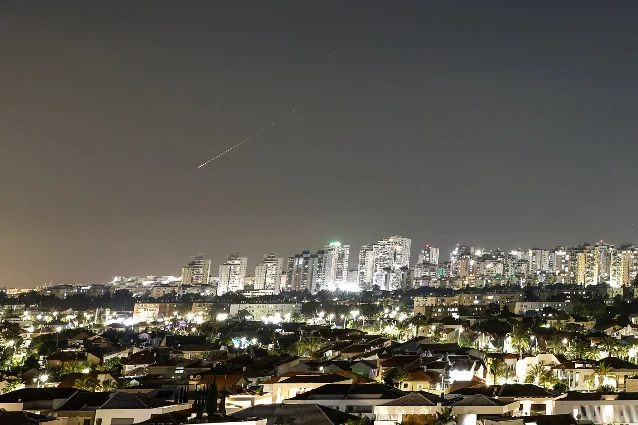
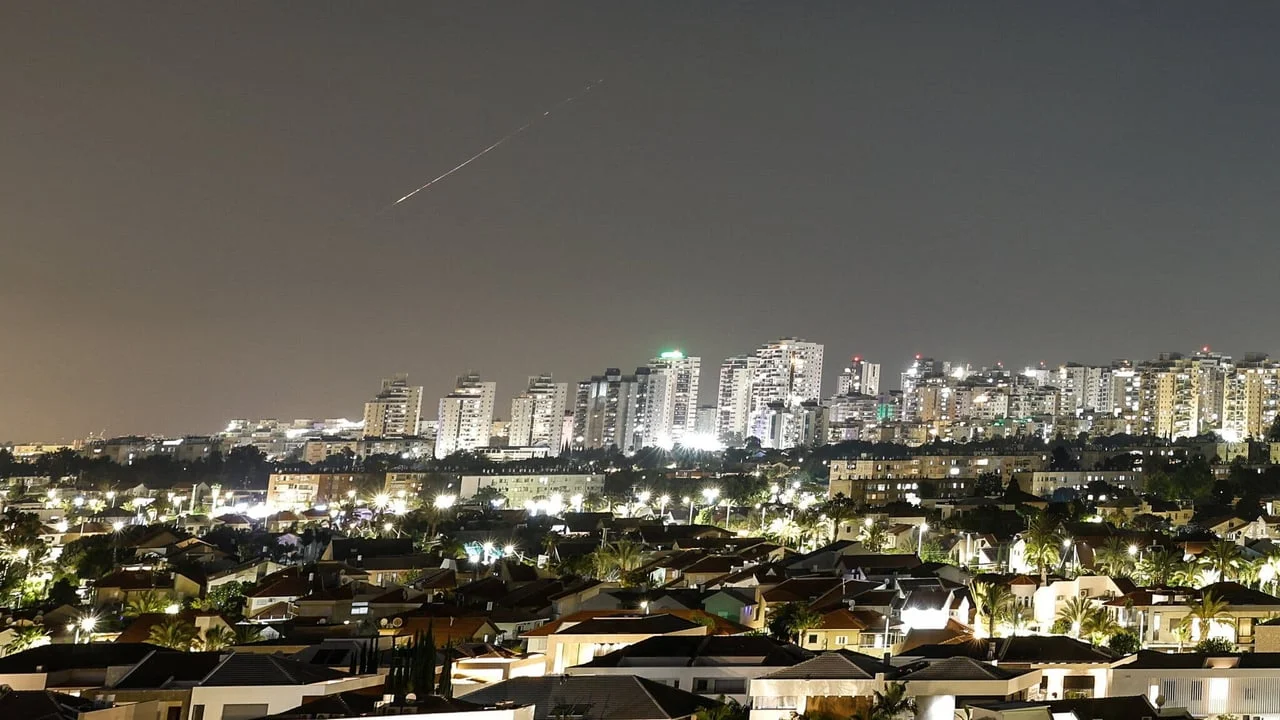
Here's the chain of events: Israel launched airstrikes on the outskirts of Beirut, targeting Iran-backed Hezbollah. Iran said that violated the ceasefire — which, from Tehran's view, was supposed to end all hostilities across the region, not just between Iran and the US. The Islamic Revolutionary Guard Corps then fired a "limited number" of ballistic missiles toward Israel, calling it a warning.4
Israel's military said it intercepted all the missiles. There were no casualties from the strike itself, though some people were injured rushing to bomb shelters, and falling debris from the interceptions started several fires. Israeli schools were announced closed on Monday as a precaution. Hardline members of Israel's cabinet immediately called for full retaliation.4
What happens next matters a lot. Trump said publicly that Israel's Beirut strikes were not coordinated with Washington and that he was unhappy about them. He told Netanyahu not to retaliate against Iran, and said firmly: "All of this is up to me — Netanyahu can't decide anything, Netanyahu will end up accepting a deal with Iran."4 Oil prices rose about 2.9% to $95.79 a barrel on the news.
The fragile peace now depends on whether Netanyahu holds back and whether Iran treats this as a one-time warning or an escalation ladder.
Zelensky offers to freeze the front lines; Starmer hosts a summit
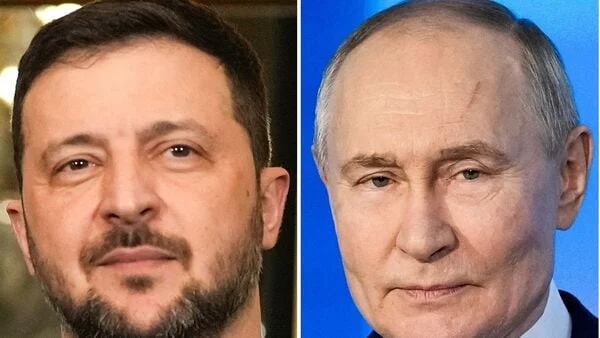
Ukraine's President Zelensky made a notable offer over the weekend: he said he was willing to freeze the current battle lines as the basis for ending the war.5 He also confirmed that Russian oligarch Roman Abramovich visited Kyiv as an intermediary, saying Abramovich told him he had a direct message from Putin and wanted to carry one back.
This comes a day after Ukraine launched roughly 376 drones at Russia — including a wave targeting St. Petersburg for the second time in under a week. Over 140 of the drones were intercepted near Leningrad Oblast; an oil depot in Ust-Labinsk caught fire, and one person was killed in Tver Oblast by falling debris.6 Zelensky called it a "fair response" to Russian aggression after Putin rejected his meeting proposal last week.
Russia struck back the same day, killing three people in southern and central Ukraine.6
On Monday, UK Prime Minister Keir Starmer is hosting Zelensky alongside France's Macron and Germany's Chancellor Merz at Downing Street — a show of European solidarity after Putin's refusal to engage.6 The US House last week passed a bill combining Ukraine aid with Russia sanctions — with 18 Republicans crossing party lines to back it, openly defying Trump.
The freeze offer is a significant shift in framing. Zelensky has previously insisted on full territorial restoration. Agreeing to hold current lines would mean accepting that Russia keeps substantial portions of eastern Ukraine — at least for now. Whether Putin responds at all is unknown.
Xi arrives in North Korea for first time in seven years
Chinese President Xi Jinping flew to Pyongyang on Monday for a two-day state visit — his first trip to North Korea since 2019.7 The visit marks the 65th anniversary of the China-North Korea treaty of friendship.
The backdrop is awkward for Beijing. North Korea has spent the years since Xi's last visit building its nuclear arsenal, sending troops to fight alongside Russia in Ukraine, and generally acting more independently than China prefers. A day before Xi landed, Kim Jong Un's government formally reaffirmed North Korea's status as a nuclear-armed state — a pointed signal that the weapons program is not on the agenda.8
Why is Xi going? China wants to reassert influence over a neighbor that's drifting toward Moscow. Russia's war in Ukraine gave Kim Jong Un new leverage: Russian sanctions support collapsed, weapons and goods began flowing, and North Korea sent troops to the front. Kim now sees himself as less dependent on Beijing's goodwill.8
Former Swedish foreign minister Carl Bildt summed it up: "China is probably a bit worried about the increasingly close relationship between Pyongyang and Moscow. Kim may feel he can demand things he couldn't before."9
The practical outcome of the visit is expected to center on economic cooperation — tourism and trade deals, not nuclear talks. North Korea's new five-year development plan identified Chinese tourists as a key revenue source, and China accounted for 90% of foreign visitors before COVID.8 But the symbolic message Xi sends — that China is still a relevant player on the Korean peninsula — may matter as much as any signed agreement.
参考ソース
- 1Armenia election results — CEC early count
- 2Armenia concludes pivotal election with 59% turnout
- 3Euractiv: Armenia PM heads for win to cement Westward shift
- 4NYT live: Iran fires missiles at Israel for first time since ceasefire
- 5World news live updates June 8 2026: Zelensky willing to freeze battle lines
- 6The Guardian: Ukraine war briefing — Kyiv unleashes hundreds of drones on Russia
- 7Xi to visit Kim Jong Un in North Korea — what to expect
- 8North Korea reaffirms nuclear status ahead of Xi visit
- 9SVT: Carl Bildt on Xi's North Korea visit
このコンテンツについて、さらに観点や背景を補足しましょう。