Hantavirus Global Situational Briefing — May 9, 2026

First-ever cruise ship Andes virus cluster (MV Hondius: 8 cases, 3 deaths, 15+ countries) triggers WHO alerts and CDC emergency response — alongside Argentina's above-threshold HPS season, Indonesia's Seoul virus cluster, and a structural biology breakthrough in Cell.

First-ever cruise ship Andes virus cluster drives unprecedented multinational response; Argentina season above outbreak threshold; Indonesia Seoul virus cases climb; vaccine pipeline accelerates amid research breakthroughs.

MV Hondius expedition cruise ship at sea

統計カードを読み込んでいます…

The MV Hondius cluster — what happened and what it means

At 08:00 on May 9, 2026, the Dutch-flagged expedition cruise ship MV Hondius is approximately 24 hours away from Granadilla de Abona port in Tenerife, Canary Islands — carrying the aftermath of what WHO has now formally documented as the first hantavirus cluster ever recorded aboard a cruise vessel 1.
Eight people have been infected. Three are dead. The case fatality rate of 38% sits squarely within the known lethal range for Andes hantavirus cardiopulmonary syndrome (HCPS) 2. The outbreak has triggered a 15-country contact tracing operation, activated emergency response centers on four continents, and pulled WHO Director-General Tedros Adhanom Ghebreyesus into direct communication with the ship's captain 3.

How it unfolded: the eight cases

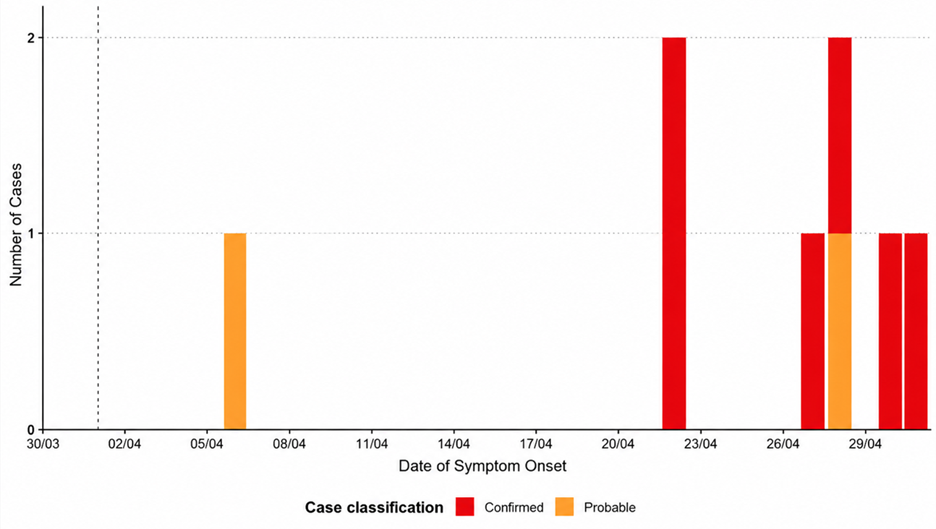
The outbreak traces to a Dutch man in his early 70s who boarded the MV Hondius in Ushuaia, Argentina on April 1, 2026, after more than three months of travel through Argentina, Chile, and Uruguay — including birdwatching activities in habitats of Oligoryzomys longicaudatus, the long-tailed pygmy rice rat that is the primary Andes virus reservoir 1.
He developed fever, headache, and mild gastrointestinal symptoms on April 6. By April 11 he was dead — respiratory failure in the ship's medical bay. His body was not tested for hantavirus at that time, which is why he is classified as a probable case rather than confirmed. His wife, a Dutch woman around 69, is Case 2: she disembarked at St. Helena on April 24 with gastrointestinal symptoms, deteriorated on a flight to Johannesburg the following day, and died at a Johannesburg clinic on April 26. PCR confirmed Andes virus on May 4 — making her the second confirmed fatality 14.
Case 3, a British man, became the first lab-confirmed case on May 2 after being medically evacuated from Ascension Island to a Johannesburg ICU on April 27. South African NICD confirmed Andes virus by PCR and genome sequencing — the gold standard that tied the outbreak definitively to this single strain. He remains in ICU as of May 8 4.
Case 4, a German woman, developed symptoms April 28, progressed to pneumonia, and died May 2. Her post-mortem sample confirmed Andes virus — the third fatality. Cases 5 and 6 — the ship's own doctor and one of its expedition guides, both adult males — developed symptoms on April 30 and April 27 respectively, were confirmed by PCR on May 6, and were medically evacuated to the Netherlands that same day and the next. Both are reported stable 1.
Case 7 is the most epidemiologically significant from a contact tracing perspective. A male passenger, he disembarked at St. Helena on April 22, flew to Switzerland via South Africa and Qatar, arrived in Zurich around April 27–28, and developed symptoms on May 1. He self-isolated immediately upon recognizing the connection to the ship and tested PCR-positive for Andes virus on May 5. His complete virus genome was published on virological.org, enabling sequencing comparisons with regional Argentine strains. He is hospitalized in Zurich 15.
Case 8 disembarked even earlier — at Tristan da Cunha on April 14 — and developed symptoms (diarrhea, then fever) on April 28. He is stable and awaiting lab confirmation, classified as probable 1.
The most troubling feature of the case distribution is the ship's own medical personnel. The infection of the ship's doctor (Case 5), who would have had close contact with the index case during his illness, supports WHO's working hypothesis: Case 1 acquired the virus through environmental exposure before boarding, and subsequent cases are the result of human-to-human transmission in the confined environment of the ship 1.
WHO stated it directly in DON-600: "Based on currently available information, the working hypothesis is that case 1 most probably acquired the infection prior to boarding through environmental exposure during activities he conducted in Argentina and Chile." 1
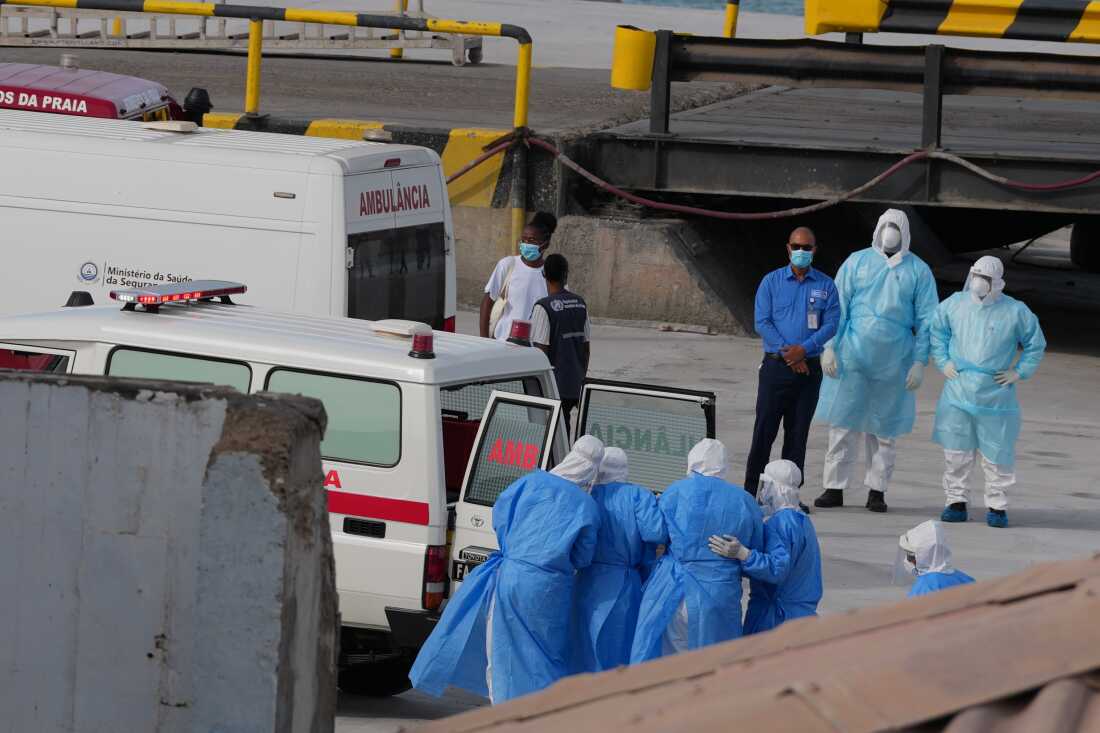
Health workers in PPE evacuating patients from MV Hondius at Praia, Cape Verde

The critical 10 days before the diagnosis: ~30–40 already off the ship

Before hantavirus was identified, approximately 30 to 40 passengers disembarked at St. Helena on April 24 6. The operator Oceanwide Expeditions reported 30; the Dutch Foreign Ministry said "about 40"; WHO DON-600 puts the number at 34 passengers and crew who had previously disembarked across all stops 14. All three figures are defensible depending on counting methodology, but none close the basic problem: people from at least 12 nationalities have already scattered to their home countries.
The contact tracing picture, as of May 9:
  • Singapore: 2 men who flew via South Africa after disembarking St. Helena are isolated and under testing.
  • South Africa: NICD tracing contacts from the April 25 St. Helena–Johannesburg flight, which carried 88 passengers — including Case 2 briefly before she was removed for hospitalization.
  • France: 1 French citizen with "benign symptoms" in isolation — a contact from the April 25 flight.
  • Italy: 4 people monitored who were on the same flight as Case 2.
  • Netherlands: Tracing 82 passengers + 6 crew from KLM flight KL592, Johannesburg–Amsterdam (April 25). A KLM flight attendant was hospitalized in Amsterdam with mild symptoms after contact with Case 2; test results pending 5.
  • UK: 7 British nationals among those who disembarked at St. Helena; 2 have returned independently and are in self-isolation.
  • USA: 6 Americans among St. Helena disembarkees; 17 Americans remain on the ship, en route to Tenerife 7.
If the Dutch flight attendant tests positive, it would represent the first confirmed Andes virus infection occurring on a commercial aircraft — a different category of transmission risk from the ship context.

Agency responses: four continents mobilized

WHO: DON-599 and DON-600

WHO issued its first Disease Outbreak Notice (DON-599) on May 4 at 7 cases / 3 deaths, followed by a revised DON-600 on May 8 updating to 8 cases. WHO risk assessments currently stand at: LOW for the global general population; MODERATE for passengers and crew remaining aboard 1.
WHO has deployed an expert to the ship alongside an ECDC counterpart. The organization shipped 2,500 diagnostic kits from Argentina to five countries and is publishing operational guidance on disembarkation protocols, contact tracing, and passenger management for the Tenerife arrival 3.
Dr. Maria Van Kerkhove, WHO Director of Epidemic and Pandemic Management, was unambiguous at a press briefing: "I want to be unequivocal here. This is not the start of a Covid pandemic. This is not Covid, this is not influenza. It spreads very, very differently." 6

CDC: Level 3 Emergency Operations Center activation

The US CDC activated its 24/7 Emergency Operations Center in Atlanta at Level 3 — the lowest of three activation tiers — on May 6. This level is appropriate for events requiring coordination and monitoring but not the full institutional surge reserved for events like H1N1 (2009) or Ebola (2014). CDC is dispatching a team to the Canary Islands to escort 17 American passengers home on a US government medical repatriation charter flight to Offutt Air Force Base; the Americans will then quarantine at the University of Nebraska, Omaha 87.
At least six US states — Georgia, California, Arizona, Texas, Virginia, and New Jersey — are monitoring returning passengers. All are currently asymptomatic. A CDC Health Alert Network advisory (CDCHAN-00528) was issued on May 8 8.

ECDC: very low risk for Europe's general population

ECDC deployed an EU Health Task Force expert to the ship and published both a Threat Assessment Brief (May 6) and a Q&A on passenger management (May 9). The agency's risk assessment for European general population is very low, underpinned by a straightforward ecological argument: the rodent reservoir of Andes virus (O. longicaudatus) has no distribution in Europe, eliminating any chain of endemic spillover 9.
Dr. Pamela Rendi-Wagner, ECDC Director, noted at a press briefing: "Many uncertainties still remain with this hantavirus outbreak and it is important that we take a precautionary approach at this point in time to reduce the likelihood of further transmission." 9

Spain: military hospital quarantine and mandatory court order

Spain is the operational hub for what comes next. Health Minister Mónica García confirmed at a May 6 press conference that the ship will dock at Granadilla de Abona, Tenerife, and that 14 Spanish citizens will be transferred to Hospital Central de la Defensa Gómez Ulla (a military hospital) in Madrid for supervised quarantine. A Spanish judge issued a mandatory confinement order for those 14 passengers — escalating the government's initial recommendation to a legal requirement. Symptomatic passengers will not transit through Tenerife; they will be evacuated directly from Cape Verde to European hospitals. Disembarkation will proceed through dedicated sanitary circuits to avoid any contact with the local population 109.

UK, Canada, and others

The UK's UKHSA has issued a 45-day self-isolation requirement for all returning British passengers. Of the 19 British passengers and 4 British crew aboard, a repatriation charter is being arranged by the UK Foreign Office for after Tenerife docking. Martin Anstee, a British expedition guide who is one of the confirmed cases now hospitalized in the Netherlands, said from his ward: "I'm doing OK. I'm not feeling too bad. There are still lots of tests to be done." 5
Canada has confirmed 10 Canadians connected to the outbreak — 4 remain on the ship, 2 have returned home. Canada's Chief Public Health Officer described pandemic risk as "very low" and noted there is "no evidence of asymptomatic spread" 11.

Andes virus — why this pathogen demands careful attention

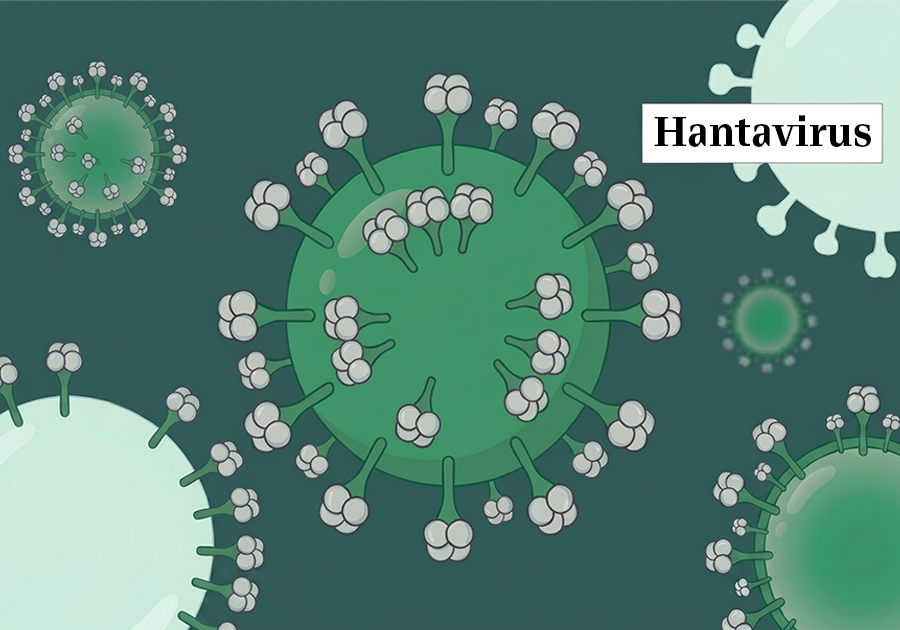
Hantavirus virion structure illustration — LSHTM
Andes orthohantavirus (Orthohantavirus andesense) occupies a specific and sobering position in the hantavirus family. It is the only hantavirus species with documented human-to-human transmission — a property not shared by Sin Nombre, Hantaan, Seoul, Puumala, or any other known hantavirus 2. That transmission, though, requires "close and prolonged contact" — typically household settings, intimate partners, and, in documented cases, a small cluster of healthcare workers treating critically ill patients. Secondary infections spreading through casual social contact have never been documented.
The basic reproduction number (R0) for Andes virus is below 1 — each infected person, on average, transmits to fewer than one other person 12. This places it in a fundamentally different epidemiological category from influenza (R0 ~1.3) or measles (R0 ~15). It cannot sustain a self-amplifying epidemic chain in the general population.
What makes it dangerous is its clinical lethality, not its transmissibility. Andes virus causes Hantavirus Cardiopulmonary Syndrome (HCPS), which progresses from fever and muscle aches to sudden-onset pulmonary edema, hemodynamic collapse, and, in severe cases, multiorgan failure. Case fatality rates in hospitalized HCPS patients in southern Chile approach 60% in some outbreak records 13. The MV Hondius cluster's 38% CFR is consistent with known Andes virus disease severity.
There is no licensed antiviral for Andes virus HCPS. Ribavirin — which shows some efficacy in Old World Hemorrhagic Fever with Renal Syndrome (HFRS) — has not been shown to work against HCPS. Treatment is entirely supportive: mechanical ventilation, extracorporeal membrane oxygenation (ECMO) for severe respiratory failure, hemofiltration for renal involvement 2.
The incubation period — 1 to 8 weeks — is the main reason WHO and national health authorities are maintaining monitoring windows of 42–45 days rather than the shorter periods used for respiratory viruses. Some people currently asymptomatic and physically distant from the ship may still be within their incubation window.
A 2020 study in NEJM documented "super-spreader" events in an Argentine community cluster, demonstrating that within the right contact structure, ANDV can amplify rapidly in a localized setting. The confined, socially dense environment of an expedition cruise ship — shared dining, close cabin proximity, repeated interaction with the ill — is precisely the setting that ANDV's transmission biology can exploit.

Americas: Argentina and the 2025–2026 HPS season

The MV Hondius outbreak is occurring against a backdrop of above-baseline hantavirus transmission in the Americas. Argentina has reported 101 hantavirus cases since July 2025 — the start of the current epidemiological season — representing a 17% increase over the 5-year average and a doubling compared to the preceding year 5.
In early 2026 specifically, Argentina's Ministry of Health reported 14 confirmed HPS cases above the outbreak threshold as of the February reporting period. Salta Province recorded 12 cases and 2 deaths during epidemiological weeks 1–10 (January 4–March 14). Neuquén reported a fatal Andes virus case in a 44-year-old woman from San Martín de los Andes 14. A notable household cluster in Cerro Centinela, Chubut, saw three family members die from ANDV with 99.99% genomic similarity between cases — a clear human-to-human transmission event at the household level.
Argentine infectious disease specialist Dr. Hugo Pizzi offered a structural diagnosis: "Argentina has become more tropical because of climate change, and that has brought disruptions, like dengue and yellow fever, but also new tropical plants that produce seeds for mice to proliferate. There is no doubt that as time goes by, the hantavirus is spreading more and more." 15
The 2025 regional baseline from PAHO provides the broader context:
チャートを読み込んでいます…
Source: PAHO 2025 annual hantavirus report — 229 cases and 59 deaths (25.8% CFR) across 8 countries in the Americas 16.
Bolivia and Paraguay both showed significant incidence increases in 2025, with values roughly doubling against recent-year baselines. Paraguay's case cluster (15 of 27 national cases) was linked to occupational road-construction activities in Mariscal Estigarribia — a reminder that land-clearing and construction expose workers to undisturbed rodent habitats 16.
Argentina's position in the cruise ship investigation: Tierra del Fuego provincial epidemiology director Juan Facundo Petrina has publicly rejected the working hypothesis that the index case was exposed in his province, arguing: "We believe we are facing a discrediting campaign against our destination." He noted the Dutch couple spent only two days in Tierra del Fuego during a multi-month trip and that the province has no recorded history of Andes variant cases. The Argentine investigation team had not yet departed for Ushuaia as of May 7; full sequencing comparisons between the outbreak strain and regionally circulating Argentine strains remain pending 5.

Asia-Pacific: Indonesia Seoul virus cluster — an underreported thread

The cruise ship outbreak has overshadowed an independent hantavirus situation in Southeast Asia that merits attention. Indonesia's Ministry of Health confirmed 23 Seoul-virus HFRS cases across 9 provinces through epidemiological week 16 of 2026, with 3 deaths and a 13% case fatality rate 17.
Seoul virus (Orthohantavirus seulense) is globally distributed through urban rat populations (Rattus norvegicus and Rattus rattus) and causes a milder form of renal syndrome compared to Hantaan virus — but with Indonesia's urban density, the rodent reservoir pressure is substantial. Geographic concentration is heavy: Jakarta (6 cases), Yogyakarta (6 cases), and West Java (5 cases) account for 17 of the 23 cases 17.
The Salatiga Class I Health Research and Development Center has detected hantavirus in rats across 29 of Indonesia's provinces through vector surveillance — a finding that suggests the 23 human cases significantly undercount actual exposure risk 17. US DoD health surveillance noted 5 Indonesian hantavirus cases in 2026 versus 3 during the same period in 2025, a 67% year-on-year increase 18.
WHO's prevention guidance for Seoul virus is straightforward but operationally difficult in dense urban environments: home and workplace hygiene, sealing rodent entry points, no dry-sweeping of potentially contaminated areas (aerosol risk), secure food storage 17.

Other global threads: Taiwan, the US baseline, Israel's first case

Taiwan reported 2 hantavirus syndrome cases in 2026 through late March — consistent with the baseline of 2 cases per comparable period seen in 2022–2025. Case 1, a man in his 70s from Taipei's Da'an District, died January 13 from sepsis with multiorgan failure. Case 2, a man in his 70s from New Taipei City with diabetes, developed fever, sore throat, and decreased urination in mid-March and was discharged March 30 after treatment. No exposure source was identified for Case 2 — no rats were captured near his residence 19.
United States — outside the MV Hondius context — saw its first HPS case of 2026 in a Santa Fe County, New Mexico resident in March. The patient recovered. San Diego County separately detected hantavirus in a Western harvest mouse near Los Penasquitos Ranch House as part of routine surveillance — no associated human case. The CDC surveillance baseline stands at 890 total laboratory-confirmed hantavirus cases since 1993, with a 35% overall case fatality rate; fewer than 30 cases are reported per year in the US, and 94% occur west of the Mississippi River 2021.
Israel confirmed its first-ever hantavirus case on May 7–8, 2026, per Israel's Ministry of Health and a ProMED alert published the same day. The patient had recently traveled to Eastern Europe, where exposure most likely occurred. The virus involved is an Old World strain — likely Puumala or Dobrava — entirely unrelated to the Andes cluster. There is no evidence of local transmission in Israel. (Source: Israel Ministry of Health / ProMED, May 8, 2026 — no direct article URL independently accessible from this report's sources.)
China — despite social media amplification of a recycled story about a Yunnan man dying on a bus while testing positive for hantavirus — has no new domestic Andes virus cases. China CDC confirmed on May 8 that the Andes virus reservoir (O. longicaudatus) has no distribution in China. Chinese endemic hantaviruses are Hantaan, Seoul, and Puumala — all Old World strains causing HFRS. Historically, China reports approximately 12,800 HFRS cases per year, the highest national burden globally, but 2026 national data has not been publicly released to date.
Europe: No confirmed Puumala or HFRS case data for spring 2026 has been published to date, representing a surveillance gap. Germany and Finland historically account for approximately 60% of European HFRS cases; spring is typically peak Puumala season in Fennoscandia as bank vole populations peak. The absence of a 2026 European HFRS situational report is noted and will be monitored in subsequent briefings.

Zoonotic dynamics: El Niño, rodent booms, and the climate feedback loop

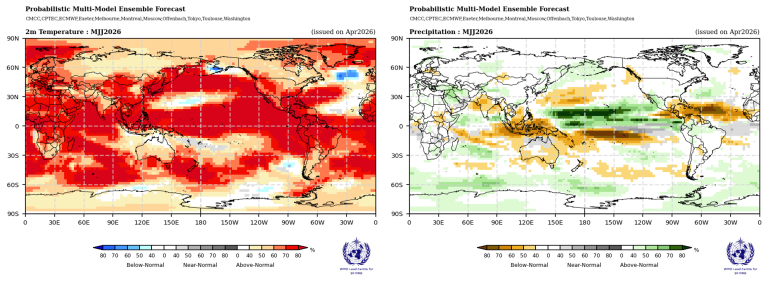
WMO precipitation outlook for May–July 2026
The hantavirus risk environment for southern South America is deteriorating on a medium-term horizon. The WMO, in its April 24 seasonal update, assessed El Niño onset probability at 61–70% for May–July 2026 — a shift from the neutral ENSO conditions that have prevailed since the weak 2025–26 La Niña faded 22. NOAA CPC upgraded to an El Niño Watch in March 2026. WMO climate scientist Wilfran Moufouma Okia noted: "Models indicate that this may be a strong event." 22
The WMO seasonal forecast for May–July 2026 projects above-normal rainfall probability across parts of northwestern South America 23. The public health implication for hantavirus is specific and well-established: El Niño–driven precipitation increases in Patagonia and the Argentine Pampas trigger vegetation growth → rodent population irruptions → elevated O. longicaudatus density → increased human spillover risk. The lag between precipitation anomaly and peak human case counts is typically 6–18 months, meaning an El Niño onset now projects elevated hantavirus risk through late 2026 and into 2027.
Argentina's 2025–2026 season already reflects this dynamic: 101 cases representing a 17% increase over the 5-year average, linked in part to expanding rodent ranges driven by climate-mediated habitat changes 5.
A supporting data point comes from an unexpected geography. In Mizoram, northeast India, the gregarious mass flowering of Bambusa tulda bamboo — a 48-year ecological cycle locally called Thingtam — has driven a dramatic rodent population explosion since late 2024. By March 2026, 5,317 farmers across all 11 districts of Mizoram have been affected, with approximately 42% of crops destroyed. Rodent-borne disease risk has been explicitly flagged by public health authorities, though no confirmed hantavirus cases have been linked to the outbreak 24. The Mizoram case illustrates the category of ecological forcing that amplifies zoonotic spillover: anything that spikes rodent density creates transmission pressure, regardless of whether an El Niño or bamboo mast cycle drives it.
On the modeling front, a UC Davis study published in npj Viruses on May 4, 2026, used species distribution and force-of-infection models to project that New World arenaviral hemorrhagic fevers — closely analogous to hantaviruses in their rodent-borne transmission ecology — will expand into previously unaffected South American regions under SSP2-4.5 and SSP5-8.5 climate scenarios by 2041–2060. Dr. Pranav Pandit, the study's senior author, summarized the methodology's broader applicability: "Our study connects the dots between changing climatic conditions and land use, shifting rodent populations and human infection risk, making it possible to see where the next generation of zoonotic arenaviral outbreaks could emerge." 25 The approach is directly applicable to hantavirus risk modeling.
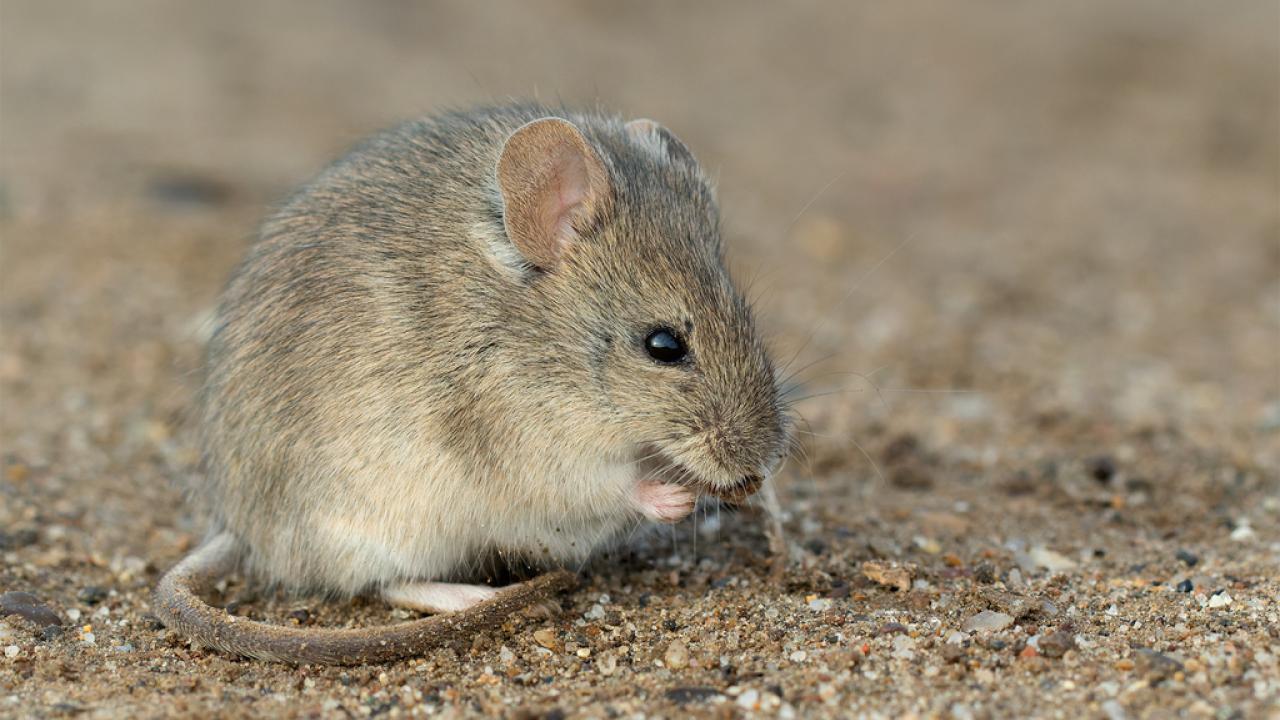
A drylands vesper mouse from Argentina — a rodent species implicated in spillover risk modeling
Virologist Luis Escobar of Virginia Tech, who conducts hantavirus field research across North and South America, offered the structural critique that applies here: "Most of our research on zoonotic viruses remains reactive — we study them after they spill over into humans instead of understanding how they circulate in wildlife beforehand." 13

Science & vaccine pipeline: faster than the clinical reality

The MV Hondius outbreak has intensified media coverage of the hantavirus vaccine gap — a gap that is, in fact, shrinking faster than clinical deployment timelines might suggest.
WHO epidemiological curve for MV Hondius outbreak by symptom onset date

Structural biology breakthrough: 2.3 Å cryo-EM structure of Andes virus

In February 2026, Jason McLellan's lab at UT Austin — the same team that solved the first SARS-CoV-2 spike protein structures in 2020 and directly enabled COVID-19 vaccine design — published a 2.3 Å resolution cryo-electron microscopy structure of the Andes virus Gn-Gc tetramer in Cell. The previous best resolution for this surface protein complex (which the virus uses to enter host cells) was 12 Å from a different team — a difference that translates to substantial inaccuracies in structure-based drug and vaccine targeting 26.
The McLellan lab's structure was immediately used to design a vaccine candidate that induced neutralizing antibodies against Andes virus in mice. McLellan stated: "Now that we have a better blueprint of what the virus looks like, we can design effective vaccines and antibody therapies for hantaviruses." 26

Vaccine pipeline: DNA, mRNA, and antibody approaches

The pipeline as of May 2026:
統計カードを読み込んでいます…
Jay Hooper, USAMRIID virologist and the lead figure behind the DNA vaccine program that has run since the 1990s, explained the core difficulty in a May 7 interview with Nature: "Because human cases of Andes virus are rare and geographically scattered, there is no obvious region to run a classic phase 3 efficacy trial, so to meet the requirements for licensing the vaccine requires more creative approaches." He was candid about the broader impediment: "There is no strong external pull, so progress is slower than it could be. It is frustrating — like pushing a rock up a hill for years." 27
The SAB-163 antibody product — generated by vaccinating cows genetically engineered to produce fully human antibodies — protects animal models against Andes virus and three other strains but has not yet entered Phase I human trials 27.
Moderna's confirmation of an mRNA-based hantavirus vaccine collaboration with Korea University Vaccine Innovation Center was reported in May 2026, though the collaboration has not yet been confirmed via official press release — it has circulated through social media and secondary news sources. If confirmed, the COVID-19 mRNA platform's translational speed could substantially compress development timelines. Hooper himself acknowledged: "The existing nucleic acid vaccine work is very translatable to mRNA platforms. COVID-19 showed how quickly mRNA vaccines can be developed." 27
A clinical trial listed in ISRCTN (ISRCTN17868912), described as evaluating "the safety and immune responses to a new vaccine against hantavirus disease" with a timeline of August 2025 to September 2026, is registered but its details remain behind the registration portal wall.

Drug repurposing and mechanistic research

Alongside vaccine development, two preprints and one peer-reviewed publication have advanced the mechanistic understanding of hantavirus:
Karolinska Institutet (bioRxiv, March 25, 2026): A high-throughput drug repurposing screen using live Puumala virus identified and validated 70 candidate antiviral compounds active across two cell systems (A549 cells and HUVECs). The screen confirmed known inhibitor classes (heat shock protein inhibitors, mTOR pathway inhibitors, nucleotide synthesis inhibitors) and flagged certain antibiotics as previously unexplored against hantaviruses — potentially pointing toward repurposing pathways that don't require the years of development that novel antivirals demand 28.
Chilean team, Fundación Ciencia & Vida (bioRxiv, March 18, 2026): Identified conserved serine residue S1121 in the Andes virus Gc glycoprotein transmembrane domain as a critical determinant of membrane fusion pore formation. Substitution of S1121 allows lipid mixing (hemifusion) but blocks full pore formation — providing a precise molecular target for antiviral development 29.
Umeå University (medRxiv, March 11, 2026): A translational study linked hyaluronan (HA) metabolism dysregulation to Puumala virus pulmonary disease severity. Plasma HA levels rose during acute PUUV infection, correlated with disease severity, and were elevated in bronchoalveolar lavage fluid in patients with greater pulmonary involvement. This positions HA as a potential biomarker for disease severity assessment and a therapeutic target for hantavirus-associated lung disease 30.
Note: The bioRxiv and medRxiv preprints cited above have not yet undergone peer review. Results should be interpreted accordingly until formal publication.

Assessment: where this stands as of May 9, 2026

The immediate public health situation is an ongoing, geographically dispersed contact tracing operation awaiting two key data points: (1) whether the Dutch KLM flight attendant tests positive — which would establish airborne commercial-flight transmission risk for the first time; and (2) whether the full genomic sequence from the Swiss case (Case 7) and subsequent sequencing from South African and Senegalese labs resolve the question of the index case's precise exposure location in Argentina or Chile.
The medium-term risk picture is shaped by three converging factors: Argentina's current above-threshold HPS season, the developing El Niño that historically precedes rodent irruptions in southern South America, and a vaccine pipeline that is advancing structurally and molecularly but still years from clinical deployment.
Dr. Michael Marks of the London School of Hygiene & Tropical Medicine framed the population-level risk accurately: "The risk of widespread transmission to the general public is extremely low." 31 But Escobar's structural warning is harder to dismiss: a virus with pandemic potential — defined by human-to-human transmission capability, an extended incubation period that allows silent spread, high lethality, and no vaccine or antiviral — warrants ongoing systematic surveillance regardless of any single outbreak's final scale.
The Tenerife arrival of MV Hondius on May 10 will trigger the most complex simultaneous multinational medical repatriation operation in the ship's history, and likely one of the largest hantavirus-linked logistics operations ever attempted. The adequacy of the 42-day post-exposure monitoring windows will become clearer in the weeks ahead.
Monitoring priorities for the next briefing (May 10, 2026):
  • Tenerife disembarkation and repatriation operations
  • Status of Dutch KLM flight attendant's test results
  • Any new confirmed cases among disembarked passengers (especially the 30–40 who left at St. Helena)
  • Argentina investigation team deployment to Ushuaia and sequencing comparison
  • 2026 spring HFRS data for Europe (Germany, Finland, Sweden, Russia)
  • Korea HFRS surveillance data — not accessed in this reporting period

Briefing covers the period February 9 — May 9, 2026. Next scheduled publication: May 10, 2026.

このコンテンツについて、さらに観点や背景を補足しましょう。

  • ログインするとコメントできます。