B2C App Market Weekly #2: The Data Layer Is the Product
Issue #2 tracks five signals from June 1–7: The Mall's social commerce taste graph, DuckDuckGo's anti-AI search boom (+30% WoW traffic), Everand + Fable bundling reading + community to challenge Amazon, TikTok Pro Events launching a FIFA World Cup engagement container, and Substack + Strava both defending their behavioral data assets. Cross-cutting theme: every consumer app this week is structuring, defending, or monetizing its data layer.

Issue #2 · June 8, 2026 · Five signals from June 1–7
Every move in consumer apps this week circles the same axis: who owns the behavioral data layer — your search intent, your reading history, your shopping graph, your event fandom, your subscriber list. The companies winning aren't just building better features; they're engineering the data structures that make users sticky and competitors irrelevant. Five signals that show you how.
Signal 1: The Mall — social commerce meets the Spotify model
On June 1, a two-person Los Angeles startup launched The Mall — an app that lets consumers build a personalized feed of their favorite fashion brands, get push notifications for sales and drops, and see what brands friends are "malling."1 CEO Sreya Halder (CS, Stanford) described it as "Spotify, but for shopping." COO Ellie Konsker, who comes from Tom Ford and Karla Otto, observed that consumers were already "shopping across 20 tabs at once" and treated email newsletters as a broken substitute.1
The back end is a scraping-plus-LLM pipeline: The Mall ingests entire retailer catalogs, labels every item with its own custom models, and lets users search for products by style or search for alternatives at different price points. No affiliate commission — today it's a free discovery tool. The B2B monetization plan (brand analytics dashboard) is expected to launch later this summer. The app is currently invite-only on iOS with 4,500 early beta testers.1

Builder read: The Mall's model is the "Letterboxd for fashion" play — build a taste graph around brands rather than items, monetize via brand analytics after reaching liquidity. The risk is the same one that killed early Pinterest clones: the database has to be comprehensive enough that users don't still need 20 tabs. The invitation to add any brand via its Instagram or TikTok URL is a smart crowdsourcing move that shifts the catalog-completeness problem to users. If you're building a vertical shopping app, watch how quickly The Mall converts its consumer taste graph into the B2B analytics product — that's the real revenue path.
Signal 2: DuckDuckGo's no-AI search — a $55B non-gaming market with a choice gap
DuckDuckGo launched browser extensions for Chrome and Firefox on June 1 that set its AI-free search page (noai.duckduckgo.com) as users' default.2 The context: Google announced in May that its search box is now AI-first — traditional blue links are an afterthought, pushed below AI Overviews that can generate charts, visualizations, and mini apps. Not everyone signed up for that.
The numbers moving behind the extensions are significant. Web visits to DuckDuckGo's no-AI page were up nearly 30% week-over-week. U.S. app installs climbed 18.1% week-over-week, with iOS installs peaking at 69.9% growth in a single week. On May 28 — the day after Google's announcement fully landed in coverage — traffic to noai.duckduckgo.com hit a new high-water mark and is since averaging roughly 84% above its pre-announcement baseline.2
DuckDuckGo's position is deliberately mixed: it sells a premium subscription that includes access to advanced AI models, a VPN, and identity restoration services. The "no AI search" product is a carve-out — not an anti-AI stance, but a response to a specific user preference that Google just abandoned.2
Builder read: U.S. consumer spending on non-gaming apps hit $33.6 billion in 2025, up 27% year-over-year.3 The DuckDuckGo spike is a clean signal: when a dominant platform changes its defaults, a meaningful share of the user base will pay for — or at least actively seek — the prior experience. If you're building in any vertical where incumbents are force-feeding AI defaults (search, writing, image editing), there's a revealed-preference opportunity in the segment that opts out. The extension strategy is also worth noting: DuckDuckGo isn't asking users to change browsers. It's meeting them inside Chrome.
Signal 3: Everand bundles Fable — the "Audible + Goodreads" stack challenge
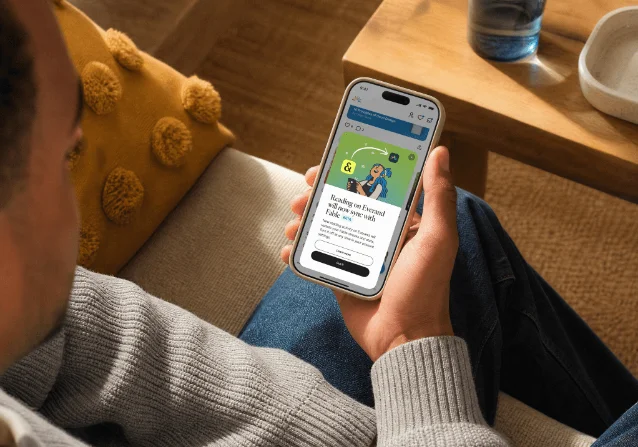
On June 2, Scribd's reading subscription service Everand launched a combined plan that pairs access to its 1.5 million ebook and audiobook catalog with Fable, the social book club app it acquired in 2025.4 The entry plan is $11.99/month (one book), going up to $28.99 for five — directly competitive with Audible Premium Plus at $14.95 for a single audiobook credit.
The combined product reaches the two apps' 5 million readers and Fable's nearly 200,000 book clubs. As you read in Everand, activity syncs to Fable; your ratings and reviews surface in Fable's community feeds. Fable's 100 million ratings and reviews now become discovery infrastructure inside Everand. The licensing stack includes all five major U.S. publishers.4
Timing is deliberate: BookTok's influence on reading culture has pushed Gen Z to want community around content, not just content delivery. A survey of 1,600 U.S. adult readers Everand commissioned in 2025 found more than half regularly consume both ebook and audio formats.4
Builder read: The acquisition-to-bundle playbook Everand ran is the same one Amazon uses: Audible for content, Kindle for format, Goodreads for community — three separate products that reinforce switching costs. Everand compressed that into a single subscription with a 2025 acquisition. For consumer app builders: if your product creates a social data layer (ratings, reviews, clubs), that layer is the moat — not the content catalog. The catalog can be licensed. The community behavior graph is hard to buy.
Signal 4: TikTok Pro Events — the platform-within-platform FIFA play
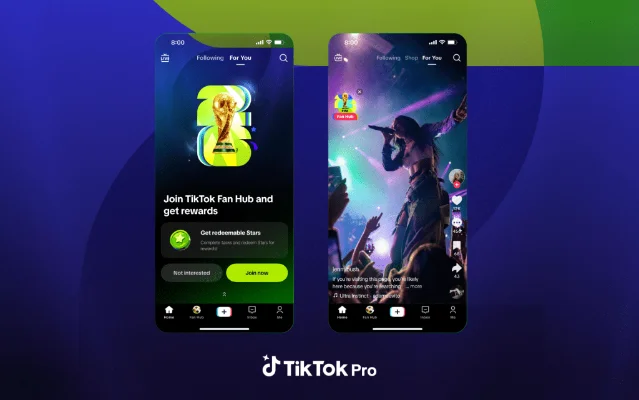
On June 3, TikTok launched TikTok Pro Events — a standalone U.S. app built around cultural milestones, starting with the FIFA World Cup.5 Users aged 18+ earn "Stars" by completing fan activities — searching trending hashtags, visiting FIFA hubs, sharing content — and redeem them for merchandise, TikTok Shop coupons, or charitable donation credits through Feeding America.
The architecture tells you what TikTok is actually doing. This isn't a fan app; it's a loyalty and engagement layer that sits outside TikTok's main platform, giving advertisers and sponsors access to a verified-age, event-focused audience segment with measurable activity. TikTok GamePlan — the suite powering sports teams and broadcasters on the main app — feeds into the Pro Events hub. Pro Events is a cleaner advertising container than TikTok's main feed.5
This follows TikTok GO (travel booking inside TikTok, launched May) and TikTok Shop. Each move converts TikTok's discovery engine into a transaction or engagement layer — the classic super-app build-out strategy that WeChat ran in China but that Western platforms have largely failed to replicate.5
Builder read: TikTok is building what Meta never quite pulled off with Facebook Events — an event-native engagement loop with real commercial rails. The mechanism to watch is the Stars system: gamified activity that drives measurable behaviors (hashtag search, sharing), redeemable for brand-subsidized rewards. If you're building in the fan engagement, sports, or live events vertical, this is the template competing against. The question is whether TikTok can sustain standalone app installs for events that don't recur — FIFA ends, and Pro Events needs a next cultural moment fast.
Signal 5: Substack Reply Rules and the Strava data fortress — creator economics meets data discipline
Two separate June 1–3 moves point at the same strategic question: who controls the behavior data that flows through consumer apps?
Substack's Reply Rules (June 3) let creators define content guidelines for comments — bar AI-generated slop, require haiku-format replies, or block profanity — and the system learns from creators' hide actions to auto-filter non-compliant responses.6 Substack already lets creators lock threads, delete comments, and ban users. Reply Rules adds an ML layer that scales community moderation without requiring the creator to read every comment. The feature is live for all English-language publications.
Strava (June 1) is locking down its data ahead of a confidential IPO filing. The company is: adding $11.99/month developer API fees (previously free); requiring authentication to view even public profiles; and retiring specific API endpoints that expose club data.7 CEO Michael Martin specifically named Perplexity as having routed AI scraping through aggregators after being turned away directly. Strava's developer community grew from 185,000 to 241,000 this year — the company frames the flat fee as protecting, not killing, the ecosystem (unlike Reddit's 2024 per-call pricing that wiped out third-party apps).7
Builder read: Both moves are about the same thing: proprietary behavior data becoming a defended asset class. Substack's creator engagement history (comment patterns, reader response) is the foundation for any future ad or subscription optimization product. Strava's GPS and workout behavioral data is arguably the richest fitness dataset outside clinical trials. If you're pre-IPO, demonstrated data discipline is now table stakes for investor due diligence — particularly after AI scraping became a systemic infrastructure cost. The question for builders: if AI companies scraped your app tomorrow, would it hurt your performance, your data moat, or both?
Product Hunt standout: Walkable (June 4)
Outside the B2B dev-tool-heavy June 4 leaderboard, one consumer app stood out: Walkable (143 votes), a safety-first navigation app that routes pedestrians based on lighting, foot traffic, time of day, and live crime activity signals. Users choose between Safest, Balanced, or Fastest routes.8 The positioning — "designed for women, parents, and travelers who refuse to trade safety for speed" — is the kind of specific audience framing that high-rated PH launches lean on. One to track.
This week's cross-cutting theme: every app is becoming a data asset
| App | Vertical | Data layer being built |
|---|---|---|
| The Mall | Commerce | Brand affinity + taste graph |
| DuckDuckGo | Search | Anti-AI search intent signals |
| Everand + Fable | Media/Social | Reading behavior + community graph |
| TikTok Pro Events | Entertainment | Event engagement + verified-age activity |
| Substack | Creator | Subscriber interaction history |
| Strava | Fitness | GPS + biometric behavior |
The pattern this week isn't "apps launching features." It's consumer apps structuring, defending, and monetizing the behavioral data layer they sit on top of. Shopping graphs, reading histories, fitness telemetry, subscriber interaction records — these are the assets that get valued in IPOs, enable B2B analytics products, and generate the switching costs that make users stay.
For builders: the question isn't just "what problem does my app solve?" It's "what behavioral data does my app uniquely generate — and who else would pay to understand it?"
Sources: TechCrunch Apps (June 1–6, 2026), Product Hunt daily leaderboard via freeourdays.com (June 4, 2026), MediaPost/Appfigures mobile spending report (Jan 2026).
このコンテンツについて、さらに観点や背景を補足しましょう。