Suno's growth playbook: $0 to $300M ARR in 26 months, on one viral loop
How Suno grew from a Cambridge startup to $300M ARR and 2 million paying subscribers in 26 months — using shareable song URLs as the primary acquisition channel, a three-layer retention stack (song library → voice cloning → DAW acquisition), and a credit-based pricing model that generates upgrade pressure at the moment of highest engagement.

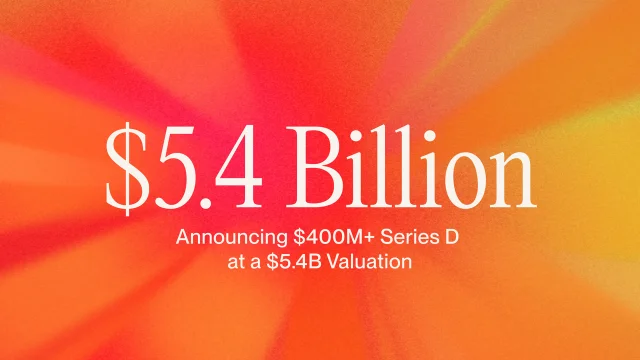
Suno launched its music-generation app in December 2023. Two years later it had 100 million users, 2 million paying subscribers, $300 million in ARR, and a fresh $400 million funding round at a $5.4 billion valuation — all without a traditional sales team, a significant marketing budget, or a B2B enterprise motion.1
The growth engine is deceptively simple: the output is the ad. A song someone makes on Suno is worth sharing. They share it. The recipient wants to make one too. That loop compounded into a billion-dollar business without a single whitepaper or SDR outreach email.
Here is how it works mechanically.
Acquisition: the output as the distribution channel
Suno's founding team came from Kensho, an enterprise data analytics company acquired by S&P Global. They built Bark, an open-source text-to-audio model on GitHub, in 2023. When Bark picked up 19,000 GitHub stars without any promotion, the team read it as a signal: the market for "anyone can create music" was larger than assumed.2
The product they built from that signal is aggressively simple: type a text prompt, get a complete song with vocals, instrumentation, and structure in under a minute. The free plan generates 10 songs per day. You can share any song via a public URL. There is no friction between creation and distribution.
That shareable URL is the primary acquisition surface. According to Menlo Ventures, who led Suno's Series C and doubled down in the Series D, "people are sharing songs on their group texts" as the primary growth driver — not paid ads, not influencer partnerships, not content marketing.3 The Series C blog post from Menlo Ventures described the dynamic directly: "Every major consumer platform is built on a new behavior. TikTok made short-form video consumption mainstream. Netflix changed how we watch TV. Suno is doing something different: making creation itself a form of entertainment."
The ICP is deliberately non-technical. Billboard's review of Suno's Series C investor deck found that the median user is male, aged 25-34, spends an average of 20 minutes creating music per session, and was not previously creating music at all.4 The same deck claimed users were generating approximately 7 million songs per day, equivalent to the entire Spotify catalog every two weeks.
Virality off-platform provided another acquisition spike. The Velvet Sundown, an AI-generated band created on Suno, went viral on Spotify. Suno included a photo of the band's cover art in its investor deck alongside the text "Suno songs go viral off platform." Viral TikTok trends — including a wave of people turning their group chat text threads into songs — propelled Suno to the #1 app in the App Store's Music category in dozens of countries in early 2026.1
The app store ranking is itself an acquisition channel. A #1 position in the Music category generates organic installs that reduce effective customer acquisition cost to near zero during peak periods. Suno spent approximately $32 million on model training between January 2024 and November 2025, but only $2,000 on data costs — the training dataset (largely scraped copyrighted recordings, the subject of active litigation) was essentially free.4
Download geography reveals the international spread: the US accounted for 15% of downloads, India 13%, Indonesia 10%, Brazil 8%.5 This is not a US-centric enterprise tool, it is a consumer product with global, mobile-first distribution.
Retention: three layers, each harder to exit than the last
Layer 1 — Personal song library
Every song you make lives in your Suno profile. After a few weeks of use, a subscriber typically has dozens to hundreds of songs, each tied to a specific memory or occasion. This library has no export-and-delete option that meaningfully transfers value elsewhere. Your songs are accessible only inside Suno.
This is a modest switching cost — songs can technically be downloaded as audio files — but the creative continuity of being able to extend, remix, and build on prior songs exists only inside the platform. The extend and remix tools are subscription-gated, which means the free user's library is a preview of what paid users can build into.
According to Suno's Series C pitch deck, weekly subscriber retention was 78% and weekly retention for all users (including free) was 39%.4 The 25% 30-day subscriber retention — disclosed in the same deck — is the honest gap: roughly 3 in 4 subscribers who come in on a viral wave exit before a second month. The reactivation metric (350,000 reactivated users per week as of July 2025) suggests Suno treats this churn as a recoverable population rather than a lost one.

Layer 2 — Voice cloning and custom models
Suno v5.5, launched in March 2026, introduced the "Voices" feature: Pro and Premier subscribers can record or upload their own voice, verify it via a spoken-phrase match, and generate songs using that voice.6 The voice is private — only the subscriber can use it. Once someone has built a voice profile and generated songs with it, the switching cost becomes personal and identity-tied in a way that a song library alone is not.
Custom Models add a second dimension: subscribers can upload their own original tracks to fine-tune v5.5 to their specific style, creating a personalized version of the model. Up to three custom models per Pro or Premier subscriber. This is the creative professional's version of the same lock-in logic — the model has learned your sound, and that trained model only lives in Suno.
Layer 3 — Suno Studio (acquired from WavTool, June 2025)
Suno acquired digital audio workstation WavTool in June 2025 and relaunched it as Suno Studio, available to Premier subscribers.4 Studio adds professional DAW features: warp markers, stem splitting (up to 12 vocal and instrument stems), multi-track editing, time signature controls, and alternates.
The Studio integration completes the loop from casual creator to semi-professional producer inside a single subscription. Previously, a Suno user who wanted to do serious editing would export to Ableton or Logic Pro. Now the editing environment is native, and the stems you split are derived from songs your custom model generated. Each layer makes the next layer more valuable, and the exit more expensive.
Monetization: credit volume as the conversion driver
콘텐츠 카드를 불러오는 중…
Suno's pricing is structurally built around one unit: the credit. Each song generation costs 5 credits. The free plan gives 50 credits per day (10 songs) that reset daily but don't roll over. The two paid tiers work on monthly credit banks:
| Plan | Price | Credits/month | Songs/month | Key feature gates |
|---|---|---|---|---|
| Free | $0 | 50/day (resets daily) | ~300 | v4.5-all model only, no commercial rights, shared queue |
| Pro | $8/mo (or $96/yr) | 2,500 | ~500 | v5.5, commercial rights, Voices, Custom Models, stems, priority queue |
| Premier | $24/mo (or $288/yr) | 10,000 | ~2,000 | Suno Studio, max credits |
The credit structure does two things simultaneously. First, it creates a natural upgrade trigger: a power user who burns through 50 free credits on day 1 faces the choice between rationing or paying. Second, commercial rights are strictly paywalled — free users cannot release or monetize their songs, which creates a clear value distinction beyond volume.
The add-on credit purchases available to Pro and Premier subscribers represent a usage-based component: subscribers can buy additional credits when their monthly bank runs out without waiting for a refresh. This is the expansion vector for heavy creators — the tier ceiling doesn't cap the revenue per user.
Suno's revenue trajectory from quarterly data is worth reading slowly:5
| Period | Quarterly revenue | Implied ARR |
|---|---|---|
| Q4 2024 | $11M | $44M |
| Q1 2025 | $18M | $72M |
| Q2 2025 | $26M | $104M |
| Q3 2025 | $34M | $136M |
| November 2025 | — | $200M (TechCrunch confirmed) |
| February 2026 | — | $300M (CEO disclosed) |
The ARR doubled from roughly $45M at Series B close (May 2024) to $200M at Series C close (November 2025) — 18 months.32 CEO Mikey Shulman confirmed $300M ARR with the 2 million paying subscriber milestone in February 2026.8
At $300M ARR and 2 million paying subscribers, average revenue per paying subscriber is $150/year — roughly $12.50/month. Given the plans are $8 and $24/month annually, the math implies the subscriber mix skews toward Pro rather than Premier, with some add-on credit purchases filling the gap between the per-plan rate and the $12.50 average.
Suno's investor deck projected $1 billion in revenue by 2028, and explicitly noted this is "before we consider monetizing consumption" — i.e., before any ad-supported or listener-facing revenue stream.4 The roadmap includes social discovery features, suggesting a listener-side monetization layer (ads, streams) is being built in parallel.
The legal overhang — and why investors ignored it
No Suno teardown is complete without addressing the copyright litigation. The major labels (Sony, Universal, Warner) filed a $500 million lawsuit in 2024 alleging Suno trained on their recorded catalog at "almost unimaginable scale." Suno's own filings acknowledge using copyrighted recordings; the legal argument is fair use.4
Warner Music Group settled in November 2025 and signed a partnership with Suno to develop a licensed model. UMG and Sony remain in active litigation as of June 2026.1 The Series D blog post references "our first music model developed in partnership with the music industry" coming later in 2026 — this is almost certainly the WMG-licensed model, and the implicit strategy for resolving the remaining litigation the same way.9
Investors in the $400M Series D — Bond Capital, IVP, Union Square Ventures, Forerunner, Menlo Ventures, Matrix, Lightspeed — clearly priced in the litigation risk. At $5.4 billion, the round implies approximately an 18x forward multiple on the $300M ARR base, which is aggressive but consistent with the category (Spotify trades at ~7x; Netflix at ~10x; Suno has higher growth and a cleaner cost structure at this revenue scale). The presence of "leading artists, songwriters and producers" as disclosed participants in the round is the signal that the legal overhang is being managed via alignment, not just argument.
Takeaways
1. When the output is shareable, the product markets itself — but only if sharing happens without friction. Suno made song URLs public by default. A free user who makes a song and wants to share it faces zero additional steps. Every friction point removed from the share action multiplied the acquisition loop. This is different from "add a share button" — it required designing the default state of every song to be "publicly discoverable."
2. Tiered credits work differently from tiered seats. Per-seat pricing triggers a buying conversation ("do I need another seat?"). Credits trigger a usage ceiling ("I've run out"). The credit ceiling creates the upgrade pressure at the moment of highest engagement — when the user is already in the product, already excited, and already generating value. Suno's daily-reset free plan maximizes trial; the monthly credit bank on Pro triggers an upgrade when a user wants to create more than the daily cadence allows.
3. Personal creative assets are a different class of switching cost. A song library can be downloaded. A trained custom model fine-tuned to your sound cannot be ported. A voice profile built from your recordings cannot be reconstructed elsewhere. As Suno adds personalization layers, each one makes the platform more irreplaceable for the specific user who built it — which is the opposite of the generic "habit" retention most consumer apps pursue.
4. The WMG settlement signals the licensing path forward. Suno's litigation with UMG and Sony is real, but the Warner settlement shows the likely resolution: a licensing deal that converts the major labels from plaintiffs into revenue-sharing partners. Suno's $400M Series D allocates 5% to "partnerships" and 20% to M&A — the infrastructure to do these deals at scale is being built now. Builders competing in licensed AI audio should watch the terms of the upcoming WMG-model launch closely; it will set the template.
참고 출처
- 1Hollywood Reporter: Suno Raises $400M at $5.4B Valuation
- 2Sacra: AI-native SoundCloud
- 3TechCrunch: Suno raises at $2.45B valuation on $200M revenue
- 4Billboard: Suno Creates Spotify Catalog Every Two Weeks
- 5Business of Apps: Suno Revenue and Usage Statistics 2026
- 6Suno blog: v5.5 launch
- 7Suno pricing page
- 8Hollywood Reporter: Suno hits 2M subscribers
- 9Suno blog: Series D announcement
이 콘텐츠를 둘러싼 관점이나 맥락을 계속 보강해 보세요.