
Team of Teams: McChrystal's Case for Running Your Organization Like a Nervous System
A practitioner close-read of General Stanley McChrystal's Team of Teams (2015): the central argument that complexity — not complication — makes traditional hierarchies obsolete; four interdependent frameworks (Shared Consciousness, Empowered Execution, Team of Teams structure, Leading Like a Gardener); seven verbatim quotes; real-world cases from JSOC to Ford/Mulally; practitioner evidence from four corporate deployments; and a rigorous critical assessment drawing on Mukunda, Schake, Greentree, and Cranfield — including the Afghanistan counterexample and the Rolling Stone empowerment paradox. Closes with five Monday moves derived from what practitioners report actually works.

In 2004, General Stanley McChrystal (U.S. Army, Ret.) was commanding the Joint Special Operations Command (JSOC) — the elite counterterrorism task force deploying Navy SEALs, Army Rangers, and Delta Force against al-Qaeda in Iraq (AQI). By every conventional measure, JSOC should have been winning. Its operators were the most highly trained soldiers in the world. Its intelligence apparatus was sophisticated. Its budget was enormous. AQI, by contrast, was a decentralized insurgency running on cheap mobile phones and word of mouth.
JSOC was losing.
Not because its people were less skilled or less committed, but because its organization was wrong for the problem. JSOC had been built for a world where the enemy's next move could be predicted with enough intelligence — where hierarchy and specialization were assets because they allowed precise, efficient execution of defined tasks. AQI didn't operate that way. It moved faster than JSOC could authorize a response. It learned from every engagement. It exploited the gaps between JSOC's silos. Speed of information movement, McChrystal realized, had become the real competitive advantage — and the architecture of his organization was throttling it.
Team of Teams: New Rules of Engagement for a Complex World, published by Portfolio/Penguin in May 2015, is McChrystal's account of rebuilding JSOC into something that could match that pace — and his argument that the same restructuring is now necessary for virtually every organization operating in a complex environment. 1 The book was a New York Times bestseller and reached 4.6/5.0 across 4,571 Amazon ratings. 1
McChrystal wrote the book with three co-authors: Tantum Collins, who studied global affairs at Yale and participated in McChrystal's leadership courses; David Silverman, a former Navy SEAL who co-founded CrossLead (later folded into McChrystal Group); and Chris Fussell, a former Navy SEAL officer who served as McChrystal's aide-de-camp during the JSOC years and now teaches at Yale's Jackson Institute. 1 The writing uses McChrystal's first-person voice throughout, which is a deliberate choice: the narrative authority comes from the man who made the calls.
The book and the man
Stanley McChrystal's career spans three decades of operational command. He commanded a Ranger battalion in the 1990s and served in Kosovo. He led JSOC from 2003 to 2008, a period the book describes in granular detail — the daily rhythms of the task force, the intelligence tradecraft, the raid planning that could cycle from collection to action in under an hour once the organization learned to move correctly. In 2009, President Obama appointed him commanding general of coalition forces in Afghanistan.
That last assignment ended abruptly in June 2010, when Rolling Stone published a profile in which McChrystal and his staff made dismissive remarks about Vice President Biden and other administration officials. Obama accepted McChrystal's resignation within 24 hours. 2 The incident matters for this book's argument — not as gossip, but as a data point about the limits of McChrystal's own frameworks. Critics have noted that a leader who championed radical transparency and empowered execution did not foresee that his empowered team's unguarded candor would end his career. More on that tension later.
After retirement, McChrystal founded the McChrystal Group, a leadership and management consulting firm. Much of the firm's corporate case-study evidence — the energy company COVID transformations, the aerospace manufacturer turnaround, the Florida emergency management program — is cited in the practitioner reactions section below.
Team of Teams is 304 pages. It divides roughly into three movements: an extended narrative of the JSOC transformation (the Iraq years); a theoretical explanation of why complexity makes old management structures obsolete (drawing on complexity theory, Taylor's scientific management, resilience engineering); and a prescriptive argument for what the replacement should look like. The first movement is by far the strongest prose. The prescriptive third is where critics have found the thinnest ground.
The central argument
McChrystal's core claim can be stated in a single sentence: the fundamental challenge facing organizations in a complex environment is not efficiency but adaptability — and efficiency-optimized structures actively prevent adaptability.
He frames this through a contrast between complicated and complex systems. A complicated system — a rocket engine, a hospital operating room — has many parts but behaves predictably. Master the engineering, know the variables, and you can predict outcomes. A complex system — an insurgency, a financial market, a global supply chain — has parts that interact in ways that cannot be fully mapped. Cause and effect relationships are non-linear, emergent, and frequently invisible until after the fact.
Traditional management theory, McChrystal argues, was built for complicated systems. Frederick Winslow Taylor's scientific management — which forms the intellectual through-line of the book's theoretical section — was an explicit attempt to engineer an organization the way you engineer a machine. Specialization, standardization, hierarchical authority: these are all optimization tools for a world where problems are complicated, not complex.
AQI in 2004 was complex. JSOC was organized as complicated. That mismatch was the real tactical problem.
The solution McChrystal arrived at — which he reconstructed in real time under fire — has four interdependent components:
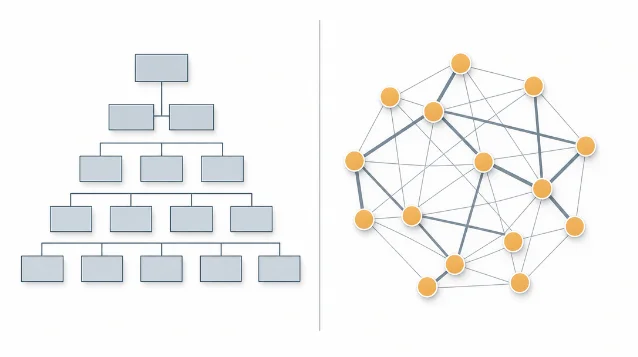
- Team of Teams (structural model): Replace the org chart of isolated, specialized silos with a network of teams where every team has direct trust relationships with every other team, not just with the teams immediately above and below them in the hierarchy.
- Shared Consciousness (information architecture): Create radical, organization-wide information transparency so that every part of the network understands the full operating picture — not just its own slice.
- Empowered Execution (decision-making authority): Push decision authority down to the level where the people with the most current, relevant information actually sit — regardless of rank.
- Leading Like a Gardener (leadership philosophy): The leader's role shifts from being the Chess Master who directs every move to being the Gardener who creates conditions in which the network can thrive — pruning, fertilizing, connecting, but not controlling every action.
These four elements are not separable. A team-of-teams structure without shared consciousness produces chaos — teams moving fast in different directions. Shared consciousness without empowered execution produces the same bottleneck that existed before: everyone knows what's happening, but only the top can authorize a response. The whole architecture is either installed together or it doesn't function as claimed.
Key frameworks in depth
Framework 1: Shared consciousness and the O&I brief
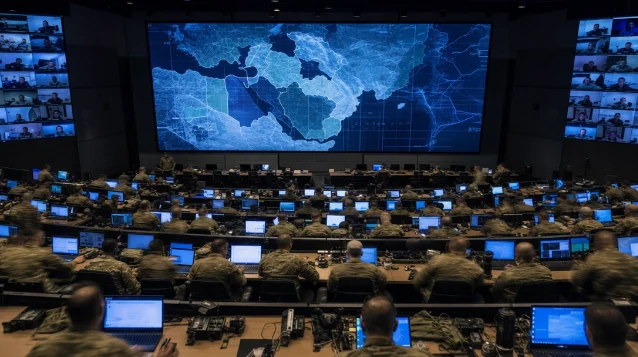
McChrystal's most operationally specific contribution is the Operations and Intelligence (O&I) brief — a daily all-hands meeting that, at JSOC's peak, ran 90 minutes, connected several thousand people across multiple time zones via secure video, and allowed anyone in the network to speak. 3
The mechanism behind it is precise: information asymmetry kills speed. In a hierarchical organization, information travels upward through gatekeepers before decisions travel back down. Every layer adds latency and distortion. By the time a commander authorizes a raid, the intelligence window may have closed. The O&I brief collapses that latency. Everyone sees everything simultaneously. The SEAL team in Mosul knows what the Delta team in Baghdad learned last night. The intelligence analyst in Tampa sees the same picture as the officer on the ground in Fallujah.
The corporate translation — which McChrystal Group calls the "Operations Forum" — adapts this to weekly cadence for most organizations. In the Fortune 100 oil and gas company case study, a cross-functional Operations Forum launched during COVID-19 delivered a 1.6x increase in employees' understanding of why decisions were being made, and a 40% improvement in cross-team coordination agreement — both measured by end-of-engagement surveys. 4
McChrystal's own formulation: "The wisest decisions are made by those closest to the problem — regardless of their seniority." 3
Framework 2: Empowered execution and the Liaison Officer
Shared consciousness alone changes nothing if authority stays at the top. McChrystal's second structural intervention was a system of Liaison Officers (LOs) — operators from one unit embedded full-time inside another, building genuine trust relationships between teams that previously had no direct connection.
The LO solves a specific problem: in a network of teams, the trust layer cannot be built on organizational proximity alone. A SEAL platoon and a CIA station in the same theater of operations had formal deconfliction processes, but they didn't trust each other at the interpersonal level. Embedding a SEAL officer inside the CIA station — who eats with them, works their hours, shares their risks — builds the kind of relationship where at 2 a.m., the CIA station chief calls the SEAL commander directly rather than going up the chain. That relationship is what makes the network function.
The principle underlying this: "Eyes On, Hands Off." Senior leaders maintain full visibility across the network, but they deliberately refrain from intervening in decisions that should be made at the edge. The leader who can see everything and still chooses not to direct everything is practicing the hardest form of restraint the book describes.
"We had to tear down the walls between the different units and build a team of teams. But we also had to ensure that this team of teams wasn't just linked at the top, but at every level — that the SEAL teams, the Ranger squadrons, the intelligence analysts, and the support elements all understood each other's challenges, capacities, and priorities."
Framework 3: Empowered execution — the decision-at-the-edge principle
In practice, McChrystal describes what he called the "O&I" broadcast not just as information sharing but as authority transfer. Every person who absorbs the current operating picture absorbs enough context to make sound decisions in their domain without waiting for approval. The task force cycled from intelligence collection to direct action — raid authorization included — in under an hour at its optimized peak, compared to the days the process had previously required. 5
Keith Pellegrini, a McChrystal Group partner and former Army major who initially resisted the JSOC transformation, applied this to his battalion command of 400 paratroopers covering 64 different military specialties. His approach: weekly Operations Forums, cross-unit briefings where each company demonstrated its capabilities to the others, and explicit downward delegation of decision authority. The model was stress-tested during the 2010 Haiti earthquake response. 6
Pellegrini's retrospective assessment: "The Team of Teams approach doesn't work because it's a military framework. It works because it's a human one." 6
Framework 4: Leading like a gardener
The Chess Master metaphor — a leader who surveys the full board and directs every piece — is seductive because it implies control. McChrystal's argument is that the Chess Master model fails in complex environments for a specific reason: no single mind, however capable, can process all relevant information fast enough to direct action at the speed complexity requires.
The Gardener alternative is less about relinquishing control than about redefining what control means. The gardener doesn't command each plant to grow. The gardener creates conditions — soil, water, light, appropriate space — in which growth happens faster and more robustly than any directed instruction could produce. In organizational terms: the leader's job becomes building and maintaining the information architecture, the trust relationships, and the shared purpose that allow the network to self-organize around problems.
"I describe myself as a 'gardener' — I lead by trying to create an environment that our people need to grow and thrive. I'm not solving problems for them. I'm helping them solve problems themselves — faster than any headquarters can direct."
Seven verbatim quotes
These are drawn directly from the book and from McChrystal's on-record statements that track closely with its content:
"The temptation to lead as a chess master, controlling each move of the organization, must give way to an approach as a gardener, enabling rather than directing."
"Efficiency is doing things right. Effectiveness is doing the right things. Our task force had been optimized for efficiency; we needed to become optimized for effectiveness."
"In complex environments, the ability to act and adapt is more important than the ability to plan and optimize."
"A team needs to trust not just the people on their team, but also the judgment of teams that exist elsewhere in the organization."
"Sharing information with people who 'don't need to know' creates the shared consciousness that allows teams to act in sync."
"Resilience thinking focuses on outcomes, whereas efficiency thinking focuses on processes."
"We needed to share our plans, our challenges, our failures — things that made us vulnerable. It was uncomfortable. But it worked."
Real-world cases the book draws on
McChrystal uses four categories of examples to build his argument:
The core JSOC narrative: The transformation of the joint task force from 2003 to 2008 is the book's spine. The operational high point is the June 7, 2006 killing of Abu Musab al-Zarqawi, the founder of al-Qaeda in Iraq, which McChrystal credits to the kind of rapid intelligence-to-action cycle the rebuilt task force made possible. 5
Historical organizational cases: The Battle of Trafalgar (1805), where British Admiral Horatio Nelson gave his captains enough decision-making autonomy to exploit tactical opportunities without waiting for his flag signals. The 1960 NASA Mercury program, which McChrystal uses to illustrate the risks of over-specialization. Captain Chesley "Sully" Sullenberger's 2009 Hudson River landing, as a case of expert judgment under time pressure that no decision-tree could have predicted.
The Alan Mulally / Ford case: McChrystal cites Mulally's 2006 arrival at Ford as an example of installing a "shared consciousness" mechanism in a corporate context — specifically the Business Plan Review (BPR), Mulally's weekly meeting where divisional leaders shared real operational data (coded red, yellow, or green) rather than sanitized presentations. The first week, all cards were green. Mulally reportedly said, "We're losing billions of dollars — is there really nothing that's not going well?" The following week, a manager submitted a red card. Instead of being punished, he was applauded. Others followed.
Business and civic sector examples: McChrystal draws briefly on hospital emergency rooms — the model of a trauma team that gathers different specialists around a single patient, each with full visibility into what the others are doing — as a naturally-occurring team-of-teams structure that predates his formulation.
How practitioners apply it today
The book's corporate afterlife is more robust than the academic literature gives it credit for — but the application gap is real.
Where it has been implemented: Polish IT services firm Univio (Unity Group, approximately 600 employees) restructured its entire operating model around Team of Teams principles after evaluating Holacracy and Sociocracy. Its key adaptation: replacing fixed job titles with roles (an employee might hold multiple roles based on current project needs), preserving titles only for external communications. The firm continued to earn Great Place to Work recognition after the change. 7 Univio's conclusion on the model: "Team of Teams is more of a philosophy rather than a rigid model, so it should be given a wide interpretation." 7
An unnamed aerospace and defense manufacturer — working with McChrystal Group — rebuilt its Operations Forum and decision-making governance after years of market share decline. The company ultimately won a multi-billion-dollar R&D contract. An executive's summary: "McChrystal Group went beyond simply handing us a three-ring binder and saying, 'here's the strategy.' It was 'let's write the plan together.' So we felt like we owned it at the end, and that was critical to the success." 8
Florida's Division of Emergency Management launched the country's first mid-level emergency management leadership program explicitly built on the Team of Teams framework in November 2024. 9 Post-program surveys showed 89% of participants reporting improved cross-functional collaboration, and 81% reporting higher decision-making confidence. 9
Where adoption is partial or stalled: Reddit communities tell a different story. In r/Leadership, the book is widely recommended — one manager wrote simply, "I have all the leaders in my org read this." 10 But detailed implementation accounts are thin. In r/EmergencyManagement, a 2024 thread questioning whether the book translates to public-sector emergency work received a skeptical response: the book describes "a very narrow field of work that doesn't map well to other professional areas," and one commenter said they couldn't find examples of the team-of-teams model succeeding outside the military. 11
The honest read of the evidence: the Operations Forum has traveled well. Shared Consciousness as an information-architecture goal has traveled well. The full structural transformation — rebuilding an organization's trust network through Liaison Officers and role-level relationship investment — is expensive, slow, and almost never attempted in the way McChrystal describes.
What the critics get right
The critical literature on Team of Teams is worth reading as carefully as the book itself, because its sharpest objections are structural, not ideological.
The "when does it apply?" silence: Gautam Mukunda (Harvard Business School) writing in Foreign Policy identified what he calls the book's most significant gap: it never specifies the conditions under which a team-of-teams structure outperforms a traditional hierarchy. 5 Not every organization operates in a complex environment in McChrystal's sense. A manufacturing plant running a well-understood process doesn't need empowered execution — it needs repeatable precision. Team of Teams offers no guidance for determining which description fits your organization. Mukunda's broader summary: "Team of Teams has some significant weaknesses, but its description of how a remarkably gifted leader transformed an organization in the most challenging of circumstances both adds to our understanding of the Iraq War and is likely to be helpful and occasionally inspiring for executives." 5
The empowerment paradox: Kori Schake (Stanford's Hoover Institution) at War on the Rocks makes the most pointed structural argument: McChrystal's personal removal from command — triggered by the candid remarks of his own empowered, fully-trusted team members — is the clearest possible demonstration of the downside risks his book underweights. 2 His exact formulation: "McChrystal argues there is no realistic alternative to full transparency and empowerment, and that even if there were, the operational advantages outweigh the downside risks. I'm not so sure." 2 Schake also challenges the technology-as-driver narrative: "Technology is an enabler of adaptation, not the fundamental driver." 2
The Afghanistan counterexample: Former U.S. diplomat and Oxford researcher Todd Greentree provided a direct empirical rebuttal using the Afghanistan context that Schake flagged: a 40-nation coalition with 19 generals, an independent Marine command, and a large CIA presence created a situation where, as he put it, "how a team of teams might have worked is hard to envision." 12 His sharper verdict: "The United States never really did master Afghanistan's organizational nature, and this is one of the reasons why, with or without teams, so much time and effort in Afghanistan achieved such inconclusive results." 12 The implication: the model worked under the specific conditions of Iraq (single theater, adequate resourcing, aligned partners) and failed to transfer when those conditions changed.
The originality question: Researchers at Cranfield University's Centre for Business Performance argued in 2019 that McChrystal's operational innovations were an unconscious application of Luc Hoebeke's Human Based Activity Systems theory — a body of academic work emphasizing that in human systems, relationships and communication, not organizational structure per se, drive outcomes. 13 The O&I brief and Liaison Officer mechanisms, in this reading, are excellent implementations of Hoebeke's framework rather than original inventions. The critique doesn't diminish the practical value of what McChrystal did; it does undercut the claim that the book represents new management theory.
The repetition and scope problem: The Goodreads reader pool (13,952 ratings, 4.13/5.0 average) reveals two consistent objections from practitioners who tried to use the book as a manual: 14 the first three-quarters builds the case for change with extensive repetition; the prescriptive framework arrives late and thin. One 2020 reader wrote that when the solutions finally arrived, they were "relatively stale and uninspiring." 14 For business readers without interest in the Iraq campaign, the signal-to-noise ratio is a real friction point.
Where it fits best, honestly: The model is most naturally suited to organizations that operate in genuinely complex (not merely complicated) environments — where the competitive threat moves faster than information travels up the chain of command. Technology companies, emergency response organizations, financial trading operations, healthcare systems, and crisis management units fit this profile. It fits less well in manufacturing, regulated utilities, and any context where repeatable precision outweighs adaptive speed — which is a larger share of management reality than the book acknowledges.
| Framework | Portability verdict |
|---|---|
| O&I brief / Operations Forum | High — adapts to weekly cadence, proven in corporate and government settings |
| Shared Consciousness (information architecture) | High — the goal translates; the investment in systems and culture is significant |
| Empowered Execution (decision at the edge) | Medium — requires clear decision rights to be explicitly redefined; common to get the slogan without the rewiring |
| Liaison Officers (trust-network investment) | Low — expensive and slow; almost never fully implemented outside military contexts |
| Leading Like a Gardener | Medium — the mindset shift is real and teachable; most leaders find it requires ongoing discipline against the pull of directive instincts |
| Full Team of Teams restructure | Low — McChrystal Group's consulting work is the primary documented route |
Monday moves — five things to try this week
These are derived from what practitioners report actually works, not from the most ambitious version of the full transformation.
1. Run a 30-minute cross-team O&I brief. Invite one person from each team that touches your team's work — engineering, product, sales, support, whoever is relevant. Give each person three minutes to share: what are they seeing right now that others probably don't know about? No agenda, no slides, no decisions required. The goal is the same as JSOC's: close the information gap between adjacent units. Do this weekly for one month and see how many times someone says "I didn't know you were dealing with that."
2. Map your trust network, not your org chart. Draw a diagram with your team at the center and every team you depend on around the outside. For each external team, mark whether your relationship is: organizational only (you communicate through formal channels), professional acquaintance (you know names and roles), or trust relationship (you would call this person at 10 p.m. with a real problem). If every connection is organizational-only, you have a silo structure regardless of what your reporting lines look like. Identify one connection to upgrade from organizational to trust.
3. Explicitly define "Eyes On, Hands Off" for one current project. Pick a project your team is running where you are involved as a senior stakeholder. Write down: what decisions do I need to be consulted on before they're made? What decisions can the team make without me, as long as I'm informed? What decisions should the team own completely? Share that list with the team. The most common mistake in delegation isn't refusing to delegate — it's failing to make the boundaries explicit so the team can act confidently.
4. Find your "Liaison Officer" opportunity. Identify one team your team regularly misunderstands or has friction with. Ask to place one person from your team inside that team's weekly meeting for the next four weeks — as a listener, not a representative. Simultaneously, invite one person from that team to yours. This costs four meetings per person. The return is the kind of ambient understanding that only comes from repeated exposure.
5. Audit the last three decisions your team escalated to you that they could have made themselves. For each one, trace why it came up: was the boundary unclear? Did they lack information? Did they lack confidence they had authority? Fix the specific cause — whether that's clarifying scope, sharing more context through a regular brief, or explicitly stating "you don't need to ask me about this category of decision." McChrystal's insight is that most escalations aren't caused by team inability — they're caused by information asymmetry or ambiguous authority.
The version of this book that would be more useful
The strongest version of Team of Teams is a documentary account of one of the most significant organizational transformations in recent military history. As that, it holds up a decade after publication — the JSOC narrative is vivid, specific, and credible.
The weaker version is the management manual that sits around it. Mukunda's "two books" critique is fair: the prescriptive framework arrives too late and too thin, the non-military case studies are gesture rather than argument, and the crucial question of when your organization actually needs this model goes unasked.
For practitioners, the most productive posture is to read it for the JSOC narrative and the four-framework architecture, then use the critical literature — particularly Schake and Greentree — as calibration for your own context. The O&I brief and shared consciousness mechanisms are transferable and underused in most organizations. The full structural transformation requires a leadership team that is genuinely committed to something uncomfortable: giving up the cognitive comfort of hierarchical control while retaining full accountability for outcomes.
That's not a small ask. McChrystal's honest contribution is making the logic of that trade-off undeniable.
Cover image: AI-generated editorial illustration for this article.
References
- 1Team of Teams — Amazon product page
- 2Is Stan McChrystal Right About Adapting to Win? — War on the Rocks
- 3What Startups Can Learn from General McChrystal — First Round Review
- 4Team of Teams in a Remote Environment — McChrystal Group
- 5'Team of Teams': Good on JSOC in Iraq, but not that much new for business types — Foreign Policy
- 6From Detractor to Advocate: A Leadership Journey Through Team of Teams — McChrystal Group
- 7Team of Teams / When Agile Methodologies Fall Short — Univio
- 8Reigniting Innovation With a Focused Strategy — McChrystal Group
- 9Florida Establishes Nation's 1st Leadership Program for Emergency Managers — McChrystal Group
- 10Best book on Leadership that was not written to be a self-help book — Reddit r/Leadership
- 11Is Stanley McCrystal's "Team of Teams" a good book for a young emergency management student? — Reddit r/EmergencyManagement
- 12Organizational Friction and the Team of Teams Approach in Afghanistan — War on the Rocks
- 13Team of Teams — Cranfield University Blogs
- 14Team of Teams — Goodreads reviews
Add more perspectives or context around this Post.