3 New Papers: Flexitarian Diet Rewires Gut Tryptophan, Exercise + Cognition After Stroke, tVNS for Insomnia
Three PubMed papers indexed this week: a flexitarian crossover RCT (n=19) shows swapping to legume-heavy protein shifts gut bacteria and tryptophan pathways in men at cardiometabolic risk; a 44-RCT meta-analysis (n=4,450) finds aerobic + cognitive-motor dual-task exercise produces the largest cognitive gains after stroke; and a 13-RCT tVNS meta-analysis finds ear-clip vagus nerve stimulation consistently improves sleep quality and insomnia severity, especially targeting the ear's concha region.

リサーチノート
Published May 29, 2026 — Three papers from PubMed indexed within the past 7 days, one each from nutrition science, exercise science, and sleep research.
🥦 Nutrition | Switching to More Plant Protein Shifts Gut Bacteria and Tryptophan Pathways in Men at Cardiometabolic Risk
Paper: Lépine G, Davila AM, Cueff G, et al. "Increasing plant protein sources in the diet modulates gut microbiota and tryptophan metabolism in men at cardiometabolic risk." Gut Microbes. 2026 Dec 31;18(1):2677951. PMID: 42199008. DOI: 1
Study design: Randomized, controlled, crossover feeding trial (NCT04236518)
Sample size: 19 men with high plasma triglycerides and elevated waist circumference; 15 with complete datasets
Peer-review status: Peer-reviewed; published in Gut Microbes (Taylor & Francis)
Core Finding
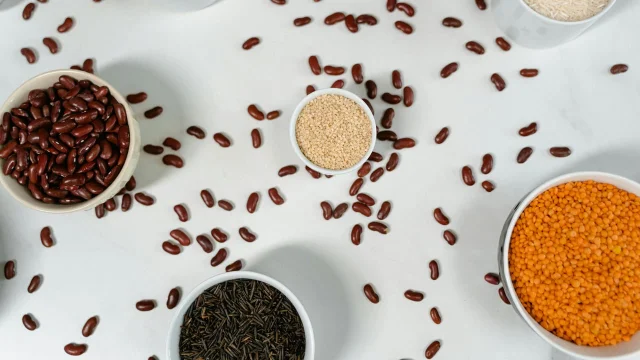
Researchers at INRAE and Université Clermont Auvergne tested a flexitarian diet (FLEX) in which 64% of protein came from plant sources — mostly legumes — against a more typical animal-based control diet (CON, 36% plant protein). Both 4-week diets were calorie-matched. Using shotgun metagenomics and targeted mass spectrometry, they tracked changes in gut bacteria, fecal metabolites, and blood metabolites.
Gut bacterial diversity did not change. What did shift was functional activity: the FLEX diet reduced taxa associated with animal-protein fermentation (e.g., Alistipes putredinis) and redirected tryptophan metabolism. Specifically, FLEX reduced the gut's genetic capacity to produce indoles (a class of fermentation by-products linked to kidney burden and vascular inflammation) and increased fecal xanthurenic acid — a marker of the kynurenine pathway. Combined with earlier data from the same trial showing higher circulating indole propionic acid (a gut-derived neuroprotective metabolite) after FLEX, the picture is one of a measurable metabolic reorientation — less indoxyl sulfate, more indole propionic acid — within one month.
Actionable Takeaway
You don't need to go fully vegan to see measurable gut microbiome changes. Replacing roughly 28 percentage points of your daily protein with legumes — lentils, chickpeas, peas — for four weeks shifted key bacterial pathways relevant to cardiometabolic and possibly kidney health. If you have elevated triglycerides or carry excess abdominal fat, a "flexitarian month" is low-risk and potentially meaningful. Note that the sample was small (n=15 analyzable) and all male, so results need replication in broader populations before firm guidance applies.
Conflicts of interest: Two authors (Perreau C, Lefranc-Millot C) are employed by Roquette Frères, a legume ingredient company that partially funded the trial. The metabolomics and microbiome analyses were conducted by independent university groups.
🏃 Exercise | Aerobic Exercise Plus Cognitive-Motor Training Delivers the Strongest Cognitive Gains After Stroke
Paper: Li Y, Zhang X, Yang Y, et al. "Exercise effects on cognitive function and molecular markers in post-stroke patients with cognitive impairment: a systematic review and meta-analysis." Neurological Sciences. 2026 May 27. PMID: 42201410. DOI: 2
Study design: Systematic review and meta-analysis of 44 randomized controlled trials; data from PubMed, Cochrane Library, Embase, and four Chinese databases (Jan 2000 – Mar 2025)
Sample size: 4,450 patients with post-stroke cognitive impairment (PSCI)
Peer-review status: Peer-reviewed; published in Neurological Sciences (Springer)
Core Finding
Post-stroke cognitive impairment — difficulties with memory, attention, and executive function following stroke — affects roughly one-third of survivors and significantly reduces quality of life. This meta-analysis pooled 44 RCTs to ask: which exercise modality works best?
Aerobic exercise alone improved cognition, but combining aerobic exercise with task-based interventions (cognitive-motor dual-tasking and functional motor training) produced the largest effect size: SMD = 1.18 (95% CI: 0.68–1.68). Patients also improved in motor function (MD = +13.98 points on a standard scale) and activities of daily living (MD = +16.78 points). At the biomarker level, exercise significantly raised serum BDNF (brain-derived neurotrophic factor, a key driver of neuroplasticity) and glutathione (an antioxidant), while lowering interleukin-6 — a pro-inflammatory cytokine elevated after stroke.
Actionable Takeaway
If you or a family member is recovering from stroke, ask the rehabilitation team explicitly about cognitive-motor dual-task training — a form of exercise that simultaneously challenges the body and brain (e.g., walking while completing a memory task or balancing on an unstable surface while counting backwards). This combination — not just cardio alone — produced the strongest cognitive improvements across 4,450 patients. For otherwise healthy readers, the broader principle holds: exercise that requires both physical coordination and mental attention (sport, dance, martial arts) may offer greater neurological benefit than monotone cardio.
Conflicts of interest: Authors declare no conflicts of interest.
😴 Sleep | Ear-Clip Electrical Stimulation of the Vagus Nerve Consistently Improves Sleep Quality and Insomnia Severity Across 13 RCTs
Paper: Choi BJ, Choi H, Kang N. "Transcutaneous vagus nerve stimulation influences sleep quality and insomnia: A systematic review and meta-analysis." Sleep Medicine Reviews. 2026 May 23;89:102311. PMID: 42202384. DOI: 3
Study design: Systematic review and meta-analysis of 13 RCTs (parallel and crossover designs)
Sample size: Pooled across 13 trials (exact total participant count not reported in abstract)
Peer-review status: Peer-reviewed; published in Sleep Medicine Reviews (Elsevier)
Core Finding
Transcutaneous vagus nerve stimulation (tVNS) delivers a mild electrical pulse through the skin — most commonly via a clip on the outer ear (auricular tVNS) — to activate the vagus nerve without surgery. The vagus nerve is the main conduit of the parasympathetic (rest-and-digest) system, and its stimulation is thought to suppress arousal and modulate the brain regions that regulate sleep.
This meta-analysis pooled 13 RCTs measuring sleep quality (Pittsburgh Sleep Quality Index, PSQI) and insomnia severity (Athens Insomnia Scale; Insomnia Severity Index). The random-effects analysis found that active tVNS consistently outperformed sham or control conditions on both outcomes. A moderator analysis added a clinically useful detail: stimulating the concha region of the ear (the curved bowl directly outside the ear canal) produced better sleep quality improvements than stimulating other auricular sites. A meta-regression found the benefit was larger in younger participants, suggesting age may moderate response.

Actionable Takeaway
tVNS devices are available commercially (sold as "auricular nerve stimulators" or "vagus nerve ear clips") and are non-invasive — no needles, no surgery. While the pooled analysis is promising, the review does not report total participant count or effect sizes numerically in the abstract, and the 13 contributing trials likely varied in duration, population, and stimulation parameters. Treat this as strong pilot-level evidence, not definitive guidance. If you have chronic insomnia and have not responded to CBT-I (the first-line treatment), ear-targeted tVNS may be worth raising with a sleep specialist. Do not use if you have a cardiac pacemaker or vagal hypersensitivity.
Conflicts of interest: Authors report no conflicts of interest.
このコンテンツについて、さらに観点や背景を補足しましょう。