AI Application-Layer Startup Radar — Week of May 26–June 1, 2026
Ten deals tracked this week: Cognition raised $1B at $26B, Anthropic closed $65B at $965B, and mid-tier application-layer rounds span an AI pharma marketing startup, a home-design AI with 300K floor plans generated in one month, a no-code agent builder acquired by Asana for $75M, and an AI-native insurtech valued at $2.6B just four months after founding. Includes founder backgrounds and capital sources for each deal.

Seven notable funding rounds and one acquisition closed in the past week, with capital flowing into AI-native vertical software, real-time media infrastructure, and a sleeper healthcare data play. Cognition's $1 billion raise and Anthropic's $65 billion Series H dominated the headlines, but the more instructive signal for early-stage founders lies in the mid-tier: new entrants raising seed and Series A rounds in defined verticals, and one YC-backed no-code agent builder exiting to a public company.
Major rounds: the two headline deals
Cognition AI closed more than $1 billion at a $26 billion post-money valuation on May 27, led by Lux Capital, General Catalyst, and 8VC, with Ribbit Capital, Atreides Management, and Founders Fund also participating. 1 Founded in 2023 by CEO Scott Wu, the company builds Devin, an AI agent that automates software development end-to-end. Revenue run rate has climbed from $37 million in May 2025 to $492 million at time of the round, with $1 billion targeted by year-end. Customers include Goldman Sachs and Mercedes-Benz. More than 90% of Cognition's own internal code is now written by Devin, Wu said on Bloomberg Television.
Anthropic raised $65 billion in a Series H at a $965 billion post-money valuation, co-led by Altimeter Capital, Dragoneer, Greenoaks, and Sequoia, with Capital Group, Coatue, D1, GIC, Iconiq, and XN also participating. 2 This positions Anthropic ahead of OpenAI by valuation for the first time. For application-layer founders building on top of Claude, the round signals that Anthropic will remain independently capitalized and not reliant on a single cloud partner — practically relevant given SpaceX's separate $60 billion acquisition talks around Cursor.
New entrants and seed / Series A activity
Reactor — $59M Series A (stealth exit)
Reactor emerged from stealth on May 28 with $59 million led by Lightspeed Venture Partners, with WndrCo (Jeffrey Katzenberg), Amplify Partners, Sky9 Capital, and FPV Ventures also joining. 3 Co-founded by Alberto Taiuti (CEO) and Bryce Schmidtchen (CTO), both former Apple Vision Pro technical leads. Taiuti previously co-founded Luma AI, where he served as CTO and built the 3D and video generation infrastructure. The company is building a unified SDK and API so developers can deploy real-time generative video and "world model" applications without managing the underlying inference infrastructure. AWS is the preferred cloud partner. Reactor's pitch is that world models — AI that generates environments dynamically as users interact, rather than pre-rendering — require a dedicated serving layer that none of the model labs provide. Initial customers include film and TV studios and robotics companies.
콘텐츠 카드를 불러오는 중…
Drafted — $16M seed
Drafted, a nine-month-old San Francisco startup that converts home-design prompts into floor plans and 3D layouts, raised a $16 million seed round. 4 Investors include Y Combinator, Buckley Ventures, Pinterest co-founder Ben Silbermann, and OneRepublic front man Ryan Tedder. CEO Nick Donahue previously ran Atmos, a custom home design startup that raised roughly $20 million (from YC, Khosla Ventures, and Sam Altman) before shutting down in early 2025 when high interest rates cut demand. Drafted launched five months ago, and has already seen 250,000 site visitors and more than 300,000 floor plans generated in the past month alone. Basic plan sets are expected to go paid at around $1,000 within three to six months. The company's prior pre-seed raised $1.65 million at a $35 million valuation from investors including Patrick Collison and Jack Altman.
Solstice — $21M Series A
Solstice, a New York-based AI-native pharma marketing startup, raised a $21 million Series A led by Transformation Capital, bringing total funding to approximately $25 million. 5 The company cuts pharmaceutical marketing campaign timelines from roughly three months to ten days. Founder names were not publicly disclosed at the time of publication.
OpenRouter — $113M Series B
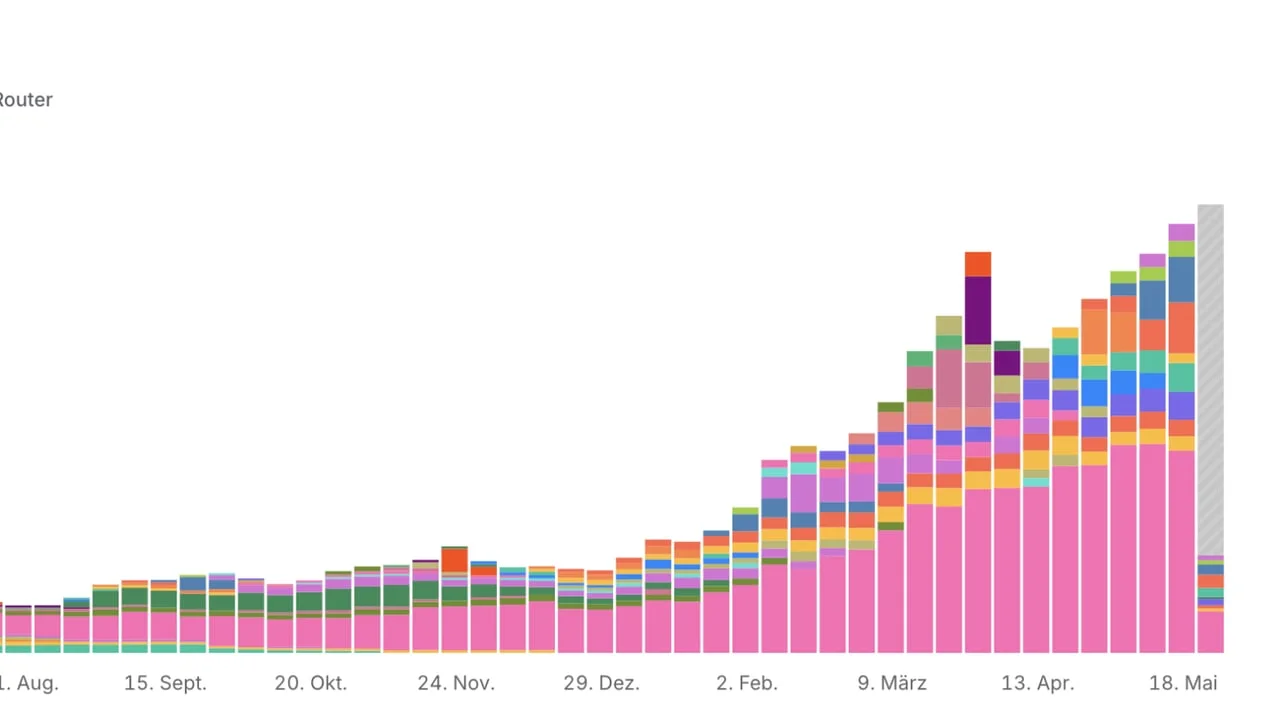
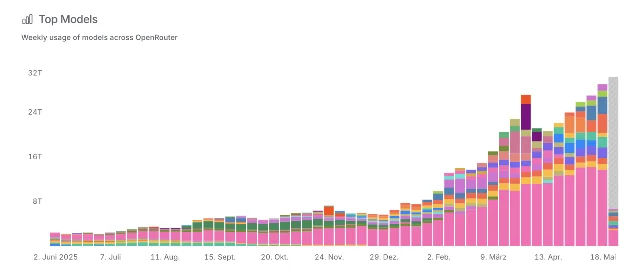
OpenRouter, a three-year-old marketplace providing a unified API for more than 400 AI models, closed a $113 million Series B at roughly $1.3 billion post-money — more than double its previous round valuation. 6 The round was led by CapitalG (Alphabet's investment arm), with Nvidia, ServiceNow, MongoDB, Snowflake, and Databricks venture arms participating alongside existing investors Andreessen Horowitz and Menlo Ventures. CEO Alex Atallah (co-founder) says the company was not actively seeking capital. Platform volume has grown fivefold in six months to 25 trillion tokens processed per week; annualized revenue has exceeded €50 million (the company has not officially confirmed this figure). OpenRouter's "Auto" feature routes requests to the most cost-effective provider automatically without favoring any single model. The token volume chart tells the story clearly:
Application-layer vertical software
H1 — $40M from CVS Health Ventures
H1, a nine-year-old healthcare data platform that sells physician profile data to pharma companies, hospital systems, and health insurers, raised a $40 million round led by CVS Health Ventures. 7 CEO Ariel Katz (co-founder) says H1 turned cash flow and EBITDA profitable in 2025, and is forecasting more than 40% revenue growth this year. The company was last valued at $750 million in a November 2021 round led by Altimeter Capital, meaning this round came at a flat or down valuation relative to 2021 — the trade-off for staying independent and reaching profitability. H1's argument for why it is AI-resilient: the physician data it collects globally is something LLMs cannot replicate from public sources.
Corgi — $106M Series B1
Corgi, an AI-native insurtech founded in 2024 by Emily Yuan and Nico Laqua, raised a $106 million Series B1 at a $2.6 billion valuation — just three weeks after a $160 million Series B at a $1.3 billion valuation, and four months after a $108 million Series A. 8 Total funding now stands at $378 million. The company offers business insurance to startups, specifically covering AI-specific risks such as financial loss from AI system failures, misinformation, and compliance failures that legacy insurers exclude or handle ambiguously. Investors include Kindred Ventures, Prime Capital, Leblon Capital, Alumni Ventures, and Y Combinator. Laqua attributed the rapid re-pricing to accelerating demand across new product lines, though the round — where the lead investor in both rounds is the same party — is attracting scrutiny in LP circles about internal markup practices.
Exit: StackAI acquired by Asana for $75M
StackAI, a Y Combinator Winter '23 no-code AI workflow automation company, was acquired by Asana on May 28 for $75 million. 9 Founders Tony Rosinol and Bernard Aceituno will join Asana. StackAI had raised just under $20 million, most recently a $16 million Series A backed by Gradient, Epakon Capital, Lobby VC, LifeX Ventures, and Vercel CEO Guillermo Rauch. The company built agents that pull data from Salesforce, Slack, and Google Workspace. Asana positioned the deal as an acceleration of its "AI-native workplace" pivot and its "AI Teammates" product line. For founders in the agent-builder and workflow-automation space, this exit illustrates one acquisition path: enterprise software incumbents looking to bolt on AI workflow capabilities rather than build them internally.
One to watch: Orbital Industries — $50M Series B
Orbital Industries (formerly Orbital Materials), a 50-person startup with offices in London and San Francisco, raised a $50 million Series B led by Plural, with Nventures (Nvidia), Radical Ventures, Compound, and Fly Ventures also participating. 10 Co-founded in 2022 by Jonathan Godwin (CEO, ex-Google DeepMind researcher, 5 years on AI for science and advanced materials), James Gin-Pollock (CTO, repeat founder who sold a prior company to Shutterstock), and Daniel Miodovnik (COO). The company built Orb, an AI model capable of simulating 100,000 atoms on a single GPU. First commercial product: a PFAS-free liquid coolant for GPU server racks, developed using AI to screen hundreds of thousands of chemical candidates and designed to ship with next-generation GPUs in 2027. If that timeline holds, it would be the first AI-designed molecule to enter commercial sale across any industry. This is technically a "deep tech / physical AI" company, but given data center demand as the end market and the application-layer route to revenue, it is worth tracking for founders building in AI infrastructure-adjacent verticals.
Summary table
| Company | Stage | Amount | Post-money valuation | Lead investor | Founded | Vertical |
|---|---|---|---|---|---|---|
| Cognition | Series D | $1B+ | $26B | Lux Capital, General Catalyst, 8VC | 2023 | AI software dev (Devin) |
| Anthropic | Series H | $65B | $965B | Altimeter, Dragoneer, Greenoaks, Sequoia | 2021 | Foundation model |
| Corgi | Series B1 | $106M | $2.6B | Kindred Ventures | 2024 | AI-native insurtech |
| OpenRouter | Series B | $113M | ~$1.3B | CapitalG | 2023 | AI model marketplace |
| Reactor | Series A | $59M | undisclosed | Lightspeed | undisclosed | Real-time generative video infra |
| Orbital Industries | Series B | $50M | undisclosed | Plural | 2022 | AI materials science |
| Solstice | Series A | $21M | undisclosed | Transformation Capital | undisclosed | AI pharma marketing |
| Drafted | Seed | $16M | undisclosed | Y Combinator, Buckley Ventures | 2025 | AI home design |
| H1 | Strategic | $40M | undisclosed | CVS Health Ventures | 2017 | Healthcare data |
| StackAI | Acquired | $75M (exit) | — | Asana | 2022 | No-code AI workflow automation |
Coverage window: May 26 – June 1, 2026. Amounts are disclosed or reported figures and may not reflect total round size where tranches are pending.
이 콘텐츠를 둘러싼 관점이나 맥락을 계속 보강해 보세요.