Geopolitics Daily Brief — June 18, 2026
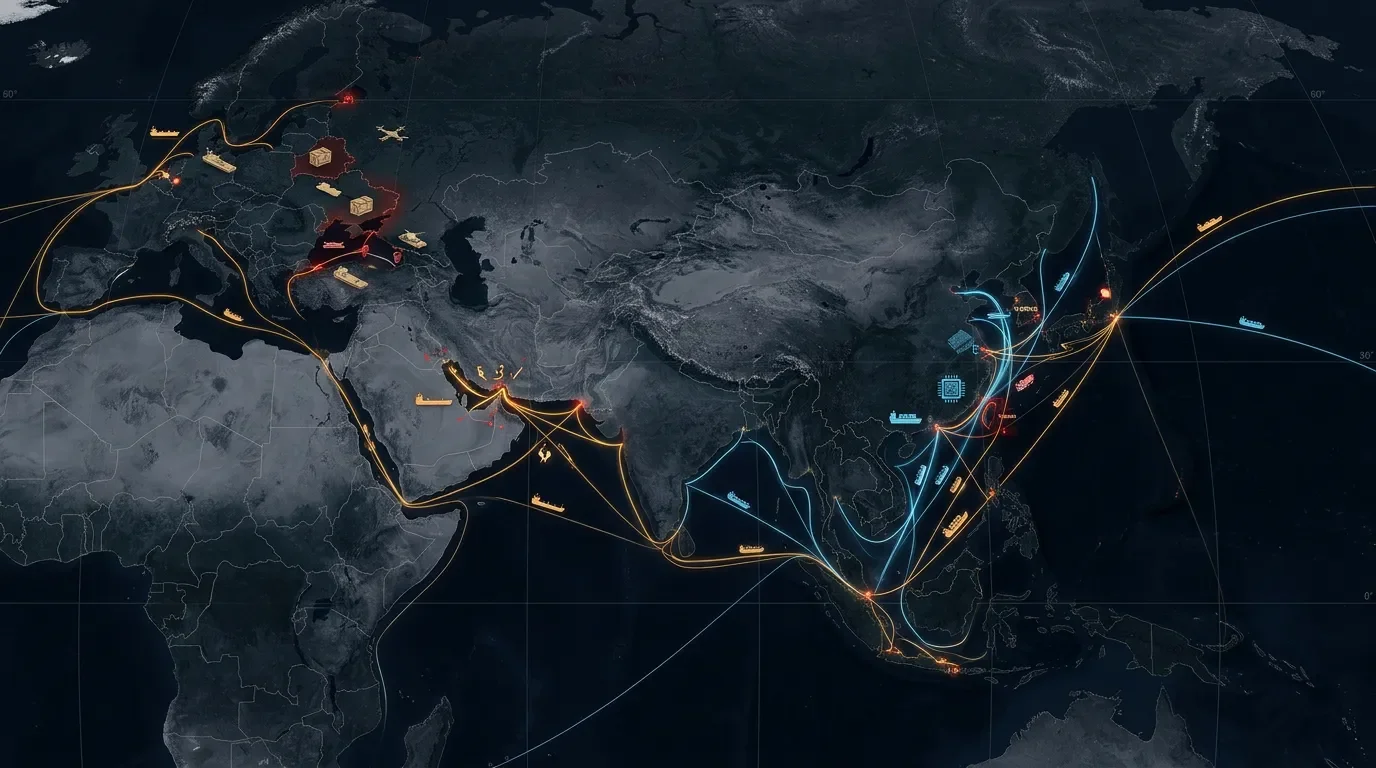
Five-story brief: the U.S.-Iran interim deal pulls oil below $80 but leaves shipping risk unresolved; Taiwan presses for U.S. arms approvals; Ukraine seeks more weapons funding while striking Russian logistics; U.S.-China tech tension moves through chips and AI access; and China-linked trade routes and yuan settlement gain attention after the Hormuz shock.

Opening move: oil is repricing the Gulf faster than shipping confidence is returning. The U.S.-Iran interim agreement has pulled Brent back below $80, but the day's risk map is broader: Taiwan is pressing Washington on arms sales, Ukraine is trying to convert battlefield momentum into weapons funding, and U.S.-China technology controls are showing up in chips and AI access.
| Theatre | Latest move | Market or supply-chain read |
|---|---|---|
| Middle East / energy | The U.S.-Iran interim agreement would reopen the Strait of Hormuz, waive U.S. sanctions on Iranian oil and begin a 60-day negotiation period; Brent was down 2.69% at $77.41 and WTI down 3.07% at $74.43 in early Thursday trading. 1 | Energy-importing markets get near-term relief, but tanker owners and insurers still have to price the risk that the deal slips before full transit is restored. |
| Taiwan Strait | President Lai Ching-te said Taiwan's refusal to accept Communist Party rule should not be treated as provocation, and he urged quick U.S. approval of a new arms sale package. 2 | Defence procurement timing remains the near-term signal for Taiwan risk; semiconductor supply chains will read delays as political leverage. |
| Russia-Ukraine | Sweden, Norway and Canada are preparing a new PURL package for U.S. weapons to Ukraine; Sweden said its own contribution would be $108 million. 3 | The defence-industrial flow is moving from pledges to delivery schedules, with air defence, drones and artillery still the limiting categories. |
| U.S.-China technology | Trump said Apple will work with Intel on U.S. chip design and manufacturing, while JPMorgan reportedly blocked Hong Kong staff from using Anthropic models. 4 5 | The commercial effect is narrower tool access in Hong Kong and more policy-backed U.S. chip capacity, not a single tariff shock. |
| China trade corridors | China-Africa trade rose nearly 18% last year, while tariff cuts on imports from 53 African countries are expected to raise flows and yuan settlement. 6 | Beijing's trade-finance push is still complementary to the dollar, but payment rails and invoicing habits are shifting at the margin. |
1. U.S.-Iran deal cuts oil, but shipping risk is not gone
- The U.S.-Iran interim agreement would end the Iran war, reopen the Strait of Hormuz and waive U.S. sanctions on Tehran's oil. 1
- The memorandum starts a 60-day negotiation period, with the text calling for full-capacity Strait of Hormuz traffic within 30 days. 1
- Switzerland said initial U.S.-Iran talks are planned for Friday at Buergenstock, with Pakistan, Qatar and other involved countries expected to participate. 7
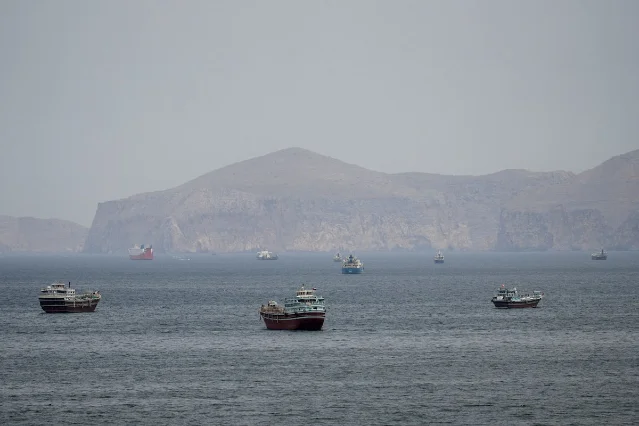
The market has moved first. Brent fell to $77.41 and WTI to $74.43 in Reuters' early Thursday oil report, while a separate markets wrap said Nikkei and KOSPI gauges hit records as oil slid and semiconductor shares supported Asian equities. 8 The supply-chain caveat is physical: Germany is sending the minesweeper Fulda and supply ship Mosel toward the Red Sea in preparation for a possible Hormuz mission, but its defence minister said any minesweeping role would need approval from Iran and Oman and would depend on the next U.S.-Iran talks. 9 Until insurers, naval planners and charterers accept the route as stable, lower crude prices do not automatically mean normal tanker scheduling.
2. Taiwan asks Washington to move on arms approvals
- Lai said Taiwan's own security measures, refusal of unification and refusal of Communist Party rule should not be seen as provocation. 2
- He said he hoped U.S. arms purchases could be approved soon, after Trump previously described Taiwan arms sales as a negotiating chip with China. 2
- Taiwan's defence ministry proposed another special defence package worth T$210 billion, or $6.66 billion, for surveillance, coastal attack and small unmanned surface drones. 2
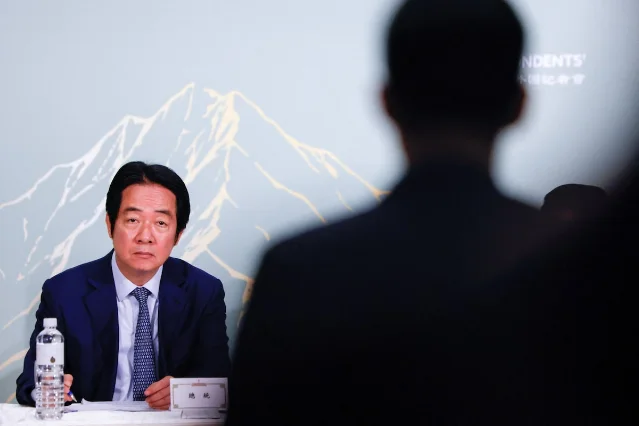
The commercial risk is not a new blockade signal today. It is procurement latency. Taiwan's opposition-dominated parliament only approved two-thirds of Lai's proposed $40 billion supplementary defence budget last month, cutting the portion intended for drones and domestically produced weapons. 2 For chip, server and electronics buyers, the working assumption should remain unchanged: Taiwan contingency planning is less about one speech and more about whether U.S. approvals and Taiwan's domestic budget process keep pace with PLA pressure.
3. Ukraine tries to turn momentum into weapons flows
- Sweden, Norway and Canada plan to announce a PURL package supplying Ukraine with U.S. weapons, and Sweden put its contribution at $108 million. 3
- Ukraine's defence minister said Kyiv is seeking an additional $20 billion from allies, on top of nearly $40 billion already announced. 10
- Reuters reported that Azov drones struck substations, repair facilities and a sanctioned ship in Mariupol's strategic seaport last week, as part of Ukraine's mid-range campaign against Russian logistics. 11
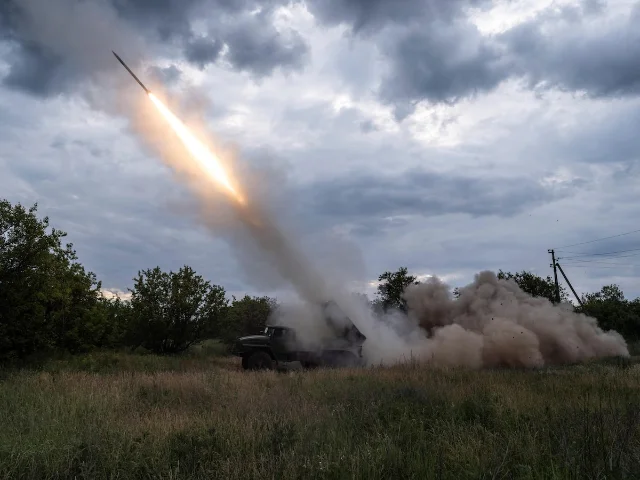
The procurement read is that allied money is being steered toward specific bottlenecks: extended-range artillery, Ukrainian drones, PURL purchases and air defence. 10 The logistics read is separate but connected: Ukraine is trying to impose recurring transport costs on Russia by hitting fuel and cargo nodes around Mariupol, Donetsk routes and the southern land bridge. 11 For defence suppliers, the signal is sustained demand for interceptors, drones, sensors and repair capacity rather than a short-cycle ammunition spike.
4. U.S.-China tech tension shifts from blacklists to operating rules
- Trump said Apple has agreed to work with Intel to design and manufacture chips in the United States. 4
- Reuters reported that the administration has been stepping up efforts to secure U.S. semiconductor and critical-minerals supply chains, including equity stakes in companies to reduce reliance on China. 4
- JPMorgan has stopped Hong Kong staff from accessing Anthropic's AI models, the Financial Times reported; Reuters said it could not immediately verify the report. 5
The supply-chain effect is diffuse but real. Apple remains heavily reliant on TSMC, whose advanced lines are in demand from AI chipmakers, while an Intel contract would give Intel demand from a major electronics customer and strengthen a manufacturing business that has lagged TSMC. 4 In financial services, AI governance is becoming a location issue: Reuters said U.S.-built AI models are unavailable in mainland China, while Hong Kong has remained a market where some models operate under limits set by U.S. companies. 5 That points to compliance fragmentation by office, model and data class.
5. China's trade-finance push widens through Africa and chokepoint workarounds
- China-Africa trade rose nearly 18% last year, and Beijing's tariff cuts on imports from 53 African countries are expected to increase flows and yuan-denominated settlements. 6
- Standard Bank became the first African commercial bank to connect to China's CIPS in November and processed $500 million in the first four months. 6
- Thailand has revived a 1 trillion baht, or $30.45 billion, Land Bridge plan linking Chumphon and Ranong as an alternative to the Malacca Strait. 12
This is the slower geopolitical story under today's oil move. Beijing's yuan settlement push does not replace the dollar now; Standard Chartered Kenya's CEO told Reuters he sees it as complementary. 6 But exporters, banks and borrowers are being given more reasons to invoice or refinance in yuan where China is the main buyer or lender. On the physical side, Thailand's corridor faces local opposition, uncertain investor interest and double-handling costs, but its renewed political appeal shows how Hormuz and Malacca risk are now part of logistics planning, not only naval strategy. 12
Watch points for the next 24 hours
- Whether Friday's Buergenstock talks produce operating details for Hormuz transit, insurance and sanctions waivers.
- Whether Washington signals a timeline for Taiwan arms approvals after Lai's public appeal.
- Whether the Ukraine Defense Contact Group turns the $20 billion ask into dated commitments.
- Whether more banks restrict U.S. AI model access in Hong Kong after JPMorgan and Goldman Sachs moves.
- Whether oil holds below $80 once shipowners and insurers update their Gulf risk pricing.
Fuentes de referencia
- 1Oil falls to 3-1/2-month low after U.S., Iran sign ceasefire deal
- 2Taiwan not "provoking" China, hopes new US arms sale package can be approved soon, president says
- 3Sweden, Norway and Canada to announce defence package for Ukraine, Sweden says
- 4Trump says Apple to partner with Intel on US chip design, production
- 5JPMorgan blocks Anthropic AI access for Hong Kong staff, FT reports
- 6China's African tariff removals, trade surge spur yuan adoption
- 7Switzerland says talks planned for Friday between Iran and U.S.
- 8U.S.-Iran deal sparks record highs for Asian stocks, drags on oil
- 9Germany deploys ship to Red Sea for possible Hormuz mission, minister says
- 10Ukraine working on additional $20 billion military aid from allies, defence minister says
- 11Ukraine's Azov fighters were forced from Mariupol. Now they're hitting back
- 12Exclusive: Thailand revives $30 bln coast-to-coast corridor to rival Malacca Strait
Añade más opiniones o contexto en torno a este contenido.