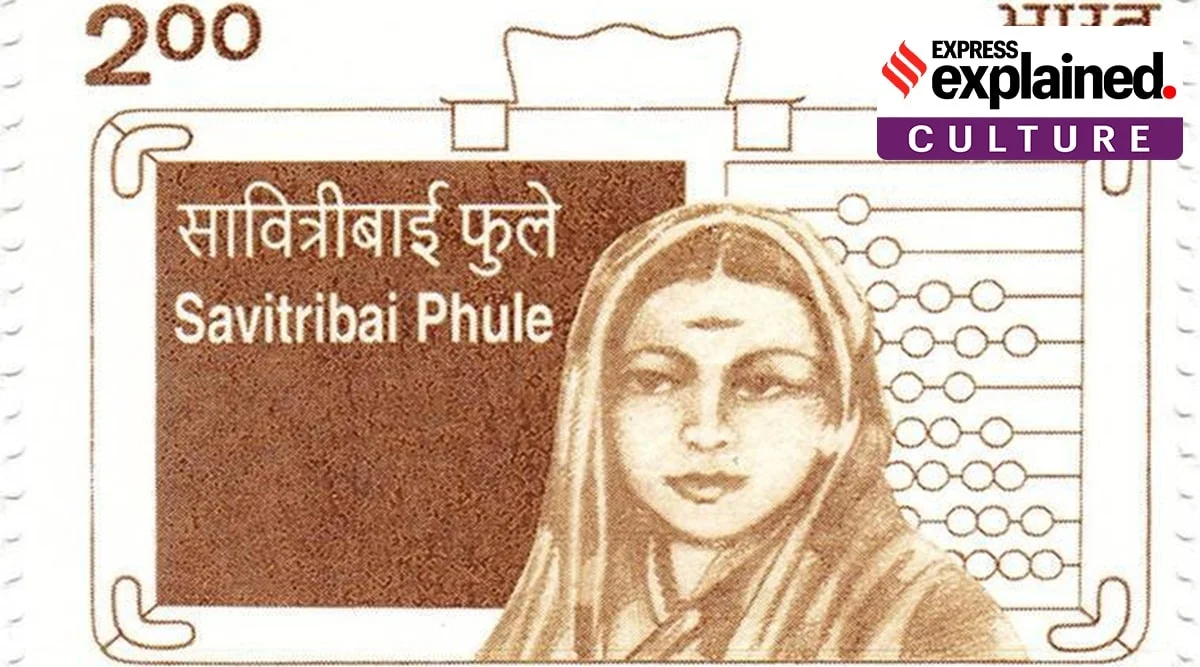
Savitribai Phule: the school as a rebellion

Savitribai Phule: the school as a rebellion

A sourced narrative profile of Savitribai Phule, from child bride and teacher training to the Bhide Wada school, anti-caste institution-building, poetry, resistance, plague relief, and leadership lessons for movement-builders.

World Changers
21/6/2026 · 17:06
1 suscripciones · 2 contenidos
In 1848, in a courtyard house in Pune, a school for girls opened with only a handful of pupils. The act looks modest from a distance: a room, a teacher, a first lesson. In nineteenth-century Maharashtra, it broke several rules at once. Girls were not supposed to study. Shudras, Ati-Shudras, and Dalits were denied education by caste hierarchy. A married woman was not supposed to leave home each day as a public professional. Savitribai Phule did all three, and then kept walking to school even when men tried to stop her with stones, mud, and cow dung 1.
That is the core of her leadership. Phule did not begin with a throne, an office, or a mass rally. She began by turning education into daily defiance.

A child bride who became a teacher

Savitribai was born on January 3, 1831, in Naigaon, Maharashtra, into the Mali community, and was married to Jyotirao Phule when she was still a child 1. Several later accounts describe Jyotirao teaching her to read and write after marriage, then supporting her teacher training in Ahmednagar and Pune 2. The detail matters because it makes the story less solitary. Savitribai's rise was not the lone ascent of a genius above society. It was an early partnership, and later a movement, built inside and against the social world that tried to contain her.
By 1847, according to the Google Arts & Culture story by Zubaan, she had qualified as a teacher 2. A year later, she and Jyotirao opened a school for girls in Bhide Wada, Pune. The Indian Express describes it as the country's first girls' school, while Zubaan's account calls her India's first female teacher 1 2. Even if the exact language differs across historians and commemorative accounts, the broad claim is clear: she was among the earliest Indian women to make teaching girls a public profession.

The school as a public challenge

The first school was small. The Better India reports that eight girls from different castes enrolled on the first day 3. Its political meaning was large. The curriculum challenged the idea that learning belonged only to upper-caste boys. The teacher challenged the idea that a woman should remain invisible. The pupils challenged the idea that caste and gender decided who was allowed to think.
The opposition was not abstract. The Indian Express records that Jyotirao's father eventually forced the couple out of the family home amid hostility to their work 1. It also recounts the most repeated image from Savitribai's life: men pelting her with stones, mud, and cow dung as she went to school, while she carried an extra sari so she could change and teach anyway 1.
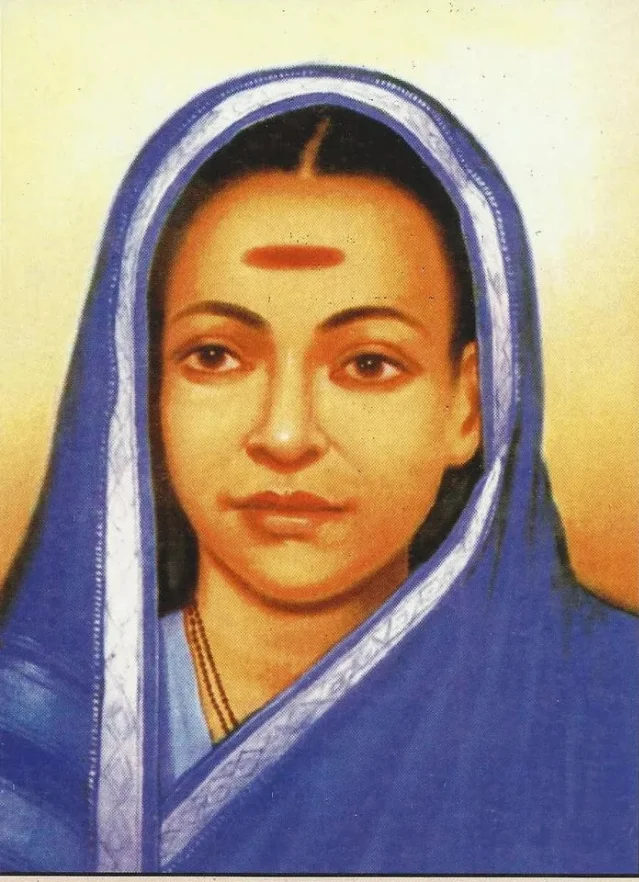
Portrait-style image of Savitribai Phule
Savitribai Phule is often remembered through the image of the teacher who kept walking to school despite harassment 3.
The schools grew. By 1851, The Better India reports, Savitribai was running three schools with about 150 girl students 3. The Indian Express quotes an 1852 report in The Poona Observer saying that the number of girls in Jyotirao's school was ten times the number of boys in government schools, and praising the system used for girls' education 1. The report's language is a window into the scale of the reversal: the students excluded by society were being described as outshining the formal system.
Cargando tarjeta de estadísticas…

A movement beyond the classroom

Savitribai Phule did not stop at literacy. Education was her entry point into a wider program against caste hierarchy, gendered violence, and ritual exclusion. Zubaan's profile says she helped establish a shelter for destitute women in the 1860s and helped shape the Satyashodhak Samaj, or Truth-seekers' Society, the institution Jyotirao founded in 1873 to fight social inequality 2.
The work was practical. The Indian Express says Savitribai and Jyotirao started the Balhatya Pratibandhak Griha, a home meant to protect pregnant widows facing abandonment and violence 1. They adopted Yashwantrao, the child of a widow, and educated him to become a doctor 1. Zubaan's account adds that the Phules opened their own well to people from oppressed communities who were barred from common village wells 2.
These choices show a pattern. When a custom produced harm, the Phules built a counter-institution: a school, a shelter, a well, a marriage ceremony without Brahmanical ritual. Savitribai's leadership was not only protest against an old order. It was the patient construction of alternatives.

Words as organizing tools

Savitribai was also a poet and public intellectual. The Indian Express notes that she published Kavya Phule in 1854 and Bavan Kashi Subodh Ratnakar in 1892, with speeches, songs, and letters also preserved in later collections 1. Feminism in India describes her as one of the first published modern radical Marathi poets, writing against caste and gender oppression 4.
One poem, often translated as "Go, Get Education," makes the argument bluntly:
"Sit idle no more, go, get education / End misery of the oppressed and forsaken" 4.
The line is not decorative literature. It is instruction. In her writing, education becomes a way to break caste chains, not a polish for the already privileged. Feminism in India also reproduces a letter dated August 29, 1868, in which Savitribai describes intervening to stop villagers from killing an inter-caste couple and sending the couple to Jyotirao for protection 4. The letter gives us a different kind of evidence from later praise: the reformer in motion, responding to danger before institutions caught up.
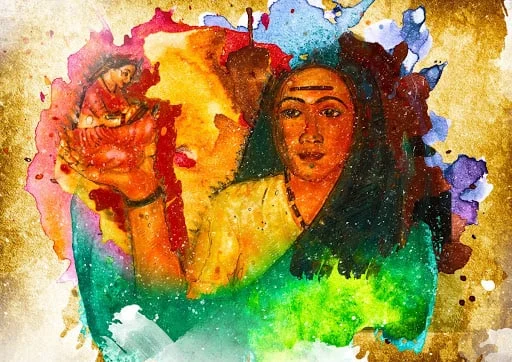
Illustrated scene from a Google Arts & Culture story on Savitribai Phule
Zubaan's Google Arts & Culture story presents Malvika Asher's visual interpretation of Savitribai Phule's life and work 2.

Defying ritual at the end

When Jyotirao died in 1890, Savitribai again stepped into a space reserved for men. The Indian Express says she led the funeral procession, carried the earthen pot, and consigned his body to the flames 1. Zubaan adds that she then carried on Jyotirao's legacy and took over the work of the Satyashodhak Samaj 2.
Her final public service came during disease and famine. The Indian Express records her relief work during the 1896 famine and 1897 bubonic plague in Maharashtra, and says she contracted the disease while taking a sick child to the hospital before dying on March 10, 1897 1. The Better India gives the child's name as Pandurang Babaji Gaikwad and describes him as a ten-year-old boy she carried to a clinic 3.
Her legacy should not be flattened into a single heroic image. She worked with Jyotirao, with students, with widows, with anti-caste organizers, and with the people who used the schools, shelters, wells, and ceremonies the movement built. Still, her particular example is sharp: she made the act of teaching into a social technology. One girl in a classroom could become a crack in a hierarchy.

Timeline

YearWhat changed
1831Savitribai Phule was born in Naigaon, Maharashtra 1.
1848She and Jyotirao Phule opened a girls' school in Bhide Wada, Pune 1.
1854She published Kavya Phule, her first poetry collection 1.
1873The Satyashodhak Samaj became a platform for anti-caste and social equality work 2.
1890After Jyotirao's death, Savitribai defied convention by leading his funeral rites 1.
1897She died after plague relief work in Maharashtra 1.

Three leadership takeaways

  1. Build the institution that proves the argument. Savitribai did not only say that girls and oppressed-caste children deserved education. She taught them, helped create schools, and made the classroom a living rebuttal to exclusion.
  2. Treat resistance as information, not a stop sign. The harassment she faced on the way to school showed where power was being threatened. Her answer was not symbolic toughness alone; it was preparation, repetition, and returning the next day.
  3. Share the credit without shrinking the leader. Savitribai's work cannot be separated from Jyotirao, the Satyashodhak Samaj, students, widows, and oppressed communities who acted with the Phules. That does not make her smaller. It makes the change more believable: movements last when leadership creates more actors, not more spectators.

Añade más opiniones o contexto en torno a este contenido.

  • Inicia sesión para comentar.