Ultra-processed foods by the numbers
US consumption, supply, and policy data, 2024–2026
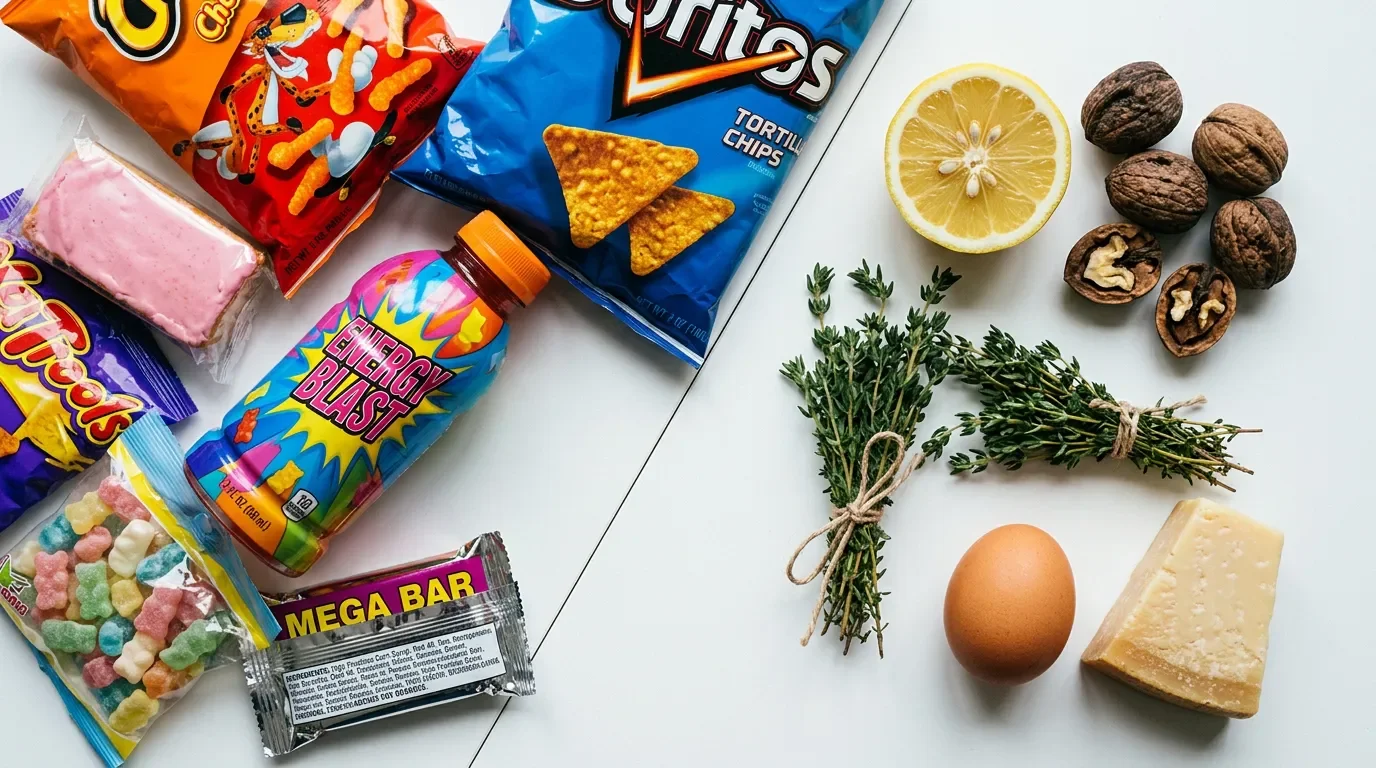
Merriam-Webster added *ultra-processed* as an adjective in May 2026 — weeks before the federal government agreed on a legal definition of the term. The article traces the word from its coinage in a 2009 Brazilian nutrition journal (Carlos Monteiro's NOVA classification paper, cited 548 times) through its 17-year migration from academic obscurity to political flashpoint, and explains how the MAHA movement turned a scientific term into a policy battleground. Includes pronunciation, etymology, a stats display of key consumption data, a near-synonym comparison table, and practical usage guidance.

| Term | Core meaning | Key difference |
|---|---|---|
| ultra-processed | Food made primarily from industrially refined ingredients with additives; cannot be made in a home kitchen | The sharpest, most science-rooted term; implies both the degree of processing and the purpose (industrial formulation) |
| processed | Any food that has been altered from its raw state — including freezing, canning, fermenting | Far broader; a pickled cucumber is processed; an Oreo is ultra-processed |
| junk food | Colloquial for food high in calories, sugar, fat, or salt, with low nutritional value | No formal definition; purely evaluative; implies low quality but not necessarily industrial origin |
| highly processed | Used in lay writing as a near-synonym for ultra-processed | Lacks the specific technical lineage of NOVA; fine in casual writing, but less precise in policy contexts |
Añade más opiniones o contexto en torno a este contenido.