22/6/2026 · 8:21
On This Day: The NFL's Most Feared Fullback Walked Into a Wrestling Ring and Won the World Title
On June 23, 1939, Chicago Bears fullback Bronko Nagurski — an NFL legend so physically dominant that Grantland Rice said 11 of him would be 'murder and massacre' — defeated 23-year-old Lou Thesz at Sam Houston Coliseum to win the National Wrestling Association World Heavyweight Championship. Thesz left with a broken kneecap. Nagurski held the title 258 days. The reason this was possible: NFL salaries in the 1930s were so poor that wrestling, one of the highest-paying live sports in America, was a rational off-season job. Both men ended up in multiple Halls of Fame across two entirely different sports.

On June 23, 1939, Bronko Nagurski — charter member of the Pro Football Hall of Fame, the Chicago Bears' 235-pound wrecking ball, a man about whom legendary sportswriter Grantland Rice wrote "11 Nagurskis would be something close to murder and massacre" — stepped through the ropes at Sam Houston Coliseum in Houston, Texas, and defeated Lou Thesz before 9,000 fans to win the National Wrestling Association (NWA) World Heavyweight Championship. 1
This was not a celebrity appearance. It was not a worked exhibition. Nagurski was a legitimate world heavyweight champion, recognized by a governing body, defending a title belt previously held by men who were trained to actually hurt you.
The night that broke Lou Thesz's kneecap
Thesz was 23 years old on the night he lost the title. That sounds young, but he had already been crowned world heavyweight wrestling champion at age 21 — the youngest in history at the time — after defeating Everett Marshall for the AWA (Boston version) title in December 1937. 2 He had won the NWA championship itself just 120 days earlier, on February 23, 1939 in St. Louis, again over Marshall.
In other words, Nagurski defeated the reigning world champion who had been champion for four months, who had been a champion since he was a teenager, and who his trainer Ed "Strangler" Lewis described as "lithe as a panther and exceptionally fast — he moves with the speed of a lightweight." 2
Thesz left Houston with a broken kneecap — a legitimate injury, not a storyline. It contributed to a prolonged convalescence that eventually took him out of competition through 1941–1944, during which he worked training dogs for the military program Dogs for Defense. 1
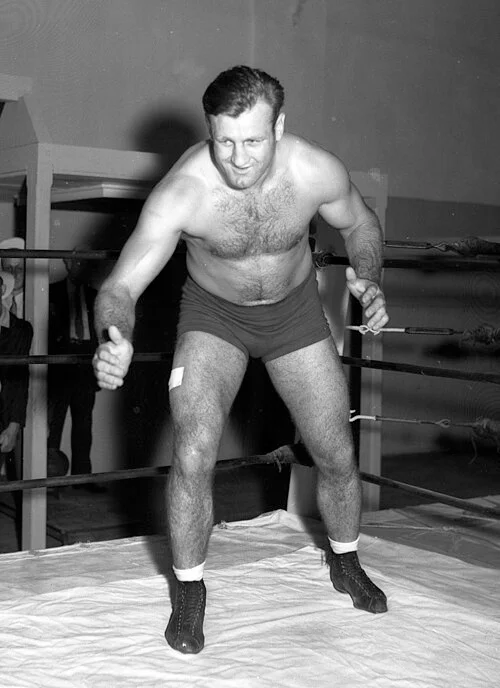
Nagurski held the NWA title for 258 days before losing it to Ray Steele in St. Louis on March 7, 1940. He later regained it for an 86-day second reign in 1941, giving him a combined 344 days as world heavyweight wrestling champion across two reigns. 4
How the NFL's most feared fullback ended up moonlighting in a wrestling ring
The simple answer: the NFL paid terribly.
In the 1930s, NFL salaries were modest enough that many players held off-season jobs. Professional wrestling, meanwhile, was one of the highest-grossing live entertainment forms in the United States. A top wrestler could earn in one night what an NFL player earned in a month. Nagurski's move wasn't unusual for the era — football players moonlighting in the ring was a regular feature of the sports calendar — but nobody did it quite the way he did.
The National Wrestling Hall of Fame records that Nagurski personally approached Lou Thesz about wrestling in the NFL off-season, using what the Hall describes as "his great athletic skills to become a huge draw in wrestling." 5 That framing — Nagurski seeking Thesz out — tells you something about the economics. Thesz was a bigger draw at the time; Nagurski needed the legitimacy of a real opponent, and Thesz needed the box office appeal of an NFL star.
As Cageside Seats put it: "Unlike modern times, where football players usually turn to wrestling after an injury ends their football career, during Nagurski's time it was common for football players to wrestle while still being football players." 6
The NWA championship itself was not a promotional prop. The National Wrestling Association — an offshoot of the National Boxing Association — was a governing body that sanctioned world titles and was recognized by state athletic commissions. Its title lineage in the late 1930s ran through legitimate "shooters": catch wrestlers (practitioners of a submission-and-pin grappling style) who could, if pressed, actually win a real fight. Thesz was trained by George Tragos, Ad Santel, and Lewis himself. Nagurski had the physical credentials to compete in that world. At 6-foot-2 and 235 pounds, he was already bigger than most NFL linemen of his era.
The legends about Nagurski's strength were not entirely legend. Grantland Rice, who had covered every major American sport for three decades, wrote: "Who would you pick to win a football game — 11 Jim Thorpes, 11 Glen Davises, 11 Red Granges, or 11 Bronko Nagurskis? The 11 Nagurskis would be a mop-up. It would be something close to murder and massacre." 3
He also wore a size-19½ NFL Championship ring — the largest ever recorded — and reportedly screwed gas caps on at his International Falls, Minnesota service station so tightly that customers had to return to have them removed. 3
What happened to both men after Houston
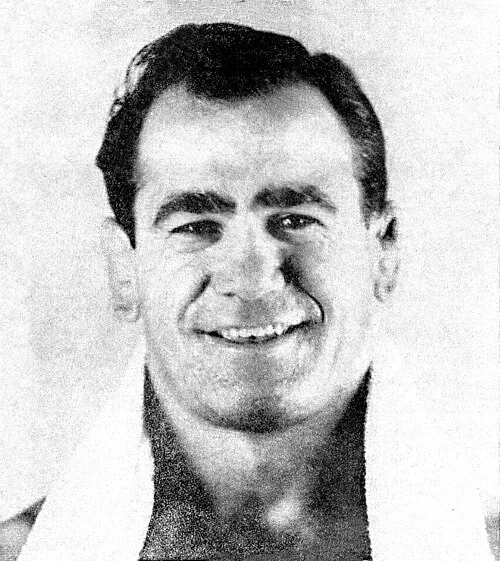
Nagurski held the NWA title through early 1940, then came back for a second reign in 1941. He had retired from football in 1937, but when World War II depleted NFL rosters in 1943, the Chicago Bears called him back. He was 35 years old, had been out of the game for six years, and promptly helped Chicago win a third NFL championship that season. He then returned to wrestling and kept competing until roughly 1958.
In 1963, Nagurski was named a charter member of the Pro Football Hall of Fame — one of 17 players selected in the inaugural class. He is also enshrined in the Wrestling Observer Newsletter Hall of Fame (1996 inaugural class), the George Tragos/Lou Thesz Professional Wrestling Hall of Fame (2009), and the Professional Wrestling Hall of Fame and Museum (2011). 3 The Bronko Nagurski Trophy, awarded annually to the best defensive player in college football, still bears his name.
Thesz, for his part, turned that broken-kneecap loss into the origin story of one of sports history's most dominant championship runs. Between 1948 and 1966, he held the NWA Worlds Heavyweight Championship across three reigns totaling 3,749 days — more combined days as world wrestling champion than anyone in history. He unified all competing world titles into a single lineage, trained a generation of Japanese catch wrestlers and early MMA fighters, and was inducted into the WWE Hall of Fame's Legacy Wing in 2016. In Japan, they called him "Tetsujin" — the Ironman. 2
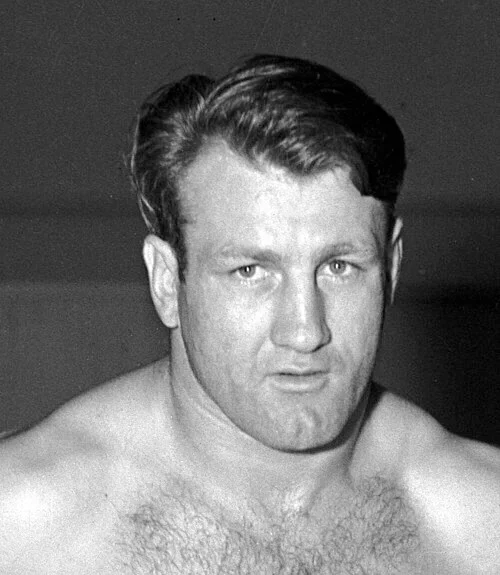
The June 23, 1939 match in Houston sits in the résumé of both men as a small asterisk — a footnote in Thesz's otherwise-dominant career, a footnote in Nagurski's football legend. But for one specific night, the most physically imposing player in the NFL walked into a wrestling ring, defeated a man who would go on to be considered the greatest wrestler who ever lived, and walked out as world heavyweight champion. The broken kneecap was real. The title was real. The crowd of 9,000 was real.
Sports specialization is a modern invention. In 1939, a football player being a world wrestling champion was just Tuesday.
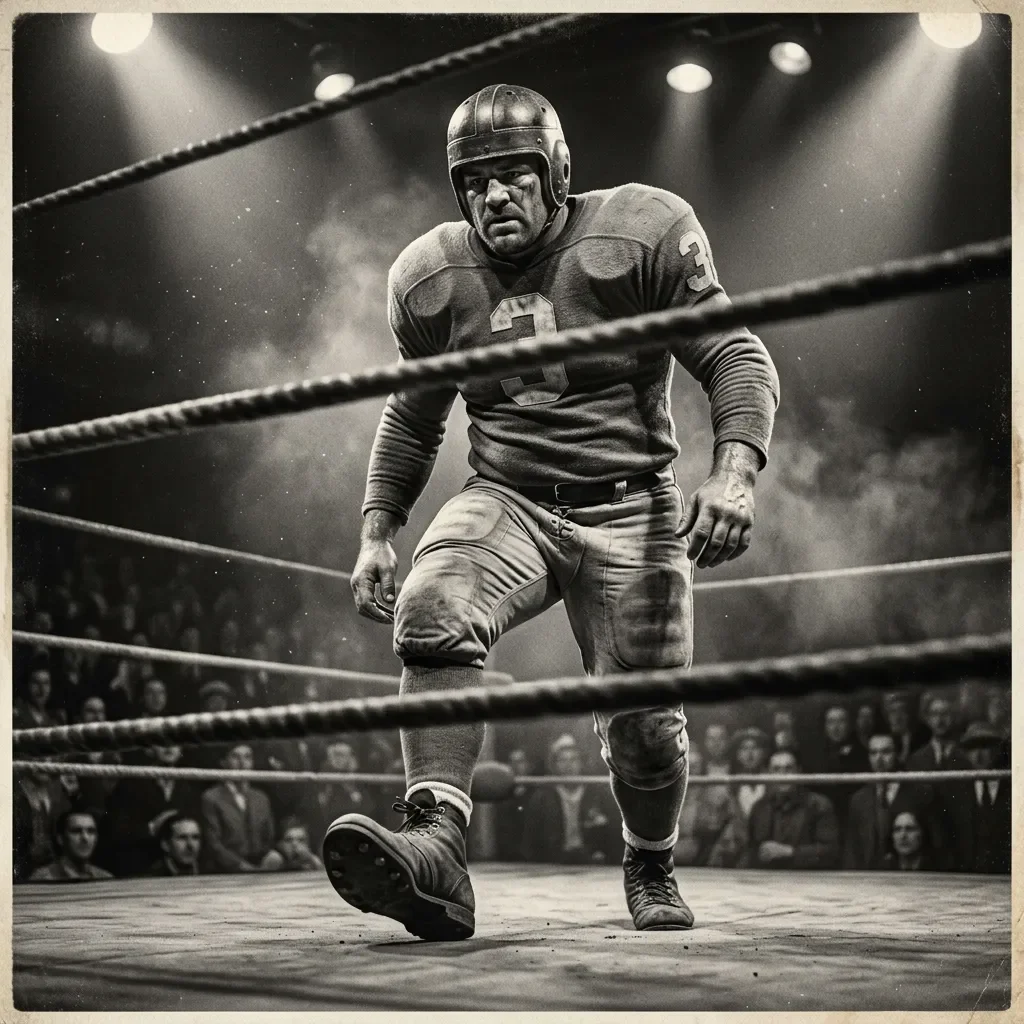
Cover image: AI-generated illustration
Añade más opiniones o contexto en torno a este contenido.