Chrysler's 41-day bankruptcy: how the Obama task force broke a five-party deadlock
In 41 days in spring 2009, the Obama Auto Task Force orchestrated Chrysler's Chapter 11 and asset sale to Fiat — breaking a five-party deadlock between the UAW, Fiat, secured creditors, and holdout pension funds. This case study dissects how deadline manufacturing, Section 363 BATNA engineering, and creditor coalition fracture turned a company with no stand-alone future into a $4.35 billion deal by 2014.

11/6/2026 · 16:04
1 suscripciones · 25 contenidos
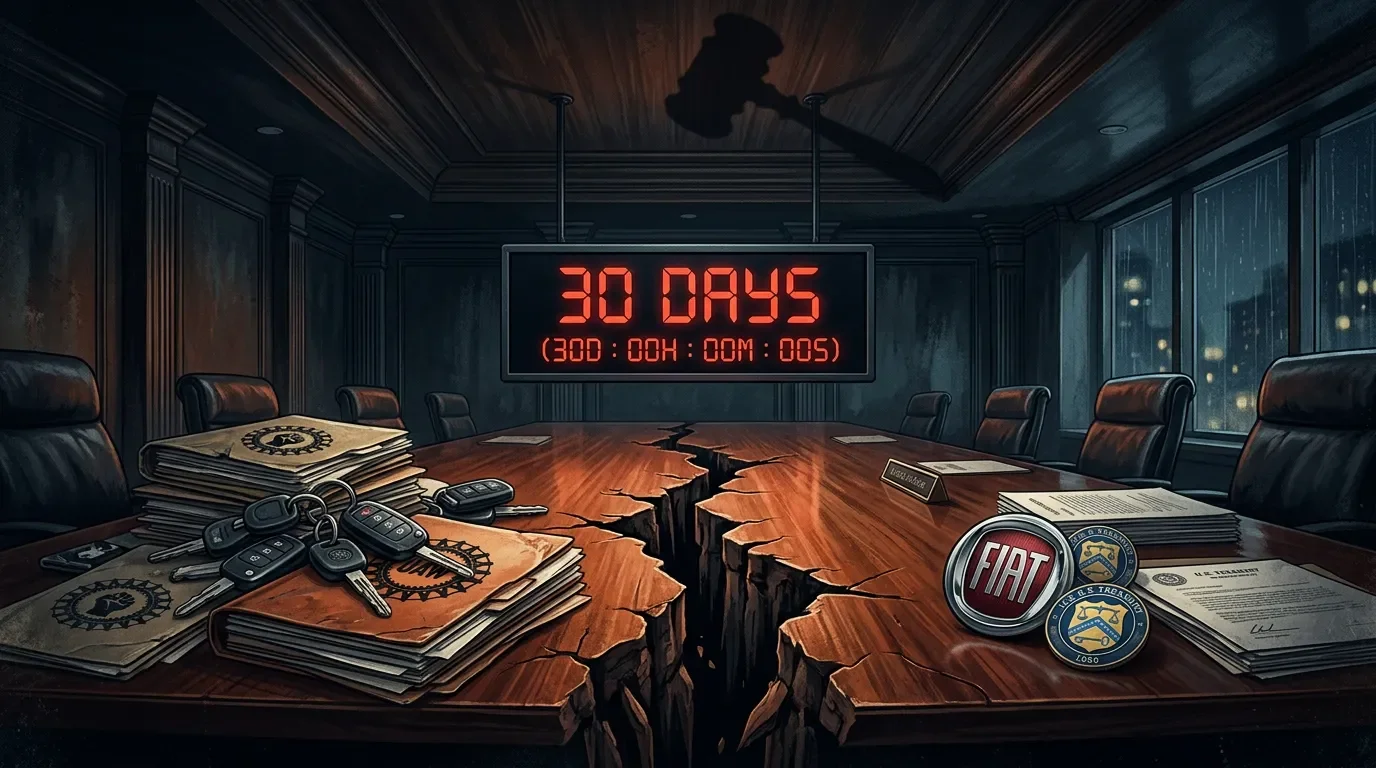
On March 30, 2009, Barack Obama stood before cameras and delivered what amounted to a structured ultimatum to the oldest of America's big-three automakers. Chrysler LLC, he said, was "unfortunately not viable as a stand-alone company." 1 It had 30 days to conclude an alliance with Fiat S.p.A., or the government would stop writing checks.
Forty-one days later — after a Chapter 11 filing, a contested courtroom battle, an emergency appeal to the U.S. Supreme Court, and a per curiam denial that cleared the way — Chrysler's asset sale to a new entity closed. 2 What looked, from the outside, like a financial rescue was actually a carefully engineered negotiation in which the government held almost every structural advantage — and knew it.
The parties and their positions
The table below maps each negotiating party's stated objectives, actual leverage, best alternative (BATNA), and the hidden preference that drove their real decision-making.
| Party | Stated objective | Real leverage | BATNA | Hidden preference |
|---|---|---|---|---|
| U.S. Auto Task Force (Rattner/Bloom) | Protect taxpayers, preserve jobs | Controls DIP financing, bankruptcy timeline, public narrative | Liquidation (~$800M recovery) — tolerable as a signal to other distressed firms | Complete a fast, visible restructuring before GM's larger crisis consumed political capital |
| UAW / Gettelfinger | Preserve jobs and retirement benefits | Strike threat, political relationships, congressional allies | Chrysler liquidation would wipe out ~38,000 active jobs and the VEBA's $8B claim | Accept equity-for-debt swap rather than lose both pension funding and employment |
| Fiat / Marchionne | Re-enter North America at minimal cost | Only viable industrial partner; walking away ends the deal | Walk away, pursue organic growth elsewhere | Gain a platform in the U.S. market for zero cash — using IP as currency, gaining real options via milestone-linked equity |
| Majority secured creditors (JPMorgan et al., ~$5.9B) | Maximize recovery on $6.9B first-lien debt | Senior security interest | Liquidation — estimated at ~$800M, or ~11¢ on the dollar | Avoid reputational damage from blocking a "national interest" deal; accept 29¢ and move on |
| Holdout secured creditors (Indiana funds, Oppenheimer, ABP, ~$1B) | Full contractual priority; 100¢ on the dollar | Litigation rights; public sympathy as "pension funds" | Supreme Court relief — long odds, but credible threat to delay the deal | Use legal process to improve settlement terms or establish precedent protecting senior creditors in future government-assisted bankruptcies |
Background: from Cerberus to TARP
Chrysler's ownership had changed hands just 18 months before the crisis arrived. In August 2007, Cerberus Capital Management — the private-equity firm led by John Snow — paid $7.4 billion to acquire 80.1% of Chrysler from Daimler AG, which retained 19.9%. 3 Cerberus installed former Home Depot CEO Robert Nardelli and injected $2 billion into the company in 2008, but the global financial crisis and a collapse in U.S. auto sales made further private investment untenable.
In December 2008, the U.S. Senate blocked a $14 billion auto-industry rescue bill by a 52-to-35 vote, forcing the Bush administration to act via executive authority. On December 19, President George W. Bush announced $13.4 billion in emergency TARP loans to GM and Chrysler, explicitly citing the financial crisis: "Allowing the U.S. auto industry to collapse is not a responsible action." 4 Chrysler received the first tranche — $4 billion — on January 2, 2009, eighteen days before Bush left office. The terms required a viability plan by March 31.
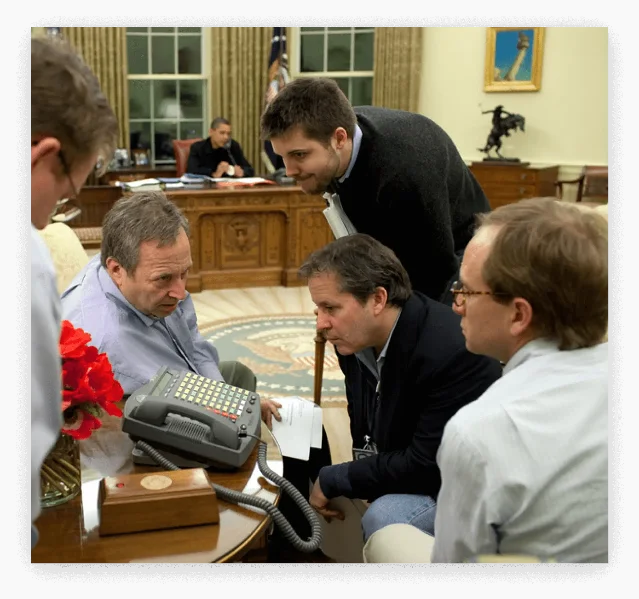
When the Obama administration took over, it convened a Presidential Task Force on the Auto Industry co-chaired by Treasury Secretary Timothy Geithner and National Economic Council director Lawrence Summers. 5 The operational leads were Steven Rattner, a Wall Street veteran, and Ron Bloom, a former investment banker turned union advisor. Their brief from the President, as Rattner later recalled, was blunt: "I want you to be tough and I want you to be commercial." 6
The ultimatum and the internal debate
The task force's review of Chrysler's business plan found a company that, in the words of one senior official, would "never generate positive cash flow" and was "never in a position, really, to pay down their debt." 1 The only path to viability that analysts could construct required an alliance with an industrial partner capable of supplying fuel-efficient small-car technology — Fiat, under CEO Sergio Marchionne, was the only credible candidate.
Internally, the vote on whether to save Chrysler was 4-to-3 against. Rattner, by his own account to NPR, held out against rescuing Chrysler until the last moment, ultimately concluding that "at this moment in the economy, staring down into the black hole of potentially an economic abyss, was not the moment to let Chrysler go when it could be saved." 7 Obama's economists also weighed the supply-chain calculus: roughly 66% of Chrysler's direct suppliers simultaneously supplied GM, and 54% supplied Ford — meaning a Chrysler liquidation could propagate through the sector. 6
The 30-day clock Obama announced on March 30 was not merely procedural. It was the opening move of a designed negotiation: a hard deadline that forced every other party to reveal its true reservation price before the government's DIP financing ran dry.
The negotiation table
The four-way bargaining that followed was, in effect, a linked series of bilateral deals — each dependent on the others closing.
The UAW's calculus. UAW President Ron Gettelfinger faced a constituency that had already watched the industry shed tens of thousands of jobs. The union's VEBA — a Voluntary Employee Beneficiary Association holding healthcare obligations for roughly 150,000 retirees — carried an $8 billion fixed claim against Chrysler. 2 Gettelfinger's negotiating position combined genuine grievance with pragmatic math: he knew the liquidation alternative left the VEBA with almost nothing. The deal he agreed to — swapping the $8B claim for a $4.6 billion unsecured note plus a 55% equity stake in New Chrysler — transferred "substantial risk" to retirees, in Bloom's words, but tied their fortunes to the new company's success. Active employees accepted a two-tier wage structure and reduced pension accruals.
The human stakes occasionally erupted at the table. During one bruising session, Gettelfinger reportedly told Marchionne: "You people are the people with two houses. And we're common people, we're average people. We're just trying to make a living, and too much is being asked of us." 8 Marchionne's reported response — an unprintable Italian-inflected expletive — conveyed the frustration of a partner being asked to underwrite concessions he had no legal obligation to fund.
Fiat's zero-cash entry. Marchionne's deal was structurally audacious. Under the Chrysler-Fiat non-binding letter of intent, Fiat committed neither cash nor debt guarantees. Instead, it contributed a free license to its intellectual property and engineering know-how "to capitalize Chrysler in exchange for 20% of the equity." 9 Three milestone-linked options would allow Fiat to earn additional equity — up to 35% — by producing a 40-mpg vehicle in a U.S. plant, establishing overseas distribution for Chrysler products, and manufacturing a next-generation engine in America. Marchionne's public leverage was credible but fragile: on April 15, he told the Toronto Globe and Mail he estimated a 50% chance the deal would fall apart without further union concessions — "Absolutely we are prepared to walk." 10 That statement was a negotiating move: it raised the cost of UAW intransigence while signaling to the task force that the clock was real.
Cerberus and Daimler: the exit. The existing owners had no leverage at all. Cerberus agreed to surrender its entire Chrysler equity stake, its share of $2 billion in second-lien debt, and the Auburn Hills, Michigan headquarters — transferring the HQ building to New Chrysler. 3 Daimler abandoned its 19.9% residual stake and paid $600 million to resolve its pension-guarantee obligations to the Pension Benefit Guaranty Corporation (PBGC). Both departures were essentially coerced: the government had made clear that without full capitulation from prior owners, there would be no DIP financing.
The secured creditor majority. The $6.9 billion first-lien syndicate, with JPMorgan Chase as administrative agent, held the most contractually senior claim. The task force's offer was $2 billion in cash — roughly 29 cents on the dollar. 2 Bloom's public defense of this number was precise: the court subsequently found $2 billion "far exceeded" the liquidation value of Chrysler's assets, estimated at roughly $800 million. That argument — that 29¢ on the dollar was generous relative to an $800M liquidation — was the government's anchor. Approximately 92.5% of the first-lien lenders voted to accept, leaving a residual holdout bloc representing roughly $1 billion in face value.
Designing the surgery: Section 363 as lever
When it became clear that unanimous secured-creditor consent was not achievable, the task force activated the mechanism it had designed as a contingency: a Section 363 asset sale under the U.S. Bankruptcy Code.
The concept — sometimes called a "surgical bankruptcy" — divided Chrysler's estate into two pieces. "Old Chrysler" retained the liabilities: the closed plants, environmental obligations, tort claims, and the holdouts' liens. "New Chrysler" (formally New CarCo Acquisition LLC, later Chrysler Group LLC) purchased virtually all operating assets for $2 billion in cash, free of encumbrances. 11 The $2 billion went entirely to the first-lien holders.
The 363 structure had been engineered in roughly one week by Cadwalader, Wickersham & Taft (lead counsel John Rapisardi) and Rothschild (financial advisor Todd Snyder), at the task force's direction — designed explicitly as the backstop if out-of-court negotiations failed. Rapisardi's justification was direct: "A 363 sale was fast, and the public would know this was out of bankruptcy." 12 His colleague Stephen Karotkin of Weil Gotshal, who led the parallel GM filing, put the stakes plainly: "We felt it was in the national interest to get something done." 12
Chrysler LLC filed Chapter 11 in the Southern District of New York (Judge Arthur J. Gonzalez presiding) on April 30, 2009. Operations continued throughout: employees were paid, suppliers were made whole via a $5 billion Treasury supplier support program (of which only $413 million was used, subsequently repaid in full), and the government issued an auto-warranty guarantee to reassure consumers. 9
On May 31, Judge Gonzalez approved the sale. His ruling addressed three critical legal challenges: it found the sale price exceeded liquidation value and therefore did not constitute an impermissible sub rosa reorganization plan; it found that the credit agreement's administrative-agent provision — naming JPMorgan as agent for the syndicate — bound minority holdout lenders who had "contracted away their right to act inconsistently"; and it extinguished tort claims, including future injury claims and state-law successor liability. 13
The holdout standoff
The holdout creditors — Indiana State Police Pension Trust, Indiana State Teachers Retirement Fund, OppenheimerFunds, and the Dutch pension fund Stichting Pensioenfonds ABP — held roughly $1 billion of the $6.9 billion first-lien debt. 3 Their attorney, Thomas Lauria of White & Case, became the public face of the opposition.
The White House chose confrontation. A senior official's statement named the holdouts as "a group of investment firms and hedge funds" that had "failed to accept reasonable offers to settle on their debt." 9 The framing was deliberate: by labeling pension-fund objectors as hedge funds, the administration made the holdouts the political villains in a story about workers and retirees. The Indiana funds fired back that they were, in fact, pension funds protecting retirees — but the narrative was already set.
Lauria appealed the SDNY ruling to the Second Circuit Court of Appeals on June 5. The Second Circuit affirmed unanimously the same day. He then filed an emergency application for a stay with the U.S. Supreme Court. 14 On June 8, Justice Ruth Bader Ginsburg — acting as the Circuit Justice for the Second Circuit — issued a brief administrative stay pending further review: a single sentence ordering that the bankruptcy court's orders were "stayed pending further order of the undersigned or of the Court." 15 For 24 hours, the deal was frozen.
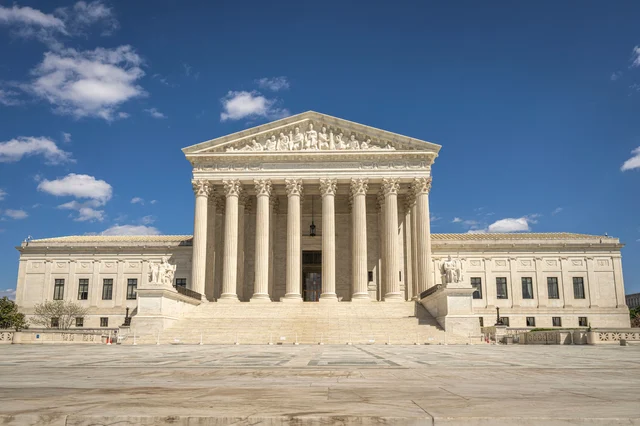
On June 9, the full Court issued a per curiam order denying all three stay applications — unanimously, without noted dissent. The opinion was careful to limit itself: "Our assessment of the stay factors here is based on the record and proceedings in this case alone." 16 The asset sale closed on June 10, 2009 — 41 days after the Chapter 11 filing. It was, at the time, one of the fastest completion timelines for a major industrial bankruptcy in U.S. history.
Rapisardi, who had watched every stage of the appeals, recalled the stakes with characteristic directness: "We knew full well that if something went wrong with the appellate court in Chrysler, it would not bode well for G.M. There was no plan B." 12
Outcome and aftermath
New Chrysler launched with the following ownership structure: UAW VEBA 55%, Fiat 20%, U.S. Treasury 8%, Canada and Ontario 2%. 9 Sergio Marchionne served simultaneously as CEO of both Fiat and Chrysler — an unusual dual mandate that reflected the partnership's fragility and Fiat's central importance to the restructuring's success. C. Robert Kidder was appointed non-executive chairman.
Fiat's path to full ownership moved faster than the milestone structure implied. By April 2011, Fiat had used cash to purchase additional equity tranches from the U.S. and Canadian governments. In June 2011, the U.S. Treasury sold its remaining 6.6% stake to Fiat for approximately $560 million. 17 On May 24, 2011, Chrysler repaid its remaining $5.1 billion in TARP loans, bringing total repayments to $10.6 billion — six years ahead of schedule. Against the $12.5 billion committed under the Automotive Industry Financing Program, the net taxpayer loss was approximately $1.3 billion by the CRS estimate (or up to $2.93 billion by academic estimates that include foregone interest). 18
The VEBA's equity stake ultimately proved valuable. In January 2014, Fiat acquired the trust's remaining 41.5% for $4.35 billion, structured as $1.75 billion from Fiat's own cash, $1.9 billion from a Chrysler special dividend, and $700 million in four equal annual installments. 19 VEBA committee chairman Robert Naftaly called it "a successful conclusion that will benefit the trust's retirees." Fiat used the threat of a Chrysler IPO — a path that would have let the VEBA sell only 25% at market, forcing a longer hold on the rest — to accelerate the trust's willingness to negotiate. 20 The combined entity, Fiat Chrysler Automobiles (FCA), was incorporated in the Netherlands and listed on the New York Stock Exchange.
Frameworks you can use
Framework 1: Deadline manufacturing
A deadline is only useful if it is credible and irrevocable — and the party setting it controls what happens when it expires. The task force's 30-day ultimatum worked because it was backed by a credible threat (the government would stop funding and allow liquidation), a plausible alternative (the 363 structure was already designed), and a public narrative that made reversal politically costly. The deadline also served as a forcing mechanism on parties who had structural incentives to delay: Fiat could negotiate indefinitely while collecting option value; the UAW's rank-and-file needed time to process major concessions; holdout creditors could extract value through delay alone. By making the deadline "very firm, very clear, unambiguous, unchangeable," as the administration official described it, the government collapsed those time-value advantages. 1
The actionable lesson: when you are the party with the most to lose from delay, design a constraint that makes delay costly for everyone. Set a deadline backed by a tangible trigger (a board vote, a financing commitment, a regulatory filing) — not merely a stated preference. The credibility of the deadline is a function of how much it costs you to miss it too.
Framework 2: Section 363 as a negotiating lever — designing the process to restructure BATNA
The task force's most consequential insight was that the negotiation's outcome would be determined by what each party's BATNA actually was — and that the BATNA could be engineered, not merely accepted. By designing the 363 structure before the bankruptcy filing, the government set the liquidation comparison point (approximately $800 million) as the floor against which every offer would be judged. The $2 billion cash offer to secured creditors looked like 29 cents on the dollar until it was compared to the liquidation floor — at which point it looked like 2.5 times better.
The 363 structure did something more subtle: it made the holdout strategy essentially self-defeating. A holdout creditor who blocked the sale through litigation would receive less — the liquidation value of collateral in a distressed wind-down — not more. The "melting ice cube" language Judge Gonzalez used in his opinion was not incidental rhetoric; it was the logical structure of the government's negotiating position. 11 In any negotiation, before accepting that the other side's BATNA is fixed, ask: what procedural, legal, or structural choices could change what the BATNA actually delivers?
Framework 3: Creditor coalition fracture — why unanimous consent is never needed
The secured creditor syndicate held $6.9 billion in first-lien claims. On paper, a sufficiently large coalition of holdouts could have delayed or blocked the 363 sale indefinitely. In practice, the deal closed because the task force never needed unanimous agreement — it only needed the majority.
Two mechanisms delivered that majority. First, the credit agreement's administrative agent clause meant that JPMorgan Chase, as agent, had authority to act on behalf of the syndicate as a whole — and the majority's agreement to the $2 billion cash offer bound the group. The court found that holdout lenders had "contracted away their right to act inconsistently." 13 Second, the government's political framing — naming holdouts publicly, contrasting them with workers making "unprecedented sacrifices" — raised the reputational cost of continued resistance for institutional creditors with other regulatory relationships to protect.
The transferable principle: in multi-party negotiations, look for the minimum coalition needed to execute your preferred outcome, then identify the procedural or structural mechanism that binds the majority. Unanimous consent is a veto right only if you have no way to work around it.
What to remember
- Deadlines create information. The 30-day ultimatum forced every party to reveal its true reservation price. Without a hard clock, Fiat had every incentive to wait; the UAW had every incentive to delay concessions; holdout creditors could extract value through inertia. The government manufactured urgency as a negotiating tool.
- Process design is substance. The 363 structure determined the outcome before most parties sat down. By engineering the bankruptcy mechanism as the backstop, the task force set the liquidation floor that made every other offer look reasonable by comparison. Controlling the process often matters more than controlling the position.
- Coalition fracture beats unanimous resistance. The government needed roughly 92.5% of first-lien creditors — not all of them. The administrative agent clause, combined with public reputational pressure, isolated the holdouts and rendered their legal strategy expensive to execute and unlikely to pay off.
- Credibility is the constraint on leverage. The task force's willingness to allow Chrysler to file Chapter 11 rather than extend the deadline indefinitely was what gave every threat force. A negotiator who will not execute a threatened alternative has no leverage at all.
Fuentes de referencia
- 1CBS News: Obama shortens Detroit's lifeline
- 2U.S. Treasury: Ron Bloom Testimony TG-222
- 3CRS Report R40003: U.S. Motor Vehicle Industry Federal Financial Assistance
- 4NYT/DealBook: Bush approves $17 billion auto bailout
- 5Wikipedia: Presidential Task Force on the Auto Industry
- 6NBER Working Paper 21000: Goolsbee & Krueger, A Retrospective Look at Rescuing and Restructuring
- 7NPR: Inside Obama's Auto Industry 'Overhaul'
- 8Wharton Knowledge: Road Trip — An Insider's Account of the Auto Industry Bailout
- 9White House: Obama Administration Auto Restructuring Initiative
- 10The Herald/AP: Fiat CEO — union concessions or no Chrysler deal
- 11Yale Journal of Financial Crises: Module C — Restructuring Chrysler through Bankruptcy (Nye, 2022)
- 12NYT/DealBook: 2 lawyers on the GM case tell their story
- 13Harvard Law Corp Gov Forum: Implications of the sale of Chrysler (Davis Polk, 2009)
- 14SCOTUSblog: Court clears Chrysler sale, without dissent
- 15NPR: Justice Ginsburg delays Chrysler sale to Fiat
- 16Indiana State Police Pension Trust v. Chrysler LLC, 556 U.S. 960 (2009)
- 17FactCheck.org: Chrysler paid in full?
- 18CRS Report R41940: TARP Assistance for Chrysler (2012)
- 19NYT/DealBook: Fiat completes acquisition of Chrysler
- 20Bloomberg: Fiat secures full control of Chrysler in $4.35 billion deal
Añade más opiniones o contexto en torno a este contenido.