
Datroway leads a landmark week: FDA approvals, May 22–29, 2026
Datroway (datopotamab deruxtecan-dlnk) set a new first-line standard of care for immunotherapy-ineligible metastatic TNBC with a 23.7-month median OS — the first agent ever to breach two years in this population. The week also produced the U.S.'s first-ever hepatitis D treatment (Hepcludex), a new BCG-naïve bladder cancer immunotherapy combo (Imfinzi+BCG), AbbVie's first hematology ADC (Decnupaz for ultra-rare BPDCN), pediatric inhaled insulin (Afrezza), and six AI/software device actions.

30/5/2026 · 6:28
2 suscripciones · 5 contenidos
This edition covers a full seven-day window including the Memorial Day holiday (Monday, May 26). The pace was uneven — nearly all announcements clustered in the final three days — but the substance was not. The week produced five drug decisions (two of them novel first-in-class or first-ever approvals), two device clearances, and two Breakthrough Device Designations. AstraZeneca again led sponsor volume with two separate approvals on the final days of the window. The headline, however, belongs to Datroway: the week's first action, on May 22, established a new first-line standard of care for a patient population that has had none for years.
All actions at a glance
| Date | Name | Sponsor | Indication / use | Action type |
|---|---|---|---|---|
| May 22 | Datroway (datopotamab deruxtecan-dlnk) | AstraZeneca / Daiichi Sankyo | 1L unresectable/metastatic TNBC, immunotherapy-ineligible | New indication (Priority Review + Project Orbis) |
| May 22 | Hepcludex (bulevirtide-gmod) 8.5 mg | Gilead Sciences | Chronic hepatitis D virus (HDV) — adults | Accelerated approval (first-ever U.S. HDV therapy) |
| May 22 | Differin Epiduo Acne Gel (adapalene 0.1% / BPO 2.5%) | Galderma | Acne vulgaris, patients ≥12 years | Rx-to-OTC switch |
| May 27 | Decnupaz (pivekimab sunirine-pvzy) | AbbVie | Adult BPDCN | Novel NME (Priority Review + BTD + Orphan Drug) |
| May 27 | SubtleHD(PET) | Subtle Medical | AI-powered PET image acceleration/enhancement | 510(k) clearance |
| May 27 | SPOT-MAS 10 (Gene Solutions) | Gene Solutions | Multi-cancer early detection blood test (10 types) | Breakthrough Device Designation |
| May 28 | Imfinzi (durvalumab) + BCG | AstraZeneca | BCG-naïve high-risk NMIBC — adults | New indication (Standard Review) |
| May 28 | Alife Health Embryo Predict | Alife Health | AI-assisted IVF embryo assessment | 510(k) clearance |
| May 28 | Coredio CPSE | Coredio | Non-invasive heart failure hemodynamic assessment | Breakthrough Device Designation |
| May 29 | Afrezza (insulin human) Inhalation Powder | MannKind | Mealtime insulin — children and adolescents ≥6 years | Label expansion |
| May 29 | Zaynich (cefepime / zidebactam) | Allecra Therapeutics | Complicated UTI including pyelonephritis | Novel NME |
| May 29 | Xocova (ensitrelvir) | Shionogi | COVID-19 post-exposure prophylaxis (PEP) | Novel NME |
| May 29 | NeuroPace ECoG Assistant | NeuroPace | AI-assisted epilepsy iEEG review — RNS System add-on | FDA approval (software device) |
| May 29 | SurGenTec ION-C Navigation | SurGenTec | Posterior cervical facet fixation — navigation-compatible | 510(k) clearance |
| May 29 | SKIA HEAD | SKIA | AR surgical navigation — head and neck procedures | 510(k) clearance |
ArteraAI Breast (digital pathology risk stratification tool, HR+/HER2− early breast cancer) received its FDA clearance on May 6, 2026 — outside this window — and is not covered here.
Drug approvals and label expansions
Datroway (datopotamab deruxtecan-dlnk) — first-line TNBC, immunotherapy-ineligible patients
FDA date: May 22, 2026 1
Drug: Datroway (datopotamab deruxtecan-dlnk) — a TROP2-directed antibody-drug conjugate (ADC) developed on Daiichi Sankyo's proprietary DXd platform. The molecule links a humanized anti-TROP2 IgG1 monoclonal antibody to the topoisomerase I inhibitor DXd (an exatecan derivative) via a tetrapeptide-based cleavable linker (drug-to-antibody ratio ~4:1). Upon binding TROP2-expressing tumor cells, the ADC internalizes, releases DXd intracellularly, and induces DNA damage leading to apoptotic cell death. This is Datroway's third FDA approval: it was first cleared for HR+/HER2− metastatic breast cancer in January 2025 and received accelerated approval for EGFR-mutant NSCLC in June 2025. 2
Sponsors: AstraZeneca and Daiichi Sankyo, under a July 2020 global development and commercialization agreement. Daiichi Sankyo retains exclusive rights in Japan and is responsible for manufacturing and supply. 3
Indication: Unresectable or metastatic triple-negative breast cancer (TNBC) in adults who are not candidates for PD-1/PD-L1 inhibitor therapy. This covers patients with PD-L1-negative tumors and those who are PD-L1-positive but cannot receive immunotherapy due to prior neoadjuvant immunotherapy exposure, comorbidities, or access barriers. Recommended dose: 6 mg/kg IV every 3 weeks (maximum 540 mg for patients ≥90 kg), continued until disease progression or unacceptable toxicity. The approval was granted under Priority Review and FDA's Project Orbis framework, with concurrent reviews by Australia's TGA, Brazil's ANVISA, Health Canada, Singapore's HSA, and Swissmedic. 1
Pivotal trial — TROPION-Breast02 (NCT05374512), a global, randomized, open-label Phase 3 study conducted at 229 centers across 23 countries (enrollment May 2022–June 2024, n=644). 1 Patients with no prior advanced systemic therapy were randomized 1:1 to Datroway 6 mg/kg Q3W (n=323) or investigator's choice of chemotherapy (n=321; paclitaxel 28%, nab-paclitaxel 54%, capecitabine 2.2%, eribulin 11%, carboplatin 4.7%). Co-primary endpoints: BICR-assessed PFS and OS.
| Endpoint | Datroway | Chemotherapy | HR (95% CI) | p-value |
|---|---|---|---|---|
| Median PFS (RECIST v1.1) | 10.8 months (95% CI: 8.6–13.0) | 5.6 months (95% CI: 5.0–7.0) | 0.57 (0.47–0.69) | <0.0001 |
| Median OS | 23.7 months (95% CI: 19.8–25.6) | 18.7 months (95% CI: 16.0–21.8) | 0.79 (0.64–0.98) | 0.0290 |
| Confirmed ORR | 64% (95% CI: 58–69%) | 30% (95% CI: 25–36%) | — | — |
| Median DOR | 12.3 months | 7.1 months | — | — |
The 23.7-month median OS with Datroway is the first time any agent has demonstrated a median OS exceeding two years in first-line metastatic TNBC among patients ineligible for immunotherapy. 3 NCCN Guidelines (May 2026 update) have incorporated Datroway as a Category 1 Preferred first-line option for this patient population. 3 Trial results were first presented at ESMO 2025 (September 2025) and published in Annals of Oncology on April 3, 2026.
Safety: In TROPION-Breast02, any-grade TRAEs occurred in 93% of Datroway patients vs. 83% on chemotherapy; Grade ≥3 TRAEs in 33% vs. 29%. Despite Datroway's longer median treatment duration (8.5 vs. 4.1 months), the discontinuation-due-to-AE rate was lower (4% vs. 7%), and no treatment-related deaths were reported in either arm. 4 Key labeled warnings include ILD/pneumonitis (3%, mostly low-grade), ocular adverse events (dry eye 24%, keratitis), and stomatitis (57% any-grade, the most common event). Patient-reported outcomes showed improvements in pain and physical function relative to chemotherapy. 4
"Datopotamab deruxtecan is the first and only medicine to significantly prolong overall survival in the 1st-line setting compared to chemotherapy in patients with metastatic triple-negative breast cancer who are not candidates for immunotherapy. This approval will bring a much-needed treatment option for these patients."— Tiffany A. Traina, MD, Director, TNBC Clinical Research Program, Memorial Sloan Kettering Cancer Center; TROPION-Breast02 investigator 3
"For seven out of 10 patients with metastatic triple-negative breast cancer who are not candidates for immunotherapy, chemotherapy has remained the only treatment option. Today's approval of Datroway means that for the first time, these patients will have a new standard of care beyond traditional chemotherapy at the outset of their treatment."— Arlene Brothers, Executive Director, Triple Negative Breast Cancer Foundation 3
Disease burden and market: TNBC accounts for approximately 15% of all breast cancers; roughly 32,000–48,000 new TNBC cases are diagnosed annually in the United States, with approximately 11,000 patients receiving first-line treatment each year for metastatic disease. 3 Around 70% of metastatic TNBC patients are not candidates for PD-1/PD-L1 inhibitors, leaving roughly 7,700 first-line patients per year in Datroway's addressable U.S. pool. 3 Pembrolizumab (Keytruda, Merck) is the primary comparator for the PD-L1-positive segment and does not compete directly in the immunotherapy-ineligible group. Trodelvy (sacituzumab govitecan, Gilead) — the only other FDA-approved TROP2-ADC for breast cancer — carries a second-line and beyond metastatic TNBC indication; two Gilead trials (ASCENT-03 and ASCENT-04) targeting first-line settings are ongoing. 5 Jefferies has estimated Datroway's annual peak sales at approximately $1.9 billion across indications, with some broader analyses projecting a $4–5 billion ceiling across the full pipeline. 5 U.S. pricing for the TNBC indication had not been publicly disclosed as of this publication. AZN (Nasdaq) closed at $187.03 on the approval date, down 1.4% from the prior session, following a ~4.5% run-up over the preceding week. 6

Hepcludex (bulevirtide-gmod) — first FDA-approved treatment for chronic hepatitis D
FDA date: May 22, 2026 7
Drug: Hepcludex (bulevirtide-gmod) 8.5 mg subcutaneous injection — a first-in-class viral entry inhibitor. Bulevirtide binds the NTCP (sodium taurocholate cotransporting polypeptide) receptor on hepatocyte surfaces, blocking the entry of both HDV and HBV into liver cells. It carries a boxed warning: abrupt discontinuation can trigger severe hepatitis B and D flares, particularly in patients with cirrhosis, requiring hepatic function monitoring, HBV DNA, and HDV RNA testing for at least six months post-treatment. 7 The approval is accelerated; continued approval may depend on verification of clinical benefit in confirmatory trials.
Sponsor: Gilead Sciences, which acquired the drug's developer, MYR GmbH (Germany), in December 2020 for approximately €1.15 billion (~$1.39B) upfront plus up to €300 million (~$360M) in FDA approval milestones. 8 The 2026 FDA approval triggers those milestone payments. Hepcludex received EMA conditional marketing authorization in July 2020 and has been available in the EU since then.
Indication: Chronic hepatitis delta virus (HDV) infection in adults without cirrhosis or with compensated cirrhosis. HDV — a defective RNA satellite virus requiring HBV co-infection to replicate — is the most severe form of viral hepatitis; 5-year mortality in patients with cirrhosis can reach 50%. 7 The FDA previously issued a complete response letter in October 2022, following an original BLA submission in November 2021; this May 2026 approval comes more than four years after that initial filing. 7
Clinical basis — MYR301 Phase 3, Week 48: Hepcludex achieved a combined virologic and biochemical response (HDV RNA reduction plus ALT normalization) in 48% of patients vs. 2% in the delayed treatment control arm. 7 Continued treatment through Week 144 maintained durable responses. The most common adverse reactions (≥10%): injection site reactions, headache, abdominal pain, fatigue, and pruritus.
"The approval of Hepcludex represents a historic milestone for people living with HDV in the United States, marking the first FDA-approved treatment for HDV."— Dietmar Berger, MD, PhD, Chief Medical Officer, Gilead Sciences 7
FDA Acting Director of the Office of Infectious Diseases Wendy Carter stated that the approval "fills a critical treatment gap" for a disease that previously had no FDA-approved therapy. 9
Commercial context: An estimated 40,000–80,000 Americans have chronic HDV (representing 2–4% of the chronic HBV-infected population in the U.S.); globally, at least 12 million people are co-infected. 7 The HDV market is small and currently has no approved competitor. GILD (Nasdaq) closed at $134.36 on the approval date, up 2.96% from the prior session; Maxim analyst Michael Okunewitch had upgraded the stock to Buy at a $165 target price on May 21, the day before the approval, citing core business growth and pipeline assets. 10 U.S. pricing had not been disclosed as of publication.
Decnupaz (pivekimab sunirine-pvzy) — first outpatient-initiable ADC for an ultra-rare blood cancer
FDA date: May 27, 2026 11
Drug: Decnupaz (pivekimab sunirine-pvzy) — a CD123-targeted ADC that delivers an indolinobenzodiazepine pseudodimer (IGN) DNA-alkylating payload to CD123-expressing tumor cells. It is the first ADC approved for blastic plasmacytoid dendritic cell neoplasm (BPDCN) and AbbVie's first approved ADC in hematologic oncology. The drug originated at ImmunoGen (code name IMGN632) and was acquired by AbbVie through its $10 billion purchase of ImmunoGen, announced November 2023 and completed February 2024. 12 Recommended dose: 0.045 mg/kg IV over 15–30 minutes every 3 weeks (21-day cycle). Pre-medication with corticosteroids and antihistamines is required. The label carries a boxed warning for hepatotoxicity, including veno-occlusive disease (VOD). FDA designations: Priority Review, Breakthrough Therapy (October 2020), Orphan Drug. 11
Sponsor: AbbVie Inc. (NYSE: ABBV). AbbVie currently markets three commercial ADCs: Elahere (ovarian cancer), Emrelis (approved May 2025 for NSCLC), and Decnupaz.
Indication: Treatment of adult patients with BPDCN — an aggressive and ultra-rare hematologic malignancy arising from plasmacytoid dendritic cell precursors. Annual U.S. incidence is approximately 0.04 per 100,000. 13 BPDCN typically presents in patients aged 60–70 with skin lesions that can rapidly spread to bone marrow, lymph nodes, and the central nervous system. Before this approval, the only FDA-approved targeted therapy for BPDCN was Elzonris (tagraxofusp, Stemline Therapeutics / Menarini Group), a CD123-targeted diphtheria toxin fusion protein approved in December 2018 that requires inpatient initiation due to capillary leak syndrome risk. 13 Decnupaz's outpatient-initiable profile offers a meaningful operational difference.
Clinical basis — CADENZA Phase 1/2 (NCT03386513), open-label, multicenter, single-arm: 11
| Population | n | CR/CRc rate | Median DOR | Patients bridged to SCT |
|---|---|---|---|---|
| Treatment-naive | 33 | 69.7% (95% CI: 51.3–84.4%) | 9.7 months | 39.4% (13/33) |
| Relapsed/refractory | 51 | 15.7% (95% CI: 7.0–28.6%) | 9.2 months | 11.8% (6/51) |
Most common adverse reactions (≥20%): edema, fatigue, musculoskeletal pain, bleeding, infusion-related reactions, nausea, diarrhea. Most common Grade 3/4 lab abnormalities (≥10%): neutropenia, thrombocytopenia, lymphopenia, leukopenia.
"Pivekimab sunirine-pvzy is the first and only CD123-targeting ADC that can be initiated in an outpatient setting, offering a meaningful benefit for BPDCN patients in need of new treatment alternatives."— Dr. Naveen Pemmaraju, Professor, Department of Leukemia, MD Anderson Cancer Center 13
Commercial context: BPDCN's global drug market was estimated at approximately $137 million in 2024; the Orphan Drug designation confers 7 years of U.S. market exclusivity. 14 U.S. list pricing had not been publicly disclosed as of publication. ABBV rose more than 1% in afternoon trading on May 27 following the announcement, though the stock was down approximately 5.7% year-to-date as of that date. 15
Imfinzi (durvalumab) + BCG — first new therapy for BCG-naïve high-risk bladder cancer in over 30 years
FDA date: May 28, 2026 16
Drug: Imfinzi (durvalumab) — a human anti-PD-L1 IgG1 monoclonal antibody that blocks PD-L1 binding to PD-1 and CD80, restoring anti-tumor immune responses. This is Imfinzi's second bladder cancer approval; its first, for muscle-invasive bladder cancer (MIBC) in combination with neoadjuvant chemotherapy and post-surgery monotherapy (NIAGARA trial), was granted in March 2025. The VOLGA trial testing Imfinzi plus Padcev (enfortumab vedotin) in perioperative MIBC also recently reported positive results. Recommended dose: 1,500 mg every 4 weeks IV (patients ≥30 kg), combined with BCG induction and maintenance therapy for up to 13 cycles. Regulatory pathway: Standard Review. 16
Sponsor: AstraZeneca. Imfinzi achieved global sales of $6.1 billion in 2025 (+37% year-over-year) and $1.7 billion in Q1 2026 (+30% year-over-year). Since its first U.S. approval in 2017 for urothelial cancer (a 2021 withdrawal after a confirmatory trial failure in the metastatic setting), the NMIBC indication marks Imfinzi's first foothold in bladder cancer. 17 More than 414,000 patients have been treated with Imfinzi globally since 2017. 18
Indication: Treatment of adults with BCG-naïve (never received BCG) high-risk non-muscle-invasive bladder cancer (NMIBC), combined with BCG induction and maintenance. NMIBC is bladder cancer confined to the bladder wall's inner lining; "high-risk" denotes features including high-grade disease, T1 stage, carcinoma in situ (CIS), or large multifocal tumors. Up to 80% of high-risk NMIBC patients experience disease recurrence within five years of standard BCG treatment, and more than 31,000 high-risk NMIBC patients were treated in the United States in 2024. 18 No new therapy had been approved for BCG-naïve high-risk NMIBC in over 30 years prior to this decision. 16 The nearest comparator is Keytruda (pembrolizumab, Merck), approved in 2020 for BCG-unresponsive high-risk NMIBC — a different, post-BCG-failure population.
Pivotal trial — POTOMAC Phase 3 (NCT03528694), randomized, open-label, global multicenter study (120+ centers, 12 countries), n=1,018, 1:1:1 randomization. Co-primary endpoint: investigator-assessed disease-free survival (DFS). 16
| Arm | Comparison | DFS HR (95% CI) | p-value | Median follow-up |
|---|---|---|---|---|
| Imfinzi + BCG induction + maintenance | vs. BCG induction + maintenance | 0.68 (0.50–0.93) | 0.0154 | 60.7 months |
The 32% reduction in risk of recurrence, progression, or death appeared within 4 months of treatment start and was maintained over the full 5-year follow-up; median DFS was not reached in either arm. POTOMAC results were presented at ESMO 2025 and published simultaneously in The Lancet. 18 Safety: no new signals emerged over 5+ years of follow-up. Imfinzi's rate of permanent discontinuation due to adverse events was 18%; serious adverse events occurred in 32% of patients. Adding Imfinzi did not impair patients' ability to complete BCG induction and maintenance. 18
"The durvalumab plus BCG regimen is the first new therapy approved in over 30 years for patients with BCG-naïve, high-risk non-muscle-invasive bladder cancer."— Dr. Neal Shore, Director, START Carolinas; Director, Carolina Urologic Research Center; POTOMAC co-primary investigator 18
Commercial context: Guggenheim Securities projected Imfinzi's U.S. peak sales in NMIBC at approximately $800 million by 2031, against a total NMIBC 7-market (7MM) addressable market of roughly $3 billion in 2025. 17 EU, Japanese, and other regulatory submissions are under review.
Afrezza (insulin human) — first inhaled mealtime insulin approved for children
FDA date: May 29, 2026 19
Drug: Afrezza (insulin human) Inhalation Powder — a rapid-onset inhaled mealtime insulin delivered via MannKind's Technosphere pulmonary delivery platform. First approved for adults in June 2014, Afrezza is now the first and only inhaled mealtime insulin approved for use in children and adolescents with diabetes. 19 It can be dosed at the start of a meal, without the advance planning required for subcutaneous rapid-acting insulin analogs. The drug is listed in the American Diabetes Association Standards of Care alongside multiple daily injection (MDI) and insulin pump therapy. 19
Sponsor: MannKind Corporation (Nasdaq: MNKD). Eligible patients can access Afrezza for $35 or less per month through the MannKind Cares program. MannKind reported Q1 2026 total revenues of $90.2 million (+15% year-over-year), with Afrezza net revenues of $15.3 million. Management has stated that capturing 10% of the pediatric insulin market would add approximately $150 million in annual net revenue. 20
New indication: Type 1 and Type 2 diabetes in patients 6 years of age and older (previously: adults 18 and older). More than 350,000 children and adolescents in the United States have diabetes, primarily Type 1. 19
Pivotal trial — INHALE-1 Phase 3 (NCT04974528), open-label randomized trial, n=230 (age 4–17), 26-week primary analysis; results published in Diabetes Care 2026;49(1):179–187. 21
| Endpoint | Result |
|---|---|
| HbA1c difference (Afrezza vs. subcutaneous comparator) | +0.18% (95% CI: −0.07 to +0.43; non-inferiority P=0.091) |
| CGM time-in-range (70–180 mg/dL) difference | −2.2% (95% CI: −7.0 to +2.7; P=0.38) |
| Serious hypoglycemia events | 2 (Afrezza) vs. 1 (comparator) |
| FEV1 change at 26 weeks | No significant difference (P=0.53) |
| Treatment satisfaction | Afrezza higher (P=0.004) |
| Weight/BMI percentile increase | Lower with Afrezza (P=0.009) |
The non-inferiority analysis did not reach statistical significance at the 0.05 level; the FDA approved the drug based on the overall data package including acceptable glucose control, no pulmonary function signal, and improved patient satisfaction and weight outcomes. 21 MNKD shares rose approximately 5% on the approval date. 20
Additional drug actions: Differin Epiduo OTC switch, Zaynich (cUTI), Xocova (COVID-19 PEP)
Three further drug approvals in the window have limited bearing on institutional pharmaceutical investment but are documented here for completeness.
Differin Epiduo Acne Gel (adapalene 0.1% / benzoyl peroxide 2.5%) — FDA approved an Rx-to-OTC switch on May 22, 2026, for Galderma (private). 22 The product combines a retinoid (adapalene) — whose 0.1% single-agent form (Differin Gel) has been OTC since 2017 — with 2.5% benzoyl peroxide, targeting patients 12 and older. The fixed combination demonstrated 12-week inflammatory lesion count reductions of up to 70.3% in Phase 3 trials. U.S. launch through major retailers (Walmart, Ulta, Target, Amazon) is expected in summer 2026. 22
Zaynich (cefepime / zidebactam) — FDA approved on May 29, 2026, for complicated urinary tract infections (cUTIs) including pyelonephritis caused by susceptible organisms. 23 Developed by Allecra Therapeutics, Zaynich combines a fourth-generation cephalosporin with a beta-lactam enhancer that restores activity against beta-lactamase-producing pathogens including carbapenem-resistant organisms. Full clinical data were not covered in this cycle's research units.
Xocova (ensitrelvir) — FDA approved on May 29, 2026, for post-exposure prophylaxis (PEP) against COVID-19 in individuals with confirmed exposure. 23 Developed by Shionogi & Co. (Japan); Xocova has been available in Japan under emergency authorization since 2022. Full clinical data for the PEP indication were not covered in this cycle's research units.
Medical device actions (May 22–29)
NeuroPace ECoG Assistant — FDA approves first AI iEEG review tool for epilepsy
FDA date: May 29, 2026 24
NeuroPace, Inc. (Nasdaq: NPCE) received FDA approval for ECoG Assistant, the first AI-powered intracranial EEG (iEEG) review tool for epilepsy — and NeuroPace's first AI-driven clinical software feature. ECoG Assistant is an add-on to NeuroPace's existing RNS System (PMA P100026, first approved 2013), integrated into the Patient Data Management System (PDMS); it does not require a new implant procedure. The AI model was trained on 124,450 expert-annotated long-term iEEG recordings and identifies electrographic seizures (ECoGs of Interest) with 93% sensitivity (benchmark: consensus of three certified epileptologists). 25 Three core functions: (1) Trends Report — one-click visualization of monthly ECoG of Interest counts; (2) Circadian Pattern Chart — ECoG distribution by time-of-day for trigger exploration; (3) AI-powered toggle in the ECoG Library for rapid event screening.
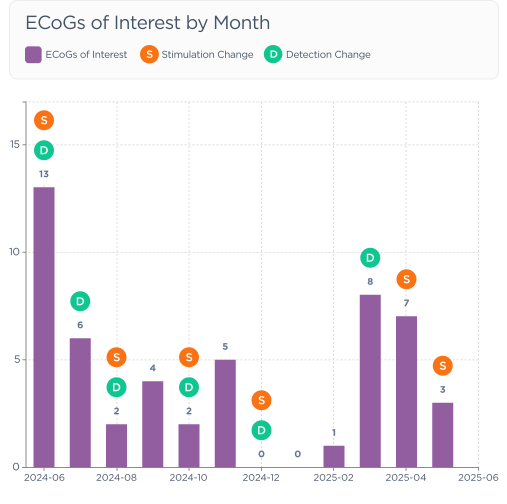
Context for the underlying platform: a 3-year post-market RNS System study (n=255, 32 U.S. centers) showed a median 82% reduction in seizure frequency, compared with historical controls for DBS (40%, n=101) and VNS (44%, n=93). 25 NeuroPace reported Q1 2026 RNS System revenues of $21.7 million (+20.1% year-over-year) and raised 2026 revenue guidance. 26 A next-generation cloud-based PDMS has been submitted to FDA and is expected to clear in Q2 2026. 24 ECoG Assistant was presented at the 2026 American Society for Stereotactic and Functional Neurosurgery (ASSFN) annual meeting in Cleveland beginning May 30. 26
"AI-driven insights offer the unique potential to improve the efficiency of epilepsy care now while building a platform that can unlock new opportunities over time to further personalize therapy and improve outcomes."— Joel Becker, CEO, NeuroPace 24
Other device clearances and Breakthrough Device Designations (May 27–29)
Five additional device actions in the window, all in AI or software-mediated imaging and diagnostics:
SubtleHD(PET) (Subtle Medical, Menlo Park, CA) — 510(k) clearance, May 27. AI-powered PET imaging acceleration and enhancement software; supports up to 75% scan time reduction and is compatible with all FDA-approved radiotracer agents, extending AI acceleration beyond traditional 18F-FDG to the broader molecular imaging portfolio. Already deployed on 1,300+ scanners globally. 27
Alife Health Embryo Predict (Alife Health, San Francisco, CA) — 510(k) clearance, May 28. AI-assisted IVF embryo evaluation tool analyzing Day 5/6/7 blastocyst images to provide supplemental scoring alongside standard morphological grading. Supported by a prospective, randomized, multicenter RCT (n=440, 7 U.S. centers). Studies have documented a 34.6% disagreement rate among fertility specialists selecting the optimal embryo for transfer (rising to 44% when ≥3 embryos are available). Also holds CE Mark. 28
Gene Solutions SPOT-MAS 10 (Gene Solutions, Singapore) — Breakthrough Device Designation, May 27. Multi-cancer early detection blood test using methylation analysis, fragmentomics, and machine learning to screen for 10 cancer types (breast, lung, liver, colorectal, gastric, ovarian, pancreatic, esophageal, endometrial, head and neck). Validated in the K-DETEK study (>9,000 asymptomatic participants); real-world use exceeds 100,000 cases. FDA BDD accelerates the regulatory pathway; Gene Solutions targets U.S. market entry by end of 2026. 29
Coredio CPSE (Coredio, Santa Clara, CA) — Breakthrough Device Designation (awarded March 2026; publicly announced May 28); also accepted into FDA's TAP program. Software-only SaMD platform using consumer smartwatch and standard blood pressure cuff for non-invasive heart failure hemodynamic assessment; evaluates LVEDP (left ventricular end-diastolic pressure), CVP (central venous pressure), SVR (systemic vascular resistance), and cardiac index via a physics-based digital twin combined with machine learning. Coredio was founded in 2023. 30
SurGenTec ION-C Navigation (SurGenTec, Boca Raton, FL) — 510(k) clearance, May 29. Navigation-compatible version of the ION-C posterior cervical facet fixation system; compatible with Medtronic StealthStation navigation platform. Zero-notch implant design for facet fixation in anatomically challenging or high-radiation cases. SurGenTec received a prior ION-C Facet Fixation System clearance in January 2026 and a TiLink SI joint fusion navigation clearance in April 2026. 31
SKIA HEAD (SKIA, Seoul, South Korea) — 510(k) clearance, May 29. Tablet-based AR surgical navigation system using Structure Sensor spatial mapping to project patient-specific 3D anatomical reconstructions from pre-operative CT/MRI onto the patient surface in real time; targeted at head and neck procedures. SKIA holds two Korean MFDS clearances (SKIA Body, SKIA Face) and has completed 80+ hernia surgeries in India. U.S. expansion planned via Structure partnership. 32
Market and investor context
AstraZeneca closed a second consecutive high-volume week with two approvals — Imfinzi+BCG and the Datroway TNBC label — following Enhertu and Baxfendy the prior week. The AZN stock pattern across both weeks was the same: pre-event appreciation followed by modest post-approval retracement. As of May 26–29, AZN traded in the $185–187 range, having given back roughly half of its pre-approval gains from the preceding week. 6 The analyst consensus target of approximately $220 (Guggenheim raised the London target from £155 to £160; one institutional desk raised the USD target from $109 to $219) reflects confidence in the ADC franchise but also embeds execution assumptions on pipeline programs through 2027. 6
Gilead's Hepcludex win is strategically meaningful but financially small at current diagnosed U.S. HDV patient counts. The more consequential Gilead catalyst this week is arguably the precedent it sets: the FDA finally accepting accelerated approval for a disease where the standard endpoint (virologic response) is a surrogate rather than a confirmed clinical outcome. The path that required more than four years from original BLA submission to approval suggests limited regulatory appetite for low-rigor endpoints in infectious disease outside extraordinary unmet need contexts.
The device segment's six-of-seven AI ratio in this window is not accidental. The FDA's Digital Health Center of Excellence has accelerated review timelines for SaMD with strong training datasets and pre-specified performance benchmarks. NeuroPace's 124,450-recording training set and 93% sensitivity benchmark are exactly the kind of documentation that has enabled faster device approvals in this category. Watch for the NAUTILUS IGE (idiopathic generalized epilepsy) PMA supplement — FDA asked for additional information and paused the review clock; a mid-2026 decision, if positive, would expand NeuroPace's addressable patient pool to a larger and less surgically complex population.
Key open items across this week's approvals: U.S. pricing for Datroway's TNBC indication, Hepcludex, and Decnupaz (all within the typical 4–8 week post-approval disclosure window); the Delaware federal court ruling on Janssen's preliminary injunction against Immgolis/Immgolis Intri (response deadline June 8); and the NeuroPace NAUTILUS IGE regulatory decision expected mid-2026.
Cover image generated for editorial use.
Fuentes de referencia
- 1FDA: FDA approves datopotamab deruxtecan-dlnk for unresectable or metastatic triple-negative breast cancer
- 2Drugs.com: Datroway FDA Approval History
- 3AstraZeneca: Datroway approved in the US as first TROP2-directed ADC for 1st-line TNBC
- 4Oncology Nursing News: Datopotamab deruxtecan improves survival outcomes in advanced TNBC
- 5P05.org: The Weekly Term Sheet (2026-W21)
- 6Simply Wall St: AZN — In-Market Oncology and U.S. Drug Pricing
- 7Drugs.com / Gilead Sciences (Business Wire): FDA Grants Accelerated Approval to Hepcludex
- 8Gilead Sciences: Gilead Sciences to Acquire MYR GmbH
- 9Drug Discovery News: Weekly Rundown
- 10Insider Monkey: Gilead (GILD) wins FDA approval for first HDV treatment Hepcludex
- 11FDA: FDA approves pivekimab sunirine-pvzy for BPDCN
- 12MedCity News: AbbVie's ADC Strategy Notches Another Win
- 13AbbVie: U.S. FDA Approves DECNUPAZ™
- 14Zacks: AbbVie Wins FDA Nod for Decnupaz
- 15Reuters: US FDA approves AbbVie's rare blood cancer drug
- 16FDA: FDA approves durvalumab in combination with BCG for high-risk NMIBC
- 17FiercePharma: AZ gains on Merck with a 2nd bladder cancer nod for Imfinzi
- 18AstraZeneca: IMFINZI approved in the US in first and only immunotherapy combination for BCG-naïve high-risk NMIBC
- 19MannKind (GlobeNewswire via Stock Titan): MannKind Announces FDA Approval of Afrezza
- 20Kavout: Did MannKind's Q1 2026 Earnings Report Signal a Turning Point
- 21Pharmacy Times: FDA Approves Afrezza Insulin Inhalation Powder for Children
- 22Dermatology Times: FDA Approves OTC Differin Epiduo Gel
- 23FDA: Novel Drug Approvals for 2026
- 24Morningstar / Business Wire: NeuroPace Announces FDA Approval of ECoG Assistant™
- 25NeuroPace: AI ECoG Assistant — NeuroPace, Inc.
- 26NeuroPace / Business Wire: NeuroPace ASSFN 2026
- 27Subtle Medical / PR Newswire: SubtleHD(PET) clearance
- 28Alife Health / PR Newswire: Alife Health receives FDA clearance
- 29Gene Solutions / PR Newswire: FDA Breakthrough Device Designation for SPOT-MAS 10
- 30Coredio / Business Wire: FDA Grants Coredio Breakthrough Designation
- 31SurGenTec / Business Wire: SurGenTec Secures FDA Clearance for ION-C
- 32SKIA / PR Newswire: SKIA HEAD receives FDA 510(k) clearance
Añade más opiniones o contexto en torno a este contenido.