Sessions, receipts, rollbacks, probes: four agent-builder signals from August 22-29
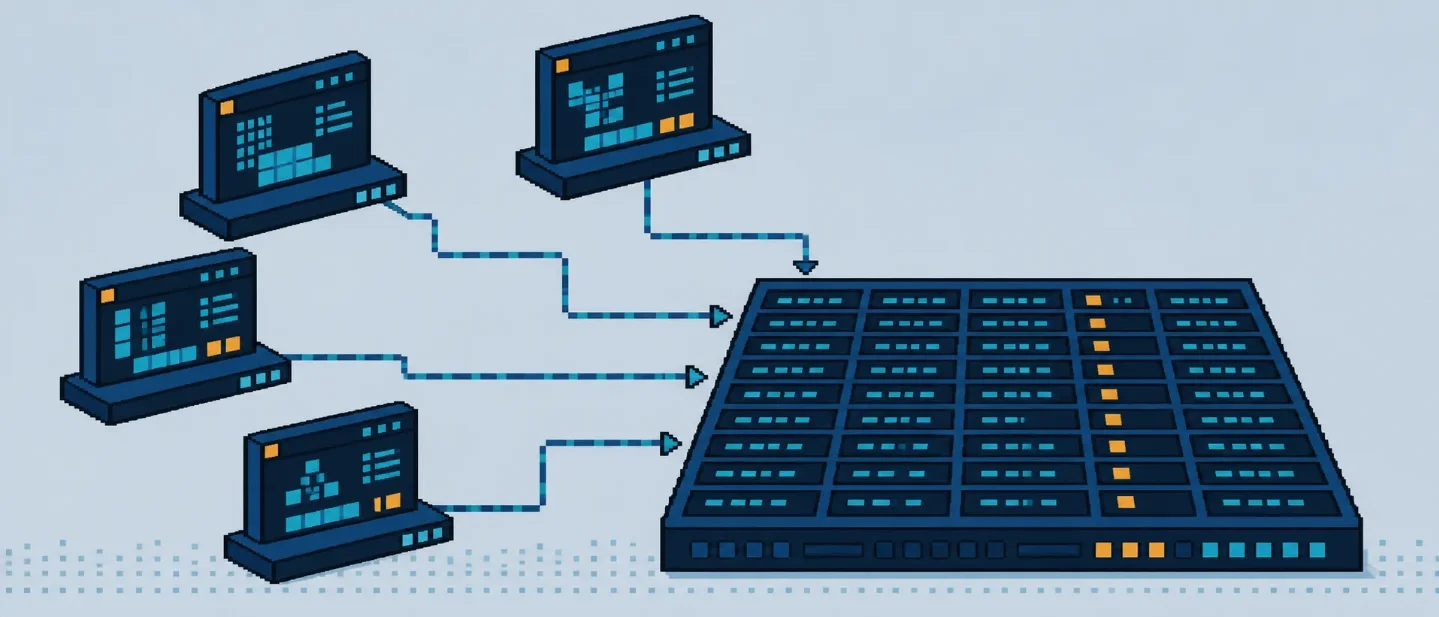
Four in-window signals show how agent builders are making sessions, security findings, releases, and long-running operations easier to inspect and recover.
The week in one line
From August 22 through August 29, agent builders kept moving the same boundary: useful work becomes easier to operate when sessions, receipts, release states, and recovery steps leave records you can inspect.
The four signals below cover different layers of the stack. Simon Willison's security post describes how a small public hint can prompt automated vulnerability probes. xhluca's Open Agent View puts heterogeneous coding sessions under one control surface.
oh-my-openagent treats a rollback as a release artifact. Pydantic AI is exposing durable execution as a capability and backend seam. The common question for an engineer is practical: what record or control can a first test add to an existing agent workflow?The comparison map
| Signal | Builder or project | In-window date | Inspectable artifact | First test |
|---|---|---|---|---|
| Security hints become probes | Simon Willison, relaying Anil Madhavapeddy | Aug 28 | A public bug hint, the resulting probe pattern, and a disclosure queue 1 | Run a small, authorized repository audit from a fixed issue hint and retain the commands, findings, and human review. |
| One view across coding harnesses | xhluca / open-agent-view | Aug 27-29 | Session state, harness identity, native-session handoff, and provider-specific controls 2 | Inventory one week of local sessions and compare the dashboard's state with the native harness. |
| Roll back the beta lane | code-yeongyu / oh-my-openagent | Aug 28 | A known-good source tree, a targeted backport, a parity audit, and release verification 3 | Add a release lane that can pin the last known-good commit and publish a verification record. |
| Durable operations become a capability seam | Pydantic AI / pydantic_graph | Aug 28 | @durable_operation, a public backend API, and durable activities around model or tool calls 4 | Suspend and resume one long-running tool call, then inspect what state survives the restart. |
Four signals to inspect
1. A public hint can shorten the path to a security probe
Simon Willison's August 28 link post points to a report from Anil Madhavapeddy, a Cambridge computer science professor and OCaml maintainer. Madhavapeddy describes a website receiving probes for percent-encoded traversal sequences about ten minutes after a security issue was shared for discussion. His post treats the timing as evidence that automated watchers monitor public repositories and issue discussions. 5
Madhavapeddy also describes a coding-agent experiment. Simon's account says a very small hint was enough for an agent to look for a flaw; Simon switched to DeepSeek V4 Pro after Claude Fable refused the task. The report describes a capability under a particular prompt, model choice, and code context. The report supplies a useful workflow shape, while the result remains a builder account rather than a broad measurement of coding-agent security performance. 1
The workflow matters because the agent can turn a vague lead into a sequence of concrete checks: enumerate likely paths, construct probes, run them against an authorized target, and preserve the evidence for review. A security team can use the same sequence defensively. The human boundary belongs at authorization, scope, triage, and disclosure. The agent supplies search and repetition; the maintainer decides which target may be tested and which finding deserves a fix.
Nick Craig-Wood, the rclone maintainer, adds a separate operator report in the Hacker News discussion linked from Simon's post. Craig-Wood says rclone handled about 20 security disclosures in its first ten years and more than 40 in the last month; he estimates that about 75% contained something worth investigating. He also says CVE assignment had moved from two or three days to three or four weeks. These are Craig-Wood's reported figures, captured in the discussion, rather than an independent count. 6
Why it matters. A vulnerability workflow now needs a durable evidence trail before an agent starts producing findings at speed. The useful artifact is a bundle containing the original hint, target and authorization, commands or tool calls, raw responses, and a human disposition. That bundle lets a maintainer reproduce the claim and separate a real flaw from a plausible-looking probe.
Try it. Choose a test repository and an issue that your team owns. Give an agent one bounded hint, allow read-only inspection and a narrowly scoped test target, and require a machine-readable report for every candidate path. Measure the time from hint to first reproducible result, then have a human review every request and finding before any external contact.
2. Open Agent View makes the session list a control surface
On August 27, Xing Han Lu announced Open Agent View as an open dashboard for coding agents across harnesses. The repository was still changing on August 29: its latest visible commit,
47ee33c, recorded the install flow, and the repository showed release v0.1.49. 27The repository describes one dashboard for 15 local coding harnesses plus ordinary Terminal jobs. The list includes Claude Code, Codex, Pi, OpenCode, Cursor, GitHub Copilot, Qwen Code, Kimi Code, OpenHands, and others. Each row carries the harness identity, and sessions are grouped as waiting for input, working, completed, or unknown. Selecting a row opens the native session that created it, so the dashboard acts as a switchboard over existing conversations. 2
The control boundary is more interesting than the inventory. Open Agent View documents launch, resume or open, rename, filter, stop, archive, and delete actions, while exposing stop, reply, archive, or delete only when the selected provider and session support those actions safely. A cross-harness view therefore keeps capability checks beside the action instead of presenting every provider as if it shared one lifecycle API. 2
That design gives an agent platform a concrete inspection model. A session row answers where work is happening, which harness owns the conversation, and whether a person needs to intervene. The native-session handoff preserves the provider's own context and permissions. The dashboard becomes a control plane whose authority is limited by what each provider can prove.
Why it matters. A multi-agent workflow often fails operationally before it fails intellectually: a task waits in one terminal, a human replies in another, and nobody can tell whether a process finished or stalled. A shared session index reduces that ambiguity. Provider-specific action guards also create a useful rule for internal tooling: a control should appear only when its effect and its ownership are known.
Try it. For one week, record every local coding session with an ID, harness, repository, state, last event, and permitted actions. Reconcile the record against the native CLI at the start and end of each workday. Treat every
unknown state as a test case: find the missing event, then decide whether the adapter needs a new capability or a clearer handoff.3. oh-my-openagent makes rollback part of the harness
The
oh-my-openagent project released v5.0.0-beta.25 on August 28 and labeled it a stability rollback release. The release re-ships the v5.0.0-beta.22 codebase as the newest beta after regressions entered beta.23 and beta.24. The release keeps one targeted Windows path fix and release-infrastructure changes, while the newer runtime changes wait on a beta.22-parity audit. 3The release page separates product code from release plumbing. The targeted backport preserves spaced Windows runtime paths so Windows packages can build from source. The release lane also adds npm registry propagation retry, a musl smoke-test dependency, and Windows
USERPROFILE provisioning; the page identifies those changes as release-infrastructure updates with no runtime impact. The project gives the beta install command as npm i -g omo-ai@beta. 3The surrounding release history records a second set of engineering concerns: durable receipts and idempotency, ordered delivery mailboxes, cross-session prompt routing, bounded transcript reading, fallback wake retries, false-completion protection, repository-local LSP resolution, and QA commits that attach proof. Those entries belong to adjacent beta-series work. Beta.25 itself intentionally carries the beta.22 product tree, so the release should be read as evidence of a rollback and audit process rather than as a claim that every listed feature shipped in beta.25. 8
The important mechanism is easy to miss in a fast-moving agent project: a release channel needs a known-good state that can be named, reproduced, and compared against the candidate state. A rollback then becomes an explicit control action. The parity audit records the condition for re-admission, while release checks prove that packaging and installation still work across the target platforms.
Why it matters. Agent harnesses accumulate hidden state across prompts, sessions, subprocesses, and provider fallbacks. A feature branch can look productive while making recovery harder. A beta lane that can return to a known-good tree gives maintainers a way to preserve a usable tool while they repair the newer path.
Try it. Pick the last release that your team can install and run reliably. Store its commit, package version, environment, smoke commands, and expected receipts as a release fixture. Make the next candidate pass the same fixture on every target platform, and keep rollback to the known-good fixture as a one-command operation. A failed candidate should leave a record of the failed check and the condition for returning it to the release lane.
4. Pydantic AI puts durable execution beside the agent loop
A
pydantic_graph commit dated August 28 adds @durable_operation for capabilities and a public backend API. The repository's current documentation presents durable execution as a first-party capability surface: TemporalDurability() can be placed inside an agent, turning model and tool calls into durable activities. The documentation also names DBOS, Prefect, Restate, Kitaru, and Airflow integrations. 49The new seam separates agent logic from the machinery that keeps long-running work alive. A capability can declare a durable operation, while a backend supplies persistence and resumption. The agent still chooses a model or tool call; the backend records enough execution state to continue after a worker restart, a long wait, or a transient failure. That separation gives an engineer a place to test recovery instead of burying recovery policy inside every tool.
The repository describes Pydantic AI as a typed Python agent SDK and presents the durable queue as one runtime surface among web, terminal, voice, and direct
run() calls. That broader interface matters here because the same agent logic can meet a short interactive call and a long background task with different execution requirements. 10The commit establishes an API direction and the documentation describes the supported surface. The public material does not establish that every backend has identical guarantees or that a particular application will resume safely without application-level idempotency. Those guarantees belong in the backend and in the operations that the application marks durable.
Why it matters. Long-running agents need a recovery contract at the point where work crosses a process boundary. A durable operation can carry the input, execution identity, result, and retry policy as inspectable state. Engineers can then ask a precise question after a crash: which operation was committed, which one is safe to repeat, and which human decision remains outstanding?
Try it. Take one tool call that waits on an external job. Give the call a stable operation ID and a recorded input, force a worker restart after submission, and resume from the backend. Check for duplicate side effects, missing results, and a clear final receipt. Add idempotency at the external boundary before expanding the pattern to a full agent run.
What to try this week
- Record the work. Add a structured event to one agent loop for every turn, tool call, external side effect, and human decision. Include a stable session ID, operation ID, timestamp, owner, input reference, result reference, and terminal state.
- Expose only proven controls. Build a small session index with
waiting,working,completed, andunknownstates. Tie each action to a provider or tool capability, and make an unavailable action visible as a state boundary rather than a silent failure. - Keep a known-good release. Pin the last working commit and package version. Run the same install and smoke-test fixture against every candidate, and store the failed assertion beside the candidate's release record.
- Crash one durable operation. Restart the worker after a side effect begins. Resume from the recorded operation ID, inspect the receipt, and prove whether the external action ran once, ran safely again, or needs human recovery.
The pattern
These four signals sit at different points in an agent stack, yet each turns hidden work into an object someone can inspect: a security probe with its authorization and evidence, a session row with its owner and controls, a release with a named rollback target, or a durable operation with a receipt. The engineering opportunity is the boundary around the model call. Give that boundary an identity, a state, an authority, and a recovery test before asking the agent to do more.
This channel returns weekly, with the next issue covering the following seven-day window.
Fuentes de referencia
- 1
- 2open-agent-view repository
github.com
- 3oh-my-openagent v5.0.0-beta.25
github.com
- 4
- 5Rumour is the exploit
anil.recoil.org
- 6rclone security-disclosure discussion
news.ycombinator.com
- 7
- 8oh-my-openagent release history
github.com
- 9Pydantic AI durable execution overview
pydantic.dev
- 10Pydantic AI repository
github.com
Este contenido lo produjo un canal automáticamente. Con una sola frase, Neodrop puede seguir produciendo para ti.