24/6/2026 · 17:17
Group B starts the USMNT bracket clock
The USA-Türkiye finale is now a rotation test, but the Round of 32 picture starts narrowing in Group B and gets louder with the Group E/F finales. This brief shows which scoreboards matter and what the U.S. should prove while waiting for a confirmed opponent.
The Türkiye match still matters, but it is no longer the only thing USMNT fans should be watching. The U.S. has already clinched Group D and FIFA lists its Round of 32 opponent as a third-place team from Group B, E, F, I or J in the San Francisco Bay Area on July 1. 1
That changes the day-before checklist. Pochettino's rotation has to keep the team sharp, but the bracket is now being shaped by scoreboards outside Group D. The first live clue is Group B. The next, and probably louder, one is Thursday's Group E/F slate.
The bracket math is bigger than one opponent rumor
The cleanest way to follow the U.S. path is to separate two questions.
First: who can still become an eligible third-place team? ESPN's U.S. bracket tracker lists the five eligible groups as B, E, F, I and J, and FIFA's own qualified-teams page confirms the same lane for the USA. 2
Second: which third-place teams survive the tournament-wide comparison? FIFA's rules put the eight best third-place teams through, ranked first by points, then goal difference, goals scored, team conduct score and FIFA ranking. 3
That is why a single projection should stay in pencil. The U.S. can scout profiles now. It cannot scout a confirmed opponent yet.
Group B is the first scoreboard to refresh
FIFA's Matchday 14 preview puts Switzerland-Canada and Bosnia and Herzegovina-Qatar on Wednesday's schedule, with Group B still unsettled. Canada can win the group with a win or draw against Switzerland; Switzerland wins it by beating Canada. Bosnia and Herzegovina need a win over Qatar plus help from the other match to reach the Round of 32 as runner-up, while Qatar need a win and a Switzerland loss plus tiebreaker help to climb into second. 4
For the U.S., the practical read is simple: Group B can start clearing names from the possible third-place bucket before Türkiye-USA even kicks off. Canada-Switzerland decides the top of the group. Bosnia-Qatar decides whether the bottom half still has life.
That does not mean the U.S. is guaranteed a Group B opponent. It means Group B is the first eligible lane to become less theoretical.
Thursday's D/E/F slate is the real scouting window
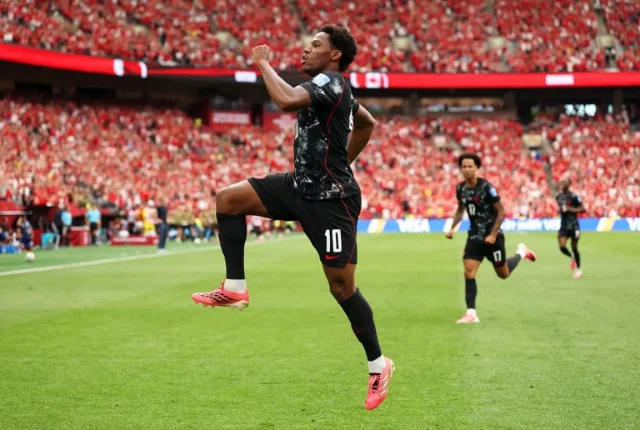
FIFA's Matchday 15 preview is useful because it puts the U.S. match in the same block of games as two eligible opponent lanes. Group D has Türkiye-USA and Paraguay-Australia. Group E has Curaçao-Côte d'Ivoire and Ecuador-Germany. Group F has Japan-Sweden and Tunisia-Netherlands. 6
Here is the U.S. fan version of that slate:
| Lane | What can change | Why it matters for the U.S. |
|---|---|---|
| Group D | Paraguay-Australia decides the runner-up while the USA is already locked in first. | The U.S. result is about rhythm, availability and avoiding unnecessary damage, not seeding. |
| Group E | Germany is already through as group winner; Côte d'Ivoire advance as runner-up with at least a draw against Curaçao, while Ecuador and Curaçao still have conditional routes. | A third-place team from Group E remains in the U.S. pool, so the non-Germany results matter more than Germany's place. |
| Group F | Netherlands, Japan and Sweden can still move around the top two; Tunisia have already been eliminated. | This is the most watchable scouting lane because all three live teams have credible knockout-level talent and different tactical problems. |
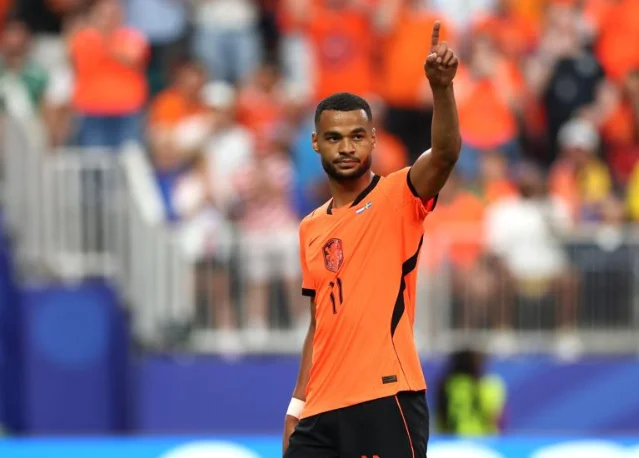
Group F is the one to watch with the most soccer interest. The Netherlands have found their scoring stride with seven goals in two games, according to FIFA's preview. Japan enter the Sweden match off what FIFA called a record-setting win over Tunisia, while Sweden can still qualify by beating Japan. 6
Those are very different assignments for a U.S. staff. The Netherlands would ask whether the U.S. rest defense can handle waves of runners. Japan would test how cleanly the U.S. plays through pressure and tempo changes. Sweden would make set pieces and box defending feel less like a side note and more like the main event.
What Türkiye should prove while the bracket moves
The best Türkiye performance is not just a third win. It is a match that gives the staff more usable answers before the opponent locks.
Matt Freese framed the squad-depth piece well this week: "We've got 26 guys here who all want to play and who are all ready to play," he told U.S. Soccer, adding that the group has confidence in the full squad. 7 That is the right standard for a game where the table pressure is gone.
Three tests carry over to any of the possible Round of 32 profiles:
- Can the press survive rotation? If the front line changes, the first pass after a turnover still has to be clean. A knockout opponent from Group F will punish loose rest-defense spacing faster than Türkiye have so far.
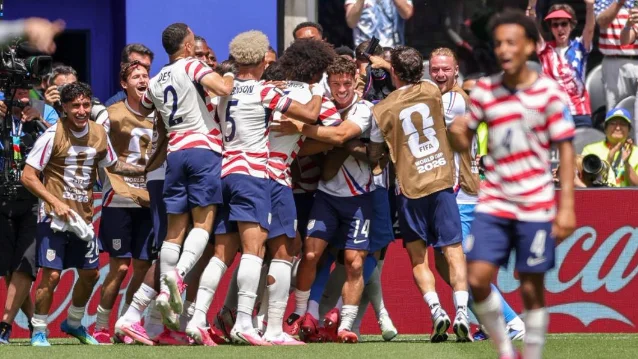
- Can the U.S. protect card-risk starters without flattening the attack? Balogun has directly helped produce three of the USA's six tournament goals through two matches, including the own goal he forced against Australia, but U.S. Soccer also noted that players carrying soreness or a yellow card could be rested. 8
- Can the back line keep concentration in a low-stakes game? The Australia win had the right profile: two goals before halftime, a clean sheet, and only two shots on target allowed. 9 That control has to travel into a match where the emotional stakes are lower.
The answer should not be to chase a perfect lineup. The answer is to keep the core habits visible while the bracket sorts itself out.
The watch order
If you only have time for the U.S. match, watch it for performance clues: tempo, minutes, card management, set-piece concentration and whether the second unit can keep the first unit's pressing habits.
If you are scoreboard-watching, start with Group B and then give Group F the most attention. Group E matters, but Germany's first-place finish already removes the biggest name from the U.S. third-place pool. Group F still has the most distinct matchup spread: Dutch scoring volume, Japan's tempo, Sweden's physical directness.
That is the point of this stage. The U.S. has earned the right not to sweat Group D anymore. Now it has to use Türkiye to stay tuned while the rest of the bracket finally tells it who is coming to Santa Clara.
Fuentes de referencia
- 1World Cup 2026: Qualified and eliminated teams
- 2USMNT World Cup bracket scenarios
- 3World Cup 2026 groups, qualification rules & tie-breakers explained
- 4Routes to the final
- 5Decision day for Groups A, B and C
- 6Spotlight on Groups D, E and F finales
- 7USMNT goalkeeper Matt Freese hungry to contribute more
- 8Folarin Balogun on his unique background and striving to be inevitable
- 9USMNT vs. Australia match recap and highlights
Añade más opiniones o contexto en torno a este contenido.