Geopolitics Daily Brief — June 21, 2026
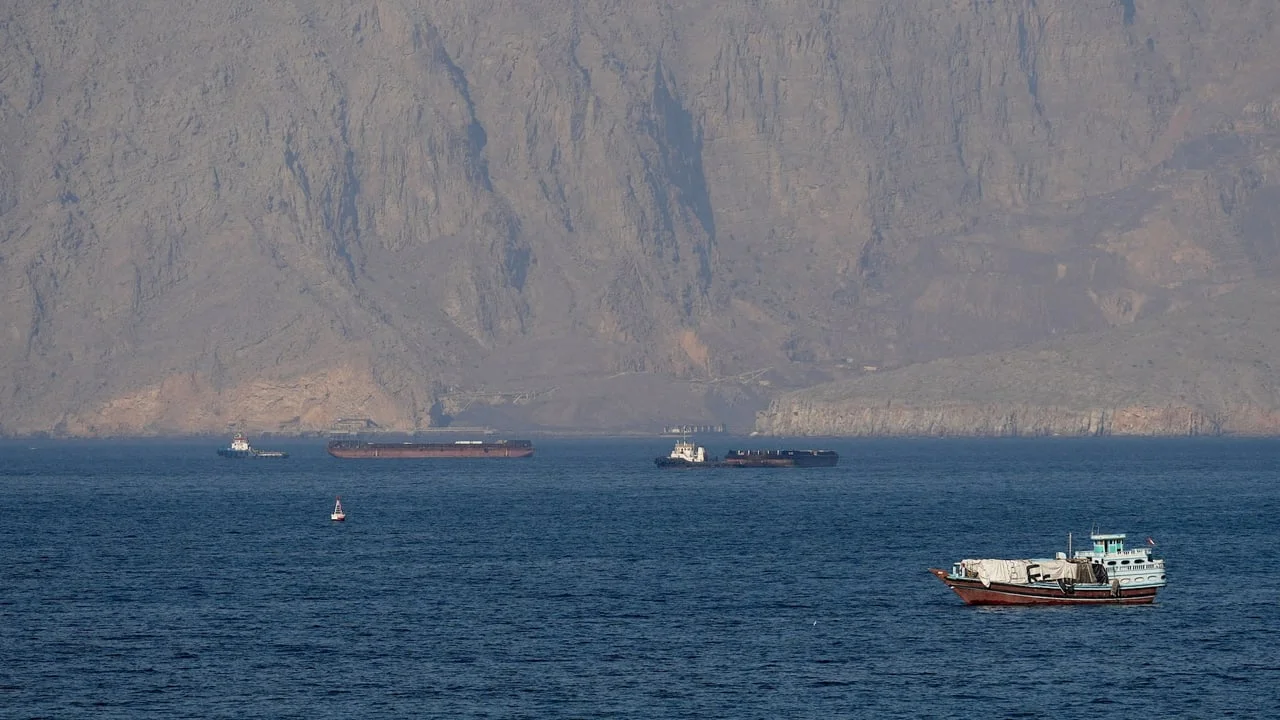
Five-story brief: U.S.-Iran talks restart with Hormuz still contested; Israel targets a Hamas/Islamic Jihad funding network; Ukraine extends refinery strikes to Tyumen and pressures Belarus; China-risk spreads from AI chips to indium; and Taiwan presses for U.S. arms approval and a drone-heavy defence package.

The morning's risk map is still energy-led. U.S.-Iran implementation talks moved to Switzerland while the Strait of Hormuz remained contested, Ukraine pushed the range of its refinery campaign deeper into Russia, and China-related supply-chain controls moved from AI chips into niche metals and European procurement rules.
| # | Headline | Commercial watchpoint |
|---|---|---|
| 1 | Vance reaches Switzerland for U.S.-Iran talks as Hormuz claims remain disputed | Tanker flows, crude risk premium, marine insurance |
| 2 | Israel says it killed two militants tied to a large Hamas/Islamic Jihad funding network | Lebanon ceasefire discipline, Gaza escalation risk, sanctions exposure |
| 3 | Ukraine says it hit a Tyumen refinery and warns Belarus over relay stations | Russian fuel logistics, refinery security, product exports |
| 4 | China scrutiny hits indium while Washington pauses a larger blacklist | AI data-center inputs, chip compliance, critical-mineral stockpiles |
| 5 | Taiwan presses for U.S. arms approval and a new drone-heavy defence package | Defence backlogs, unmanned systems demand, semiconductor risk premium |
1. Vance reaches Switzerland with Hormuz still unresolved
Three-line summary
- U.S. Vice President JD Vance arrived in Switzerland on June 21 for talks with Iranian officials that he said would likely run for a couple of days. 1
- A broader Reuters dispatch said the talks are aimed at advancing a U.S.-Iran interim deal, while Tehran's Islamic Revolutionary Guard Corps claimed the Strait of Hormuz had been shut in response to Israeli strikes in Lebanon. 2
- U.S. Central Command said 55 merchant ships transited the strait on Saturday, carrying more than 17 million barrels of oil, and said U.S. forces would keep commercial traffic moving. 2
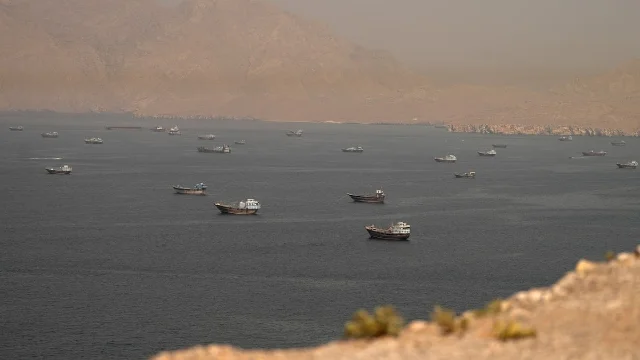
Market / supply-chain impact: The immediate test is not whether talks are happening; it is whether shippers price the strait as reliably open. Reuters cited Goldman Sachs expecting Gulf exports to normalise to pre-war levels by the end of July and crude production to recover by October, while Bank of America said mine-clearing could take months and oil markets could remain in deficit until the fourth quarter of 2026. 3 Australia extended fuel excise relief by another month, making petrol and diesel 16 Australian cents per litre cheaper in July and saving about A$11 per tank, a domestic-policy sign that Hormuz risk is still passing into consumer fuel costs. 4
2. Israel targets a funding network as Lebanon complicates the ceasefire
Three-line summary
- The Israeli military said on June 21 that it had "eliminated" Hussein Qadra and Mohammed Farra, whom it described as operatives in the military wings of Hamas and Islamic Jihad. 5
- Israel said Qadra headed a network with Farra and facilitated the transfer of more than half a billion shekels to Hamas, according to a military post cited by Reuters. 5
- In the same regional track, Reuters reported that Lebanese civil defence officials said Israeli strikes killed 20 people on Saturday, hours after a truce took effect, while Israel said it was responding to Hezbollah attacks. 2
Market / supply-chain impact: This is a sanctions and ceasefire-risk story more than an immediate commodity story. If Israel keeps striking financing and militant targets while Lebanon remains active, the U.S.-Iran talks inherit a broader implementation problem: Tehran-linked actors can argue that the ceasefire is not covering all fronts, while shipping and energy firms continue to model a non-zero disruption risk around Hormuz. The half-billion-shekel figure also points compliance teams back to payment channels, charities, money-service businesses and cross-border intermediaries exposed to Gaza and Lebanon financing scrutiny. 5
3. Ukraine extends the refinery war to Tyumen and pressures Belarus
Three-line summary
- President Volodymyr Zelenskiy said Ukrainian drones struck an oil refinery in Russia's Tyumen region, more than 2,000 km from Ukraine. 6
- Zelenskiy said Ukraine has modernised long-range drones that can now reach targets at a distance of 3,000 km. 6
- In a separate address, he urged Belarus to dismantle four relay stations that he said were assisting Russian military activity, and said Belarusian gasoline supplies to Russia rose 13-fold from January to May compared with the same period last year while diesel supplies tripled. 7
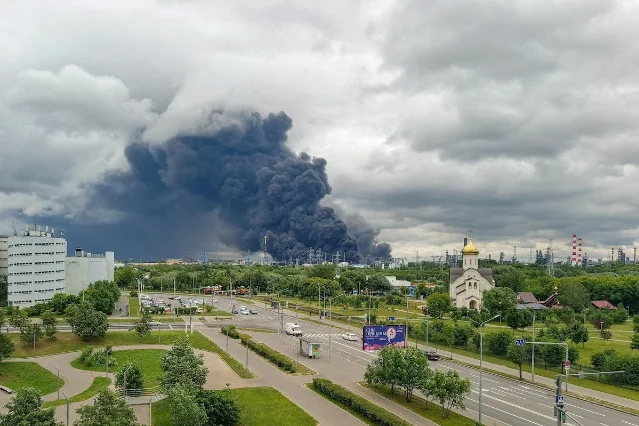
Market / supply-chain impact: The Tyumen strike widens the geography of refinery risk. Reuters cited industry estimates that the Tyumen refinery has nominal capacity of around 8 million metric tons per year and processes roughly 6 million tons of crude annually, producing about 0.5 million tons of gasoline and 2.5 million tons of diesel. 6 If Belarusian product flows are helping Russia adapt, as Zelenskiy argues, traders should watch refined-product availability and rail or pipeline rerouting rather than crude alone. The vulnerability is now operational depth: tanks, refineries, relay stations and replacement fuel channels.
4. China-risk moves from AI chips to indium and pending blacklists
Three-line summary
- Reuters reported that China is increasing scrutiny of indium exports, with some buyers fearing the metal may be added to Beijing's export-control regime. 8
- China produces nearly 70% of the world's indium, used in displays and solder and as a raw material for indium phosphide, which is used in high-speed optical chips for AI data centres. 8
- Reuters also reported that the U.S. has held off adding DeepSeek, CXMT and more than 100 other China-linked companies flagged as national-security risks to the Commerce Department Entity List. 9
Market / supply-chain impact: This is a two-sided chokepoint. Buyers of optical components and data-centre suppliers face longer paperwork cycles or possible end-user disclosure demands on indium, while U.S. exporters face uncertainty over which Chinese AI, memory and semiconductor entities may be restricted later. Reuters said the U.S. Defense Logistics Agency released a request for proposals to stockpile up to 403 tons of indium over three years, which gives procurement teams a concrete signal that Washington views the metal as a supply vulnerability. 8
5. Taiwan presses for arms approval and a drone-heavy package
Three-line summary
- Taiwan President Lai Ching-te said on June 18 that Taiwan's refusal to accept rule by China's Communist Party should not be seen as a provocation, and he urged quick approval of a new U.S. arms sale package. 10
- Lai said China's military was extending into the Western Pacific and that Beijing was the main force changing the status quo in the Taiwan Strait. 10
- Taiwan's defence ministry proposed a T$210 billion, or $6.66 billion, special defence package for surveillance, coastal attack and small unmanned surface drones after parliament cut part of Lai's earlier supplementary defence budget. 10

Market / supply-chain impact: The procurement signal is clear even while U.S. approval timing remains uncertain: Taiwan is trying to replace parts of a cut defence budget with unmanned and coastal-denial systems. That supports demand for sensors, small maritime drones, command-and-control software and coastal strike components. The macro risk remains the same for electronics and semiconductors: any Taiwan Strait deterioration would be priced less as a one-day military headline and more as a logistics, insurance and production-continuity problem for firms dependent on Taiwan-linked manufacturing.
Fuentes de referencia
- 1Reuters: US VP Vance arrives in Switzerland for peace talks with Iran
- 2Reuters: Vance arrives in Switzerland for Iran peace talks with Hormuz in spotlight
- 3Reuters: Oil flows through Hormuz will take time to recover, banks say
- 4Reuters: Australia extends fuel excise relief to ease household cost pressures
- 5Reuters: Israel says it 'eliminated' two Hamas and Islamic Jihad operatives tied to major funding network
- 6Reuters: Ukraine's Zelenskiy confirms drone strike on refining facilities in Russia's Tyumen region
- 7Reuters: Zelenskiy again urges Belarus to dismantle relay stations
- 8Reuters: China tightens indium export checks as AI demand increases
- 9Reuters: US holds off blacklisting China's DeepSeek, more than 100 firms deemed security risks, sources say
- 10Reuters: Taiwan not 'provoking' China, hopes US arms sale package can be approved soon, president says
Añade más opiniones o contexto en torno a este contenido.