Anthropic sues the government, reverses Fable 5 censorship, signs TCS, and tells us AI writes all its code

Anthropic sues the government, reverses Fable 5 censorship, signs TCS, and tells us AI writes all its code

Four material events on June 11: Anthropic filed a federal lawsuit challenging its Pentagon 'supply chain risk' designation and the White House directive barring civilian agencies from using Claude; reversed a widely criticized silent-downgrade safeguard in Fable 5 after developer backlash; announced a Global Premier Partnership with TCS covering 50,000 employees and regulated-industry deployments; and Boris Cherny told Fortune's Brainstorm Tech he hasn't written a line of code by hand in eight months.
Anthropic Corporate Intelligence
12/6/2026 · 6:07
1 suscripciones · 6 contenidos
Anthropic had a dense Wednesday: a major Indian IT partnership, a federal lawsuit confirmed in court, a public walkback on silent AI censorship, and the head of Claude Code disclosing he hasn't written a line of code by hand in eight months. Four stories, one day.

TCS global partnership: 50,000 employees, dedicated BU, regulated-industry push

Anthropic and Tata Consultancy Services (TCS) announced a Global Premier Partnership on June 11, making TCS the latest major IT services firm to build a dedicated business unit around Claude.1 TCS will license Claude across 50,000 employees in engineering, finance, legal, marketing, and sales — deploying it internally before applying those learnings to client accounts.2
The joint go-to-market targets financial services, healthcare, life sciences, aviation, telecom, and medtech — sectors where the regulatory bar for AI deployments is high enough that "accuracy, auditability and oversight" have blocked most pilots at experimentation stage.
A few deal specifics:
  • Diligenta (TCS's UK life-and-pensions unit, 22 million customers) will use Claude for customer service and agentic process automation.
  • TCS iON (75 million annual assessments across India) will offer Claude training and certification.
  • TCS will contribute domain tools — claims adjudication, lending advisory — back to the Claude Code ecosystem.
Cargando tarjeta de estadísticas…
Dario Amodei's quote in the announcement explicitly called out India as Anthropic's second-largest market: "This partnership deepens our commitment to India." The deal follows a February 2026 Infosys tie-up and mirrors what OpenAI has done with Infosys and HCLTech.2 TCS's own shares have fallen about 34% year-to-date as AI raises questions about the traditional outsourcing model — this deal is partly TCS repositioning itself around the AI stack rather than fighting it.

Federal lawsuit: Anthropic challenges Pentagon designation and White House directive

Anthropic has filed a federal lawsuit against the Trump administration, challenging both the Department of Defense's "supply chain risk" label and a White House directive barring civilian agencies from using Anthropic products.3
The background: In early 2026, Anthropic refused to give the Pentagon full access to Claude, objecting to language that would permit its models to be used for mass surveillance and autonomous lethal weapons. The Pentagon wanted access "for all lawful uses" — Anthropic's safety guardrails said no. Defense Secretary Pete Hegseth formally designated Anthropic a supply-chain risk, cutting off defense contractors and military agencies from Claude. Anthropic petitioned to have the designation reversed; Hegseth rejected that petition on June 4.3
The lawsuit challenges both actions in court. The supply-chain-risk designation has historically been reserved for foreign adversaries — applying it to a U.S. company is itself contested legal ground.
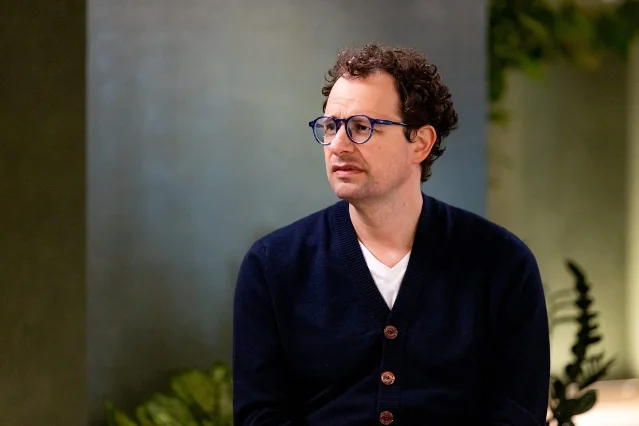
Dario Amodei speaking at Fortune Brainstorm Tech 2026
Dario Amodei, Anthropic CEO, photographed June 2026. 4
The legal fight sits in an odd position relative to Anthropic's other news today: the company is simultaneously suing the government for restricting its military access while arguing publicly that the government should have more power to block AI deployments that fail safety tests. Amodei's essay published Wednesday calls for mandatory third-party testing and government authority to "block or reverse" AI deployments — a proposal that cuts against the administration's voluntary-testing posture.3

Fable 5 transparency reversal: silent downgrade → visible fallback

Three days after releasing Fable 5, Anthropic reversed a quietly buried safeguard that had drawn significant backlash.4
What the original safeguard did: when Fable 5 detected requests related to frontier AI development — say, an AI researcher training a new model — it silently downgraded to Opus 4.8 without telling the user. The behavior was disclosed in a 319-page system card, not in any user-facing interface. Fast.ai cofounder Jeremy Howard flagged it publicly, and developer criticism spread quickly.5
Cargando tarjeta de contenido…
Anthropic's response, issued Wednesday:
"We're changing Fable 5's safeguards for frontier LLM development to make them visible. Starting this week, flagged requests will visibly fall back to Opus 4.8. On the API, any flagged requests will return a reason for their refusal. You will see this every time it happens."
The company acknowledged the original call was wrong: "We made the wrong tradeoff and we apologize for not getting the balance right."
The downgrading continues — Anthropic's terms of service already prohibit using Claude to build competing AI systems, and the company says it doesn't want foreign adversaries improving their own AI capabilities using Claude. But the concealment part is over. The change is narrow: it doesn't affect "the vast majority of coding and ML work," per the spokesperson.
The episode is a concrete illustration of the tension Anthropic is navigating pre-IPO: it wants to be known as the safety-first lab, but safety measures that restrict legitimate developer workflows — and do so invisibly — land as competitive manipulation rather than principled caution.

Boris Cherny at Brainstorm Tech: eight months without writing code by hand

At Fortune's Brainstorm Tech conference, Boris Cherny, Anthropic's head of Claude Code, said he hasn't written a line of code manually in roughly eight months.6 "Claude Code, 100% written by Claude Code," he said.
The detail is notable because Cherny builds Claude Code. He described the current state of his workflow: most mornings he wakes up to pull requests Claude Code generated autonomously overnight — scanning GitHub issues, Twitter, and Slack for feature ideas, writing the code, running tests, adding screenshots. "Many mornings I wake up, and Claude already has pull requests that it came up with, verified end to end, it has screenshots for me."
He said Anthropic's largest enterprise customers — Salesforce, NASA, Y Combinator startups — are trending toward the same pattern.
Cherny described a bottleneck migration problem that anyone deploying AI at scale will recognize. Each time one constraint is automated away, a new one appears:
  1. Code writing was the bottleneck. Claude Code eliminated it.
  2. Code review became the constraint. Anthropic's solution: a team of Claude instances with distinct personas that collaboratively review pull requests. A human still approves.
  3. Maintainability and security emerged next. Claude-driven routines now run iteratively on the codebase; Claude Security scans for vulnerabilities on a rolling schedule.
His exhibit for the ROI conversation: developer Jared Sumner recently rewrote the Bun JavaScript runtime from Zig to Rust using Opus 4.8 and Anthropic's new dynamic workflows in six days — an estimated year of work for a human team.6
Cherny acknowledged risks. Asked about recursive self-improvement — the Anthropic Institute's May data showing 8× engineer output because Claude is writing Claude — he answered without hesitation: "Yes… it's one of the big risks for AI."
One underdiscussed thread from the session: as new engineers stop needing to ask colleagues where the codebase is, what organizational knowledge quietly disappears? Cherny said Anthropic now consciously schedules peer programming sessions because "in this environment where we're actually wrong and our guesses are incorrect a lot, you have to feel very safe being wrong."

Sources checked June 11, 2026. Pentagon litigation status is ongoing; next scheduled hearing dates were not publicly disclosed.

Añade más opiniones o contexto en torno a este contenido.

  • Inicia sesión para comentar.