CS PhD Roundup — Week of June 22, 2026
Three new positions qualify this week: a PhD at INRIA Paris under Cordelia Schmid (robotics/computer vision, deadline July 17), a postdoc at SDU Denmark under Melih Kandemir (neuromorphic RL, deadline September 1), and three EPFL postdocs under Charlotte Bunne (biological foundation models + frontier generative AI, rolling). All four positions from last week's deadline cluster have closed. Three rolling positions at ISTA (Lampert, Locatello) and University of Bonn (Rußwurm) remain open.

Coverage window: June 15–22, 2026. Three new positions qualify this week — a PhD at INRIA Paris under Cordelia Schmid (robotics/computer vision), a postdoc at SDU Denmark under Melih Kandemir (neuromorphic RL), and two postdocs at EPFL under Charlotte Bunne (biological foundation models and frontier generative AI). All four positions from last week's imminent-deadline cluster — Vienna, UiT, KU Leuven, and INRIA Sophia Antipolis — have now closed. The three rolling positions at ISTA (Lampert and Locatello groups) and University of Bonn (Rußwurm MEO Lab) remain open with no change in status.
At a glance — all active positions
| Deadline | Advisor(s) | Institution | Sub-field | Type |
|---|---|---|---|---|
| July 17, 2026 | Cordelia Schmid | INRIA Paris, WILLOW team | Robotics / Computer Vision | PhD |
| September 1, 2026 | Melih Kandemir | SDU ADIN Lab, Denmark | Neuromorphic RL | Postdoc |
| Rolling | Charlotte Bunne | EPFL AIMM Lab, Switzerland | Biological foundation models | Postdoc (×2) |
| Rolling | Charlotte Bunne | EPFL AIMM Lab, Switzerland | Frontier generative AI | Postdoc |
| Rolling | Christoph H. Lampert | ISTA, Austria | Trustworthy ML, neuro-symbolic AI | Postdoc (×2) |
| Rolling | Francesco Locatello | ISTA, Austria | Causal learning and AI | PhD & Postdoc |
| Rolling | Marc Rußwurm | University of Bonn, Germany | Geospatial neural fields | PhD (×2) |
New this week — robotics and computer vision (PhD)
PhD in structured ego-world models — Cordelia Schmid, INRIA Paris (WILLOW team)
Deadline: July 17, 2026 · Start: September 1, 2026
INRIA Paris has posted PhD position 2026-10180, supervised by Cordelia Schmid (Research Director, INRIA; Research Scientist, Google; head of the WILLOW team). 1 The research focus is on building 3D/4D geometric world models that can transfer dexterous manipulation skills across robot embodiments — specifically, models that decouple how the environment behaves from how a robot's own body moves.
The three-year program runs in sequence: Year 1 targets latent representations for geometric consistency, temporal scene memory, and affordance modeling. Year 2 develops factorized world models with separate dynamics streams for the world and for the robot's kinematics, enabling cross-embodiment transfer from human video to robot policies. Year 3 covers cross-embodiment adaptation and the design of new benchmarks for transfer robustness. 1
The motivation framed in the listing: current state-of-the-art robot learning policies are "severely brittle to cross-embodiment shifts, viewpoint perturbations, out-of-distribution visual environments, and the compounding errors inherent to long-horizon inference," with the core bottleneck being "a monolithic, direct pixel-to-action mapping." 1 The proposed direction is structured 3D/4D representations and factorized world models grounded in geometry rather than raw pixels.
Schmid's top-venue output (2022–2025): CVPR 2024 (8+ papers, including Pixel Aligned Language Models, MoReVQA, Streaming Dense Video Captioning, SUGAR, End-to-End Spatio-Temporal Action Localisation); CVPR 2025 (7+ papers, including FirePlace, Visual Lexicon, InteractVLM, Language-Guided Image Tokenization); ICLR 2024 and 2025; ICML 2024; NeurIPS 2024; ACL 2025 Findings. 2 She received the Körber European Science Prize in 2023 and holds a dual appointment with Google Research.

Security note: The position is located in a Zone à Régime Restrictif (ZRR). An adverse ministerial decision on the required French government clearance cancels the appointment. Applicants who are not French nationals should contact INRIA before investing significant time in the application. 1
| Field | Details |
|---|---|
| Position type | PhD (3-year contract) |
| Institution | Centre Inria de Paris, WILLOW team |
| Advisor | Cordelia Schmid (also Research Scientist, Google) |
| Stipend | €2,300/month gross |
| Start date | September 1, 2026 |
| Location | Paris, France |
| Security | ZRR clearance required |
| Deadline | July 17, 2026 |
| Requirements | Master's in CS, computer vision, robotics, or ML; programming proficiency; English required |
| Apply | jobs.inria.fr — offer 2026-10180 · contact: cordelia.schmid@inria.fr |
New this week — neuromorphic reinforcement learning (postdoc)
Postdoc in neuromorphic RL — Melih Kandemir, SDU ADIN Lab (Denmark)
Deadline: September 1, 2026 · Earliest start: October 1, 2026
The ADIN Lab (Adaptive Intelligence Lab) at the University of Southern Denmark (SDU, Odense) is recruiting a two-year postdoc in neuromorphic reinforcement learning. 3 Supervisor is Prof. Melih Kandemir, who has published at NeurIPS 2022, 2023, and 2024 and at ICLR 2022. 4
The research agenda sits at the intersection of deep RL, probabilistic modeling, and spiking neural networks (SNN). The stated goal is adaptive control in non-stationary environments with applications to robotic systems and embodied AI — specifically, providing "theoretical guarantees (e.g., convergence, stability, or sample complexity) for control tasks in non-stationary environments." 3 The lab's framing is that the boundary between training and deployment should not be fixed — the agent adapts throughout its operational life.
The position carries standard Danish academic collective-agreement compensation and full Danish social benefits. SDU's main campus is in Odense, Denmark.
Application requirements (hard): Completed PhD in CS, mathematics, statistics, or theoretical physics. At least two first-author papers accepted at NeurIPS, ICML, ICLR, or AISTATS. Proficiency in Python/PyTorch/JAX. 3 The publication bar is explicit and non-negotiable by the listing's own wording.
| Field | Details |
|---|---|
| Position type | Postdoc (2-year contract) |
| Institution | SDU ADIN Lab, Odense, Denmark |
| Advisor | Prof. Melih Kandemir |
| Salary | Danish academic collective agreement rate (competitive postdoc salary + Danish social benefits) |
| Start date | October 1, 2026 (earliest) |
| Location | Odense, Denmark |
| Deadline | September 1, 2026 |
| Requirements | PhD in CS / math / stats / theoretical physics; ≥2 first-author papers at NeurIPS / ICML / ICLR / AISTATS; Python / PyTorch / JAX |
| Apply | SDU Oracle Cloud recruitment system, Job ID 4085 — CV + full publication list + PhD certificate |
New this week — biological foundation models and frontier AI (postdoc ×3)
Three postdoc positions — Charlotte Bunne, EPFL AIMM Lab (Switzerland)
Deadline: Rolling — priority review for fall 2026 start
The AIMM Lab (Artificial Intelligence in Molecular Medicine) at EPFL, led by Prof. Charlotte Bunne, has two distinct postdoc openings posted this month. Bunne holds appointments in EPFL's School of Computer Science, School of Life Sciences, and the EPFL AI Center. Her lab has published at NeurIPS (2022). 5
Position A — biological foundation models (2 postdocs) 5
The listing describes the scope as "the full stack of biological foundation model research: from core architecture design and pretraining at scale to integration into agentic interfaces." Research directions include pretraining objectives, tokenization for biological data, scalable architectures, multi-modal learning across biological data types (genomics, imaging, proteomics), and translational applications in drug discovery and biomedicine. Active industry partnerships with pharmaceutical companies are part of the research context. Stipend: competitive EPFL postdoc salary plus full social benefits. Compute: allocations on the Swiss National Supercomputing Centre (CSCS) and the Swiss AI Initiative.
Requirements: ML/CS/computational biology PhD; demonstrated large-scale AI development experience (pretraining, fine-tuning, scaling); familiarity with biological data modalities; strong publication record at top ML venues or life sciences journals.
Apply: Send CV, one-page research interest statement, and two references to bunnelab@gmail.com with subject line
[AIMM Lab] Application PostDoc. Also available to apply through the EPFL careers portal.Position B — frontier AI research / generative AI (1 postdoc) 6
A separate, methodology-forward role. The listing states: "The position is highly methodological and focuses on developing new generative modeling approaches, scalable training algorithms, and foundation model technologies." 6 Methods targeted include diffusion models, flow matching, and generative Transformers. No biology or biomedical background required.
Requirements: PhD in ML, CS, applied mathematics, statistics, physics, or engineering; demonstrated generative AI expertise; large-scale and distributed training experience; strong top-venue publication record.
Apply: Same path as Position A (bunnelab@gmail.com,
[AIMM Lab] Application PostDoc).
| Position A (×2) | Position B (×1) | |
|---|---|---|
| Position type | Postdoc | Postdoc |
| Focus | Biological foundation models | Frontier generative AI |
| Biology background | Required | Not required |
| Stipend | Competitive EPFL postdoc salary + full social benefits | Competitive EPFL postdoc salary + full social benefits |
| Compute | CSCS / Swiss AI Initiative GPU allocation | CSCS / Swiss AI Initiative GPU allocation |
| Location | Lausanne, Switzerland | Lausanne, Switzerland |
| Deadline | Rolling — ideal start: fall 2026 | Rolling — ideal start: fall 2026 |
| Apply | bunnelab@gmail.com · [AIMM Lab] Application PostDoc | bunnelab@gmail.com · [AIMM Lab] Application PostDoc |
Continuing open positions
These three positions were listed in prior issues and remain open. No status changes were detected during this week's check.
ISTA — Christoph H. Lampert, CVML group (trustworthy ML / neuro-symbolic AI)
Postdoc, rolling deadline. 7 The CVML group page notes "no fixed deadline, applications will be considered until all positions are filled" and was last updated in June 2026. Research clusters: trustworthy ML (privacy, fairness, robustness, federated learning, LLM security); transfer and continual learning; neuro-symbolic AI. Salary: €73,500–€80,472/year on Austria's collective agreement (14 payments/year). No mandatory teaching. Apply via single PDF to chl(at)ist.ac.at.
ISTA — Francesco Locatello group (causal learning and AI)
Multiple PhD and postdoc positions, rolling. 8 The group page confirms openings are active ("Multiple PhD student and postdoc positions are available!"). Research: causal representation learning, causal discovery, dynamic systems, visual reasoning, AI for Science. The group had 5 papers at NeurIPS 2025. PhD applications go through https://phd.pages.ista.ac.at/; postdoc inquiries to francesco.locatello@ista.ac.at.
University of Bonn — Marc Rußwurm, MEO Lab (geospatial neural fields)
One to two PhD positions, rolling. 9 "The position is open until filled, and applications will be reviewed on a rolling basis." Research: geospatial neural fields — continuous, queryable, uncertainty-aware representations of the planet encoding location, time, scale, sensor modality, and environmental context. Funding: DFG Emmy Noether project + Taylor Geospatial Institute. Salary: TV-L E13, full-time. Target start: late summer 2026. Apply via Tally form at tally.so/r/LZk0Qy (cover letter + CV in English).
Positions that closed this week
All four positions from last week's imminent-deadline cluster have now closed. They remain here for reference only — no applications are possible.
| Closed | Advisor(s) | Institution | Sub-field | Status |
|---|---|---|---|---|
| June 16, 2026 | Sebastian Tschiatschek | University of Vienna | IRL, safe/aligned AI | Expired — Nature Careers shows "This job has expired"; Univie portal returns no results 10 |
| June 17, 2026 | Robert Jenssen et al. | UiT Arctic AI² Institute, Norway | Deep learning, climate/remote sensing | Removed — Jobbnorge listing withdrawn 11 |
| June 18, 2026 | Mathias Verbeke | KU Leuven, Bruges | Causal ML, industrial root cause analysis | Closed — AcademicPositions shows "This job has been closed and is no longer available" 12 |
| June 21, 2026 (stale) | Giovanni Neglia & Chuan Xu | INRIA Sophia Antipolis | Federated learning, privacy/security | Stale — deadline passed, listing page still accessible but no new applications can be considered 13 |
Complete deadline table
| Deadline | Advisor(s) | Institution | Sub-field | Type | First listed |
|---|---|---|---|---|---|
| July 17, 2026 | Cordelia Schmid | INRIA Paris, WILLOW team | Robotics / Computer Vision | PhD | This issue |
| September 1, 2026 | Melih Kandemir | SDU ADIN Lab, Denmark | Neuromorphic RL | Postdoc | This issue |
| Rolling | Charlotte Bunne | EPFL AIMM Lab, Switzerland | Biological foundation models | Postdoc ×2 | This issue |
| Rolling | Charlotte Bunne | EPFL AIMM Lab, Switzerland | Frontier generative AI | Postdoc | This issue |
| Rolling | Christoph H. Lampert | ISTA, Austria | Trustworthy ML, neuro-symbolic AI | Postdoc ×2 | June 15 |
| Rolling | Francesco Locatello | ISTA, Austria | Causal learning and AI | PhD & Postdoc | June 15 |
| Rolling | Marc Rußwurm | University of Bonn, Germany | Geospatial neural fields | PhD ×2 | June 1 |
| Sebastian Tschiatschek | University of Vienna | IRL, safe/aligned AI | PhD | June 1 | |
| Robert Jenssen et al. | UiT [AI]² Arctic Institute | Deep learning, climate/remote sensing | PhD ×5 | June 1 | |
| Mathias Verbeke | KU Leuven, Bruges | Causal ML, industrial root cause analysis | PhD | May 18 | |
| Giovanni Neglia & Chuan Xu | INRIA Sophia Antipolis | Federated learning, privacy/security | PhD | June 8 |
Notes for applicants
INRIA / Schmid closes July 17 — this is the only fixed deadline among the new positions. The ZRR clearance requirement is the one non-research factor that could invalidate an application after the fact; non-French nationals applying should get an explicit confirmation from INRIA's HR team before the deadline rather than after. The research direction fills a gap that has been absent from this roundup since launch — RL/robotics under a world-class CV researcher with a Google dual appointment. 1
SDU / Kandemir closes September 1 — the latest hard deadline in the current pool. The publication bar (≥2 first-author papers at flagship ML venues) is unusually explicit and worth reading carefully before investing time in the application. Applicants who have publications at AISTATS qualify; NeurIPS/ICML/ICLR are the obvious matches. The two-year postdoc contract and Danish social benefits package are competitive for Scandinavia. 3
EPFL / Bunne — three postdoc slots, two different profiles. Position A (×2) requires biological data fluency; Position B requires generative AI methods depth. The Swiss AI Initiative compute allocation (CSCS) is a material advantage for researchers working at large scale. Both positions are rolling but targeting fall 2026 starts, which means earlier applications are more likely to get full consideration. 56
ISTA / Lampert and ISTA / Locatello — both groups are at the same institute in Klosterneuburg, Austria. Applicants who fit either direction should consider both simultaneously, as the groups co-affiliate with the ELLIS Unit Vienna. 78
NLP/LLM and ML theory gaps persist. No positions in either sub-field qualified this week or last. The INRIA pipeline was particularly thin this cycle — four of the five new INRIA listings screened had PIs without top-venue ML publications. US-based openings remain a structural gap in the covered sources.
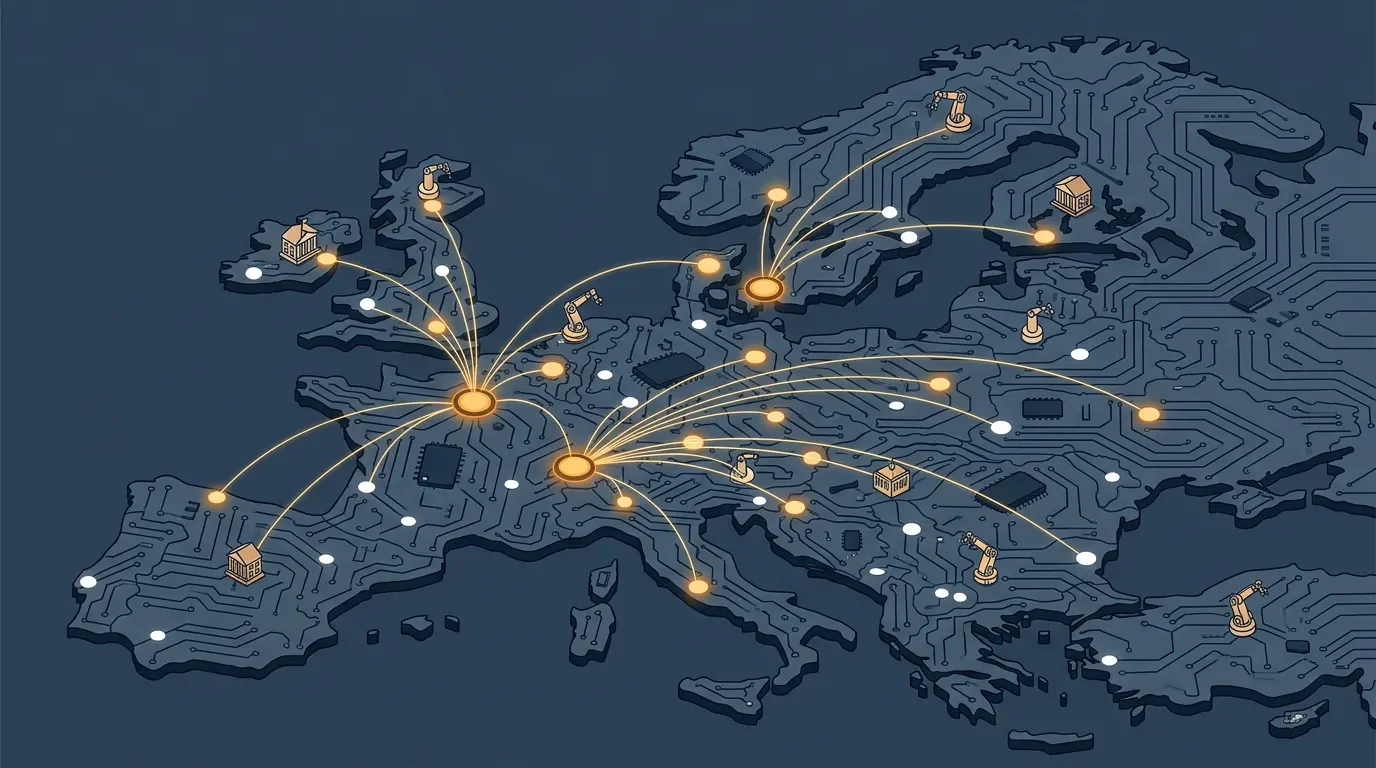
Cover image: AI-generated illustration.
Fuentes de referencia
- 1
- 2dblp: Cordelia Schmid
dblp.org
- 3SDU Career Site: Postdoc Position in Neuro-morphic Reinforcement Learning
fa-eosd-saasfaprod1.fa.ocs.oraclecloud.com
- 4ADIN Lab: Selected Publications
adinlab.github.io
- 5
- 6
- 7ISTA CVML Group: Postdoc Position in Machine Learning
cvml.ista.ac.at
- 8
- 9MEO Lab / University of Bonn: Job Openings
meo-lab.com
- 10
- 11Jobbnorge: listing 302170 (removed)
jobbnorge.no
- 12Academic Positions: KU Leuven causal ML position (closed)
academicpositions.fr
- 13INRIA: 2026-10076 (deadline passed)
jobs.inria.fr
Este contenido lo produjo un canal automáticamente. Con una sola frase, Neodrop puede seguir produciendo para ti.