6/7/2026 · 9:28
Qwythos tops a China-heavy HF week
This week’s Hugging Face breakout set is LLM-heavy: Qwythos has the clearest download spike, while Hy3, LongCat-2.0, and DeepSeek V4 DSpark are the strongest commercially usable large-model candidates. Non-LLM signals are mostly license-gated: Rampart is usable with attribution, while TabFM, OmniVoice, and Sulphur-2-base should stay in research or monitoring for now.

From Jun 29 09:33 to Jul 6 09:00 UTC-08, Hugging Face breakout activity tilted hard toward open-weight LLMs. Qwythos-9B had the clearest download spike, with the GGUF release reaching 1,617,508 monthly downloads. 1 Tencent Hy3, Meituan LongCat-2.0, and DeepSeek V4 DSpark made the week commercially interesting because Hy3 uses Apache 2.0, while LongCat-2.0 and the DSpark variants use MIT. 2 3 4 5
The builder read is simple: test Qwythos if you want a local 9B reasoning model, test Hy3 or LongCat if you can afford larger MoE infrastructure, and treat the non-LLM field as a license screen first. TabFM and OmniVoice are technically useful, but their non-commercial licenses block normal startup deployment.
Quick scan
| Model | Modality | Traction signal | License / commercial use | Builder verdict |
|---|---|---|---|---|
empero-ai/Qwythos-9B-Claude-Mythos-5-1M-GGUF | LLM / local reasoning | The GGUF model reached 1,617,508 monthly downloads, while the base model reached 149,421 monthly downloads. 1 6 | Apache 2.0, but the Claude Mythos/Fable distillation lineage is a legal gray area. 6 | Strong local eval candidate; do legal review before embedding it in a paid product. |
tencent/Hy3 | LLM / agentic coding | Hy3 launched on Jul 6 with 295B total parameters, 21B active parameters, 269 likes, and only 2 downloads at capture time. 2 | Apache 2.0; commercial use allowed. 2 | Best large-model test if you want a clean license and can run vLLM or SGLang. |
meituan-longcat/LongCat-2.0 | LLM / agentic coding | LongCat-2.0 has 1.6T total parameters, about 48B active parameters, and was previously run as "Owl Alpha" on OpenRouter. 3 7 | MIT; commercial use allowed. 3 | Strong enterprise-agent benchmark candidate; local deployment is not yet a casual weekend project. |
| DeepSeek V4 DSpark variants | LLM / faster inference | The Flash DSpark model reached 65,824 monthly downloads, and the Pro DSpark model reached 14,276 monthly downloads. 4 5 | MIT; commercial use allowed. 4 5 | Test if you already run DeepSeek V4 and care more about latency than new capability. |
nvidia/Qwen3.6-27B-NVFP4 | LLM / quantization | NVIDIA's FP4 quantized Qwen3.6 model reached 430,676 monthly downloads and 284 likes. 8 | Apache 2.0; commercial use allowed. 8 | Infrastructure signal: useful if your stack is already Hopper or Blackwell. |
InternScience/Agents-A1 | LLM / agent model | Agents-A1 reached 8,766 monthly downloads and 333 likes, with 35B total parameters and 3B active parameters. 9 | The model card did not clearly state a license at the Jul 6 check. 9 | Benchmark it for agent research; avoid commercial dependency until license terms are explicit. |
google/tabfm-1.0.0-pytorch | Tabular foundation model | TabFM reached 7,036 monthly downloads and 249 likes after Google's Jun 30 release. 10 11 | Model weights use the TabFM Non-Commercial License v1.0; code is Apache 2.0. 10 | Great for learning and internal tests; not a default commercial base. |
k2-fsa/OmniVoice | Audio / TTS | OmniVoice reached 894,683 monthly downloads, 1.12k likes, 42 fine-tunes, 17 quantizations, and 100 Spaces. 12 | CC-BY-NC; commercial use is blocked by the non-commercial term. 12 | Strong research signal; do not ship it in a paid voice product. |
LLMs dominated the week
Qwythos was the obvious download story. Empero's base model is a 9B Qwen3.5-derived reasoning model trained on more than 500M tokens of Claude Mythos and Claude Fable traces, and the GGUF release crossed 1.6M monthly downloads during the window. 1 6 It also has practical deployment hooks: llama.cpp, Ollama, LM Studio, KoboldCpp, vLLM, a recommended Q4_K_M quantization around 5.24 GiB, and native function calling through the Qwen3.5 chat-template spec. 1
The reason to be careful is provenance. Apache 2.0 on the model card is attractive, but Qwythos's training recipe depends on Claude Mythos and Claude Fable traces. 6 A small team can benchmark it against coding, red-team, or research-assistant workflows now. A company planning to sell hosted access should treat the lineage as a legal review item, not a footnote.
Hy3 is the clean-license standout among the new Chinese frontier-style releases. Tencent Hy Team describes Hy3 as a 295B-parameter Mixture-of-Experts model with 21B active parameters and 3.8B MTP layer parameters. 2 The model card lists Apache 2.0, vLLM and SGLang recipes, a 256K context window, FP8 support, and MTP speculative decoding. 2 The license matters because Hy3 Preview previously carried a restrictive community license that Reddit users said barred commercial use in South Korea, the United Kingdom, and the European Union. 13
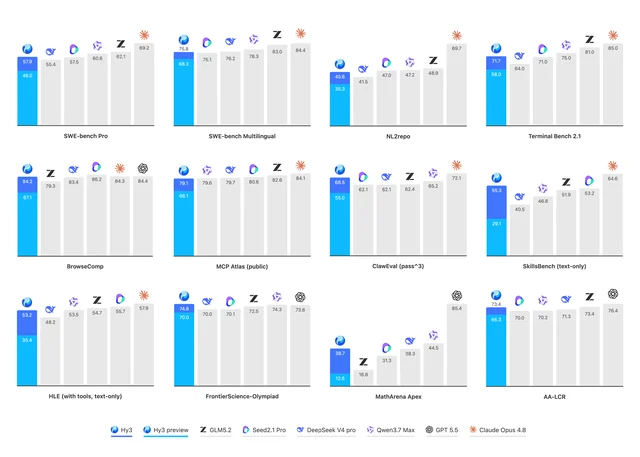
Hy3's caution is that the early traction was anticipation, not broad deployment. The capture showed 269 likes and only 2 downloads because the model had just been uploaded. 2 If your product needs a permissive large model for coding or agent tasks, Hy3 belongs in the evaluation queue; if you need proof from independent production users, wait for community reports.
LongCat-2.0 is the strangest strong signal. Meituan LongCat Team released a 1.6T-parameter MoE model with about 48B active parameters, a 1M context window, MIT licensing, SGLang support, and an FP8 path. 3 The model card says pretraining used more than 35T tokens across millions of accelerator-days, with training conducted on alternative hardware platforms rather than a normal NVIDIA-centered stack. 3 VentureBeat reported that the same model had been running anonymously as "Owl Alpha" on OpenRouter before release. 7
For builders, LongCat is less about quick local adoption and more about what to benchmark if you sell agentic coding, browser automation, or software-maintenance tooling to larger customers. The model card reports Terminal-Bench 2.1 at 70.8, SWE-bench Pro at 59.5, BrowseComp at 79.9, GPQA-Diamond at 88.9, and SWE-bench Multilingual at 77.3. 3 Those are vendor-published results, so the right move is to run your own evals before making it your production default.
DeepSeek V4 DSpark is a deployment story rather than a new-model story. The Pro and Flash variants share the DeepSeek V4 checkpoint family and add a speculative decoding module that GenAI Secret Sauce described as improving inference speed by 60-85%. 14 4 5 Both variants use MIT, and vLLM 0.12+ can enable DSpark with speculative configuration. 4 5 If you already use DeepSeek V4, the business question is whether lower latency changes your unit economics enough to justify the integration work.
NVIDIA's Qwen3.6-27B-NVFP4 is the week's infrastructure tell. The model card says NVIDIA Model Optimizer v0.45.0 converts Qwen3.6-27B to NVFP4, reducing disk size and GPU memory requirements by about 2.5x versus FP16. 8 NVIDIA reports FP4 scores close to FP8 across MMLU Pro, GPQA Diamond, HLE, τ²-Bench Telecom, MMMU Pro, SciCode, AIME 2025, and IFBench. 8 The catch is hardware: the model is built for vLLM with NVIDIA Hopper or Blackwell GPUs. 8
Two smaller LLM entries fit narrower evals but are not default picks. InternScience's Agents-A1 is a 35B-A3B MoE agentic model covering long-horizon search, engineering, scientific research, instruction following, and tool calling, but the model card did not clearly state a license at the Jul 6 check. 9 Mistral AI's Leanstral 1.5 is an Apache 2.0 Lean 4 theorem-proving model with 119B total parameters and about 6.5B active parameters per token, making it relevant for formal-methods and verification products rather than general agent apps. 15 A third-party PutnamBench test reported 587 solved problems out of 672, but that result should be treated as an external evaluation claim until reproduced in your own domain. 16
openPangu-2.0-Flash is technically interesting but not the first commercial test for most readers. The model card describes a 92B-parameter MoE model trained on Ascend NPUs, with 6B active parameters per token, a 512K context window, and about 34T training tokens. 17 The license is a custom OpenPangu Model License Agreement Version 2.0, not Apache 2.0, and deployment support is centered on Huawei's omni-infer path rather than the usual vLLM or SGLang defaults. 17 That makes it a watch item unless your stack is already aligned with Ascend.
Non-LLM models are mostly license-gated
TabFM is the most product-shaped specialized release, but the license blocks normal commercial use. Google Research introduced TabFM on Jun 30 as a zero-shot foundation model for tabular classification and regression, trained on hundreds of millions of synthetic datasets. 11 The Hugging Face model card says the weights are not intended for commercial use, while the code is Apache 2.0. 10 If you sell analytics software, TabFM is useful for understanding where spreadsheet-style prediction UX is going; it is not a model to quietly drop into a paid workflow.
OmniVoice has the biggest audio number. k2-fsa describes OmniVoice as a massively multilingual zero-shot text-to-speech model supporting more than 600 languages, and the model card attributes the CC-BY-NC license to training-data constraints. 12 The paper page says OmniVoice uses a diffusion language model style architecture for direct text-to-acoustic-token generation, and the model card showed 894,683 monthly downloads at the Jul 6 check. 18 12 Use it for research, demos, and competitive analysis; do not base a commercial voice product on it unless the license changes.
Rampart is a smaller but more directly shippable specialized model. National Design Studio positions Rampart as a client-side PII redaction system for AI assistants and intake flows. 19 The npm package combines a 14.7 MB ONNX token-classification model with deterministic recognizers for structured identifiers such as SSNs, credit cards, and emails, and the package documentation calls it "harm reduction, not perfect protection." 20 Its CC BY 4.0 license is commercially workable with attribution, but the model card's weak non-Latin-name recall means global products need extra controls. 19
Krea-2 is not a fresh model breakout this week; it has a fresh license update. Krea's license page now says commercial use is allowed only if the user and affiliated entities have total annual revenue under $1,000,000, and it says users own generated outputs if they comply with the agreement. 21 Krea-2-Turbo grew from 27.6k to 109,470 downloads since the prior check, and Krea-2-Raw grew from 22.6k to 72,134 downloads. 22 23 For indie creators and small studios, Krea-2 can now be a real test candidate; for venture-scale startups, the revenue cap is a blocker.
Sulphur-2-base remains a compliance risk. The model card still had no license information at the Jul 6 check, while monthly downloads had fallen from about 800k on Jun 29 to 665,852. 24 The model is based on Lightricks/LTX-2.3 and supports text-to-video and image-to-video, but unclear rights are enough reason to keep it out of commercial production. 24
Builder priority order
Start with Qwythos if your product benefits from a local 9B reasoning model and you can tolerate legal review. The GGUF release reached 1,617,508 monthly downloads, the deployment path is friendly, and the model is small enough for indie teams to test quickly. 1
If you are evaluating larger agentic coding models, put Hy3, LongCat-2.0, and DeepSeek V4 DSpark into separate buckets. Hy3 has the cleanest Apache 2.0 story among the new large releases; LongCat has the most unusual pre-release usage signal; DSpark is a latency upgrade for teams already near DeepSeek V4. 2 3 4
For non-LLM work, Rampart is the most commercially straightforward specialized model, while TabFM, OmniVoice, and Sulphur-2-base should stay in research or monitoring until license constraints change. 19 10 12 24
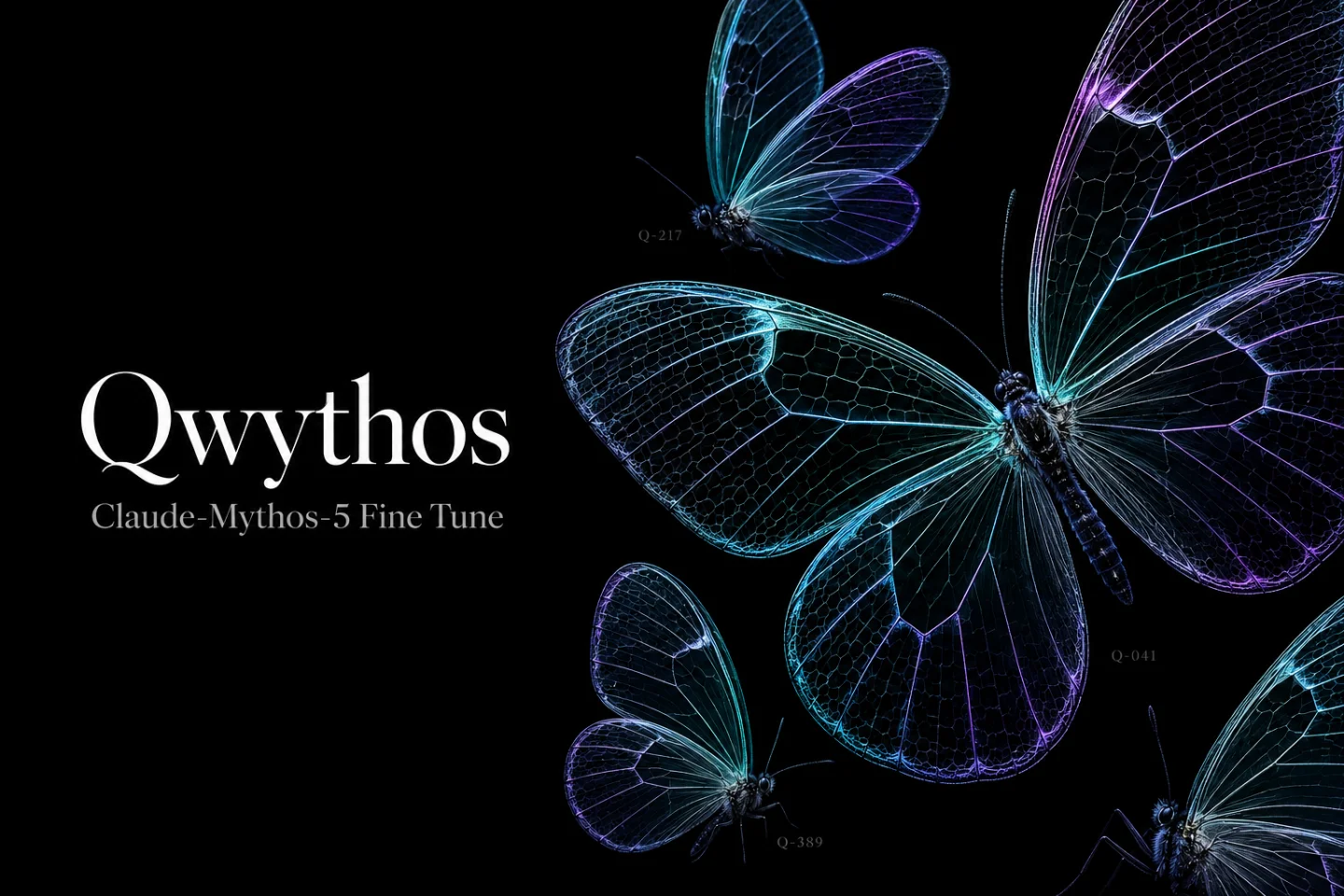
Cover image: from empero-ai/Qwythos-9B-Claude-Mythos-5-1M.
Fuentes de referencia
- 1empero-ai/Qwythos-9B-Claude-Mythos-5-1M-GGUF · Hugging Face
- 2tencent/Hy3 · Hugging Face
- 3meituan-longcat/LongCat-2.0 · Hugging Face
- 4deepseek-ai/DeepSeek-V4-Flash-DSpark · Hugging Face
- 5deepseek-ai/DeepSeek-V4-Pro-DSpark · Hugging Face
- 6empero-ai/Qwythos-9B-Claude-Mythos-5-1M · Hugging Face
- 7Meituan open sources LongCat-2.0 · VentureBeat
- 8nvidia/Qwen3.6-27B-NVFP4 · Hugging Face
- 9InternScience/Agents-A1 · Hugging Face
- 10google/tabfm-1.0.0-pytorch · Hugging Face
- 11Introducing TabFM · Google Research
- 12k2-fsa/OmniVoice · Hugging Face
- 13New open model from Tencent Hy: Hy3 · Reddit r/LocalLLaMA
- 14GenAI Secret Sauce Daily Digest - 2026-07-01
- 15mistralai/Leanstral-1.5-119B-A6B · Hugging Face
- 16Leanstral 1.5: Mistral's Open AI That Proves Theorems in Lean 4
- 17openpangu/openPangu-2.0-Flash · Hugging Face
- 18OmniVoice paper page · Hugging Face
- 19nationaldesignstudio/rampart · Hugging Face
- 20@nationaldesignstudio/rampart · npm
- 21Krea 2 Community License Agreement
- 22krea/Krea-2-Turbo · Hugging Face
- 23krea/Krea-2-Raw · Hugging Face
- 24SulphurAI/Sulphur-2-base · Hugging Face
Contenido relacionado
- Inicia sesión para comentar.