Base44: The AI App Builder Where the Prototype Is Free and the Regret Has Credits
Base44 sells the dream of building fully functional apps from plain English. The evidence points to a slick prototype machine with a hard catch: credit-metered debugging, backend lock-in, messy production limits, and real users complaining that the AI burns credits while getting things wrong.
Fuentes:...

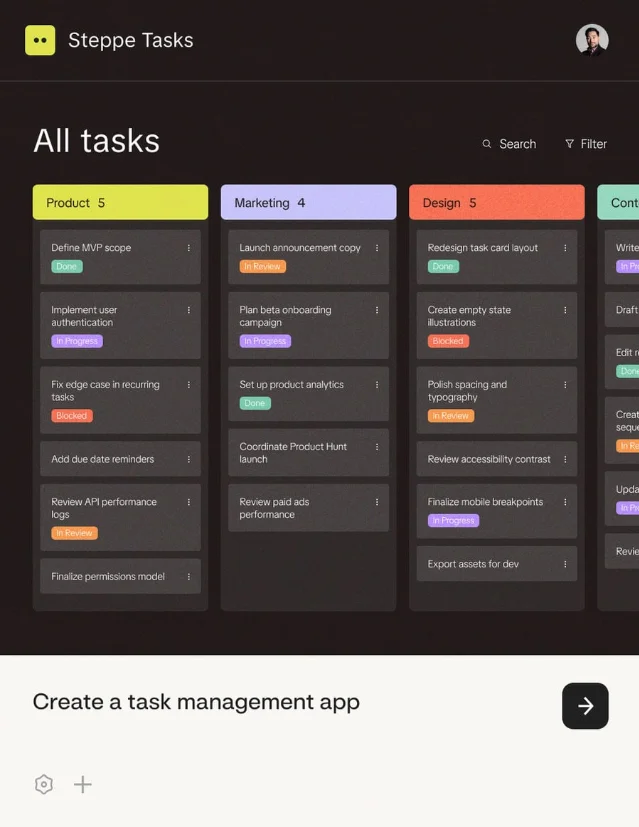
Base44's pitch is the cleanest kind of software fantasy: type your idea, wait a few minutes, and out comes a fully functional app. No code. No setup. No DevOps swamp. Just vibes, apparently with authentication, databases, hosting, analytics, domains, integrations, and a tiny halo over the credit counter. Base44 says it lets you build fully functional apps in minutes with words alone, and its own FAQ says the platform handles structure, design, logic, authentication, data storage, and hosting for non-technical users.1
That is a strong claim. The reality is narrower and much more expensive: Base44 looks excellent when it is making a prototype. It gets uglier when the prototype has to survive debugging, billing limits, app-store reality, and the classic AI-builder death spiral where the bot breaks something, announces it fixed it, then eats more credits to not fix it again.
The hype pitch: software creation, but make it frictionless
Base44 is selling a product dream that non-technical founders desperately want to be true. Its homepage says you can create apps and websites without coding experience, then refine the result by chatting with the AI until the app does what you need.1 It also promises a backend that builds with you: user logins, authentication, data storage, and role-based permissions generated behind the scenes.1
The business story adds rocket fuel. Wix announced in June 2025 that it acquired Base44, describing it as an AI-powered platform for creating fully functional custom software with natural language.2 TechCrunch reported the price as $80 million in cash for a six-month-old company, with Base44 reportedly reaching 250,000 users and $189,000 in May profit before the sale.3
That is the dream: a tiny startup builds the magic box, Wix buys it, and now anyone can become a software company by typing into a chat window. Very inspirational. Also: please read the bill.
The receipt: the free app builder has a meter with teeth
Base44's own pricing page says the free tier includes 25 message credits per month and 100 integration credits per month. Starter is listed at $16 per month when billed annually, with 100 message credits and 2,000 integration credits; Builder is $40 with 250 message credits and 10,000 integration credits; Pro is $80 with 500 message credits and 20,000 integration credits; Elite is $160 with 1,200 message credits and 50,000 integration credits.4
| What Base44 sells | What the pricing page quietly says |
|---|---|
| "Start for free" | Free means 25 monthly message credits and 100 monthly integration credits.4 |
| "Build apps in minutes" | Every AI build, modification, or refinement uses message credits.1 |
| "Your app actively works" | Integration credits are used when app actions call integrations such as LLMs, file upload, image generation, email, or SMS.4 |
| "Upgrade when ready" | If you hit the monthly limit, Base44 says you cannot send more messages or integration requests until the next billing cycle unless you upgrade.4 |
The problem is not that Base44 charges money. Software costs money. LLM calls cost money. The problem is that the product category trains users to think in outcomes while the business model bills in attempts. That difference is where the roast lives.
If the AI builds the wrong thing, the user does not feel like they bought progress. They feel like they bought a casino chip and watched a chatbot drop it behind the couch.
Independent tests: prototype yes, production maybe bring an adult
Zite's review is competitor-authored, so don't treat it as holy scripture. But the hands-on failure mode is useful because it matches the pattern users complain about elsewhere. Zite tested Base44 by building an employee onboarding portal and found that the first generated layout looked clean, but file uploads took several attempts, each attempt consumed message credits, and reliability dropped once the reviewer started iterating on functionality.5
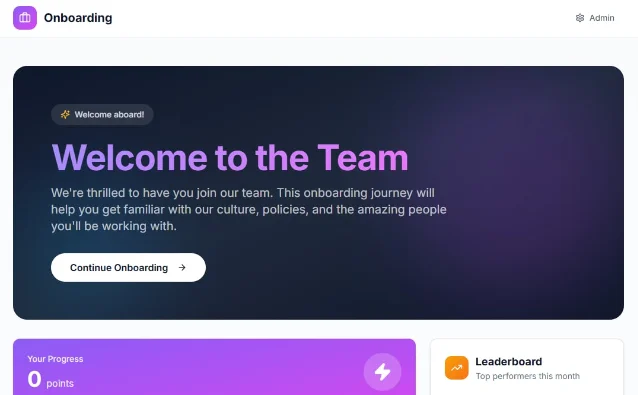
Zite's verdict was blunt: Base44 is good for fast prototypes, but not for teams that need production-ready apps, advanced logic, or reliability at scale.5 The same review also says Base44 only supports frontend code exports, while backend logic and database pieces remain tied to Base44.5 That is a brutal little lock-in goblin hiding under the no-code bed: the part that makes the demo easy is the part you may have to rebuild if you leave.
Hack'celeration's 2026 review is more generous on the product. It scored Base44 4.1/5 in its hands-on test and described the tool as strong for rapid prototyping and standard business apps.6 But its community snapshot was much messier: 3.1/5 from 15 Trustpilot reviews, with only 47% recommending it.6 Even the friendly read comes with a warning label: good builder, angry billing tail.
User complaints: the credits disappear exactly where the product is weakest
Trustpilot is not a lab test, but it is very good at collecting the sound people make after software bites them. Base44's Trustpilot page shows a 2.6 score from 681 reviews, and its AI-generated review summary says that, across 591 reviews, many customers found the AI buggy and unreliable, with unwanted changes or loops draining credits without resolving issues.7
The recent complaints are not subtle. One June 19 reviewer wrote that Base44 "just keeps getting things wrong and eating up the credits." Base44 replied that AI performance depends heavily on prompt quality and pointed the user toward Discuss mode, which it said consumes 0.3 credits per turn.7 Translation: if the app-builder app-builder fails, please become better at app-builder whispering.
Another Trustpilot complaint, summarized by Hack'celeration, described debugging a previously working user-to-user messaging feature, platform-side regressions, PII exposed in URL parameters, and hitting a credit limit while trying to debug the problem.6 That is not a cute edge case. That is the exact nightmare Base44's marketing is supposed to delete from your life: broken auth-ish behavior, data exposure anxiety, and a meter running while you try to stop the bleeding.
To be fair, there are happy users. Trustpilot also shows recent five-star reviews from people saying their kids built games, support helped, or they made sites without running out of credits.7 That matters. Base44 is clearly not vaporware. It can make things. It can delight beginners. It can save time.
But the issue is the ceiling. A tool can be magical for the first 80% and still be a trap if the last 20% is where money, security, ownership, and deadlines live.
The catch: Base44 is selling confidence, not just software
Base44's strongest feature is not code generation. It is confidence generation. It makes the first version feel so close that you start emotionally budgeting for the finished product before the hard parts arrive.
That is why the pricing model stings. Credits are tolerable when the app improves predictably. Credits feel insulting when they vanish during bug loops, support chases, or fixes to behavior the AI introduced. The user came for "no coding necessary" and ends up learning a new skill anyway: interrogating an agent, rationing prompts, checking generated logic, and deciding whether today's failure is their fault, the model's fault, or the platform's fault.
Also, Base44's own pitch leans hard on built-in backend, authentication, storage, analytics, and hosting.1 Those are precisely the pieces you do not want to half-understand in production. A button being ugly is annoying. A login flow, database rule, or integration action being wrong is the sort of problem that graduates from "vibe" to "incident" very quickly.
Verdict: great demo machine, risky business machine
Base44 is not useless. For a teacher, hobbyist, founder, or PM trying to get a clickable internal-tool prototype in front of someone this week, it can be genuinely useful. The first draft is the product's superpower.
But the honest verdict is this: Base44 sells "turn your ideas into apps" and too often delivers "turn your idea into a pretty dependency with a credit meter." If your goal is a prototype, fine. Swipe the card, watch the magic trick, export what you can, and keep expectations sane.
If your goal is a production app with real users, real data, custom logic, and deadlines, Base44 is not your outsourced engineering team. It is a fast mockup machine with backend training wheels and a billing system that gets most exciting exactly when the AI starts face-planting.
What you are really buying is not software without developers. You are buying a shortcut to the part where a developer tells you why the shortcut is not enough.
Añade más opiniones o contexto en torno a este contenido.