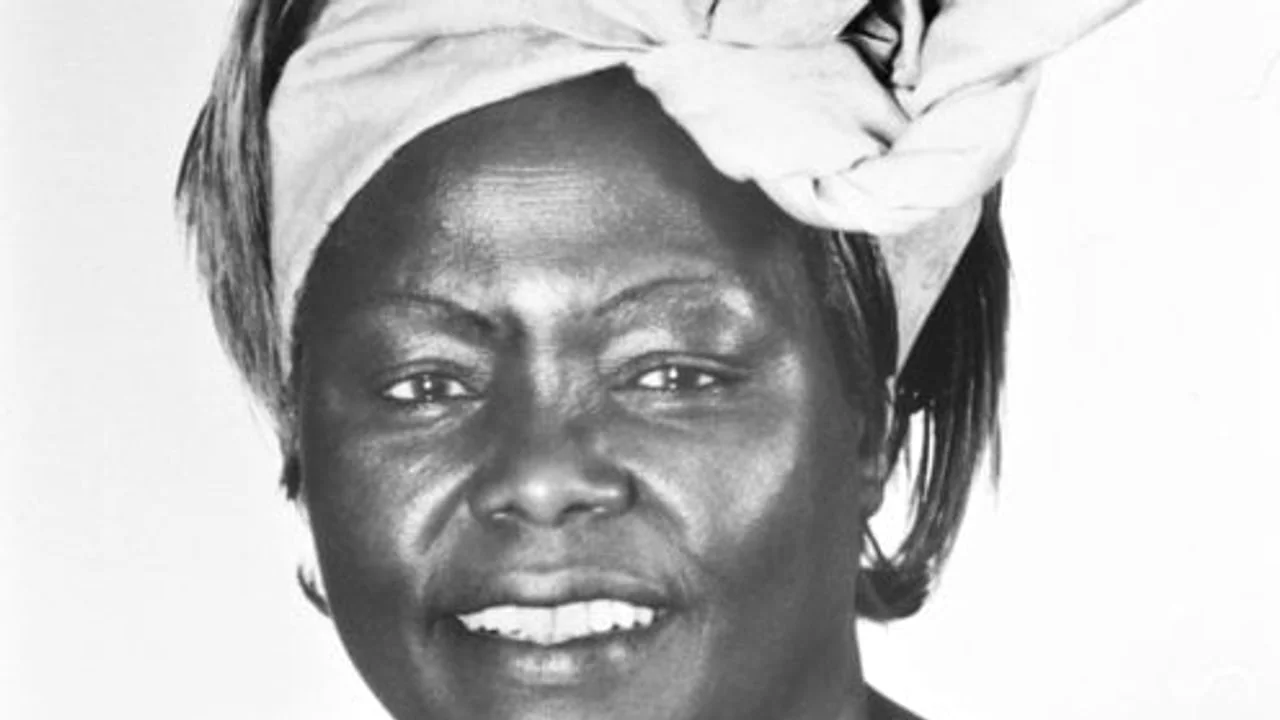
Wangari Maathai: the tree as a political act
A narrative profile of Wangari Maathai, from her rural Kenyan childhood and scientific training to the Green Belt Movement, state resistance, the Nobel Peace Prize, and the leadership lessons that still travel beyond Kenya.

In 1977, Wangari Maathai responded to something specific: rural Kenyan women telling her that firewood was harder to find, streams were drying up, and the work of feeding families was getting heavier. Her answer was to pay local women to raise and plant trees. What started as a repair grew into a civic movement — and eventually a critique of how Kenya's land and democracy were being managed. 1
Scientist first
Maathai was born on April 1, 1940, in Nyeri, in Kenya's central highlands. 2 She studied biological sciences at Mount St. Scholastica College in Kansas, earned a master's from the University of Pittsburgh, and received a Ph.D. from the University of Nairobi in 1971 — the first woman in the region to chair a university department and become an associate professor there.
That training mattered. When rural women described soil erosion, weaker harvests, and longer walks for water, Maathai had the scientific vocabulary to confirm what they already knew: these were symptoms of the same broken relationship between land management and political accountability.
The Green Belt Movement
The movement grew from Maathai's work with the National Council of Women of Kenya. 3 A planted tree could hold soil, retain groundwater, provide food or fuel, and bring income to the women who raised and sold seedlings. It could also become a gathering point — people around nurseries began asking why forests were disappearing and who was benefiting from land allocations.
By the early 1980s there were hundreds of nurseries. By the end of 1993, women reported planting more than 20 million trees; by the time of the 2004 Nobel, the figure had passed 30 million. 4 A tree-planting scheme had become a mass civic network.
Confronting the state
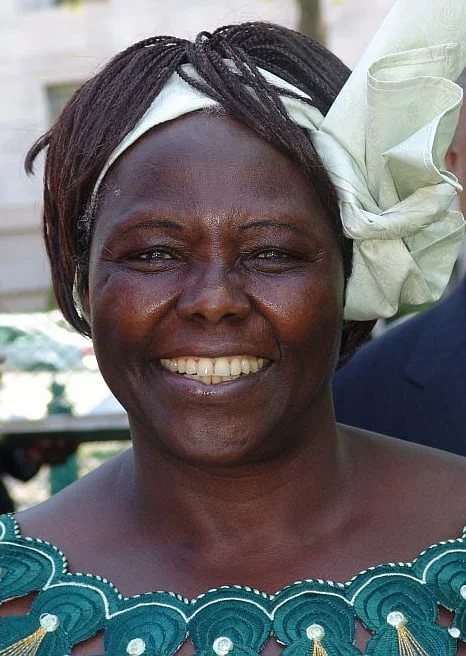
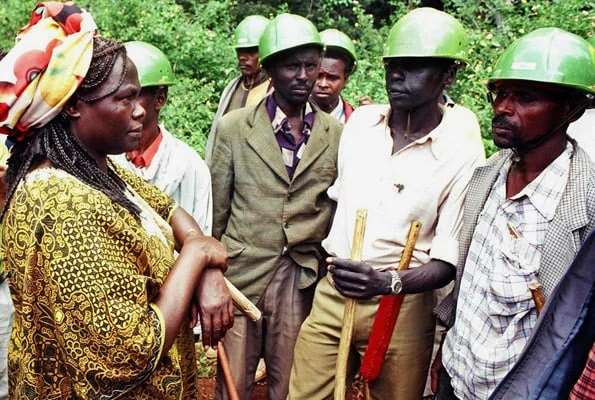
The movement's ecological work made a harder claim visible: deforestation was tied to land grabbing and corruption. That was not a safe argument in Kenya under Daniel arap Moi. Maathai was harassed, beaten, detained, and publicly defamed. 1 One of the flashpoints was Karura Forest, where she and other activists challenged attempts to privatize public land.
The movement's methods stayed practical throughout — raise seedlings, plant them, discuss the causes of degradation, connect those causes to governance, and ask citizens to act. In her Nobel lecture, Maathai described community sessions where people identified their problems, traced their causes, and linked personal action to environmental and political conditions. 6
Nobel, and a necessary complication
In 2004, the Norwegian Nobel Committee awarded Maathai the Peace Prize, describing her as a leader who connected ecological work with democracy, human rights, and women's rights. 4 Her acceptance speech pushed back against the hero narrative: "Although this prize comes to me, it acknowledges the work of countless individuals and groups across the globe."
Around the same time, reports circulated that Maathai had suggested HIV/AIDS might have been engineered by Western scientists. She denied making those allegations. In a statement issued by the Nobel Committee, she said she did not believe the virus was developed to destroy Africans, calling such views "wicked and destructive." 7 The episode is worth noting. Maathai's documented work linked science, community organizing, and democratic accountability; loose or reported words in a different register collided with that record at the worst possible moment.
What her approach shows
Maathai died on September 25, 2011. 2 By then the Green Belt Movement had helped turn tree planting into a language of rights: the right to water, to land protected from private capture, and to women's leadership in public work.
Three things stand out for anyone trying to build durable change:
- Start with a repair people can do now. Maathai began with seedlings and firewood, not an ideology.
- Let practical work reveal the system. Planting became political because people could see how degraded land, corruption, and gendered labor were connected.
- Share credit before the world asks for a hero. Her Nobel lecture named the countless people behind the work — an accurate theory of how movements actually hold together.
Fuentes de referencia
- 1Wangari Maathai Foundation, "Wangari's Story"
- 2Nobel Prize, "Wangari Maathai – Biographical"
- 3Right Livelihood, "Wangari Maathai"
- 4Nobel Prize, "The Nobel Peace Prize 2004 – Press release"
- 5Wikimedia Commons, "Category:Wangari Maathai"
- 6Nobel Prize, "Wangari Maathai – Nobel Lecture"
- 7RFE/RL, "Africa's First Female Nobel Peace Laureate Accepts Award Amid Controversy Over AIDS Remarks"
Añade más opiniones o contexto en torno a este contenido.