
When the government blinked: AIG, $85 billion, and the negotiation that had no BATNA

When the government blinked: AIG, $85 billion, and the negotiation that had no BATNA

On September 16, 2008 — 36 hours after Lehman Brothers filed for bankruptcy — the Federal Reserve invoked Depression-era emergency powers to rescue AIG with an $85 billion loan in exchange for a 79.9% equity stake. This case study traces the four-day sequence from AIG's Friday liquidity alarm to the Tuesday night Federal Reserve vote, explains why AIG was rescued when Lehman was not (the $441 billion CDS counterparty network, not collateral quality), covers the politically toxic 100-cents-on-dollar Maiden Lane III counterparty payout ($62.1 billion), and dissects the Starr International litigation that produced a federal court ruling of illegality — and zero damages. The government ultimately profited $22.7 billion. Four transferable frameworks close the piece: BATNA erasure, the 79.9% accounting threshold trick, rating-trigger hidden clocks, and the pre-commitment trap.

Business Negotiation Classics: One Case a Day
10/6/2026 · 21:24
1 suscripciones · 25 contenidos
At 9:00 p.m. on Tuesday, September 16, 2008, the Federal Reserve Board of Governors voted to invoke Section 13(3) of the Federal Reserve Act — the same Depression-era emergency lending authority the Fed had used just six months earlier for Bear Stearns, and declined to use just 36 hours earlier for Lehman Brothers. The target this time was American International Group, the world's largest insurer. The terms were $85 billion at approximately 11.5% interest, secured by virtually every asset AIG owned. In exchange, the U.S. government received a 79.9% equity stake. 1
The decision came 36 hours after Hank Paulson had stood in the same institution and declared, in effect, that the government was done rescuing Wall Street. It came 19 hours after Lehman Brothers had filed for the largest bankruptcy in American history. It came after every private-sector alternative had collapsed and after Timothy Geithner, president of the Federal Reserve Bank of New York, had concluded that letting AIG fail was "a formula for a second Great Depression." 2
This is the third case in the 2008 crisis trilogy: Bear Stearns was rescued in March; Lehman was not rescued in September. AIG was rescued the morning after. The three decisions together reveal more about how sovereign intervention actually works — and what "leverage" means when a counterparty's failure would destroy you — than any single case could alone.

The parties at the table: interests, leverage, and what they weren't saying

Before tracing what happened, it helps to map where each actor actually stood — not their public position, but the underlying interests, real leverage, and hidden constraints that shaped every decision.
PartyStated objectiveReal leverageBATNAHidden constraint
AIG (Willumstad)Find private financing or a government bridgeNear-zero — $1T in assets but stock at $4.76, commercial paper markets shutChapter 11 bankruptcy; complete wipeout for equity holdersHad been quietly lobbying for access to the Fed's discount window for weeks; management had no credible contingency
Federal Reserve / Treasury (Bernanke, Paulson, Geithner)Prevent systemic collapse; avoid moral hazard; avoid formal nationalizationSection 13(3) emergency lending authority; sole authority to authorize the rescuePresiding over a potential global financial cascade — the actual alternative, not a negotiating positionPublicly committed 36 hours earlier to "no government funds"; AIG's $441B CDS book made that commitment politically impossible to hold
Private equity / bank consortium (Flowers, JPMorgan, Goldman)Acquire distressed assets or bridge-fund AIG at favorable termsCapital access; deal structuring expertiseWalk away — each firm was managing its own mortgage exposureEach firm simultaneously had large, undisclosed CDS exposure to AIG; "rescuing" AIG privately would reduce their own losses, but no one would say so publicly
CDS counterparties (Goldman $12.9B, Deutsche Bank $11.8B, Société Générale $11.9B, Barclays $8.5B)Recover collateral contractually owedLegally binding collateral call rights; automatic triggers in CDS contractsTrigger all calls simultaneously, likely bankrupting AIG within daysA 100-cents-on-the-dollar payout from a government rescue was far superior to a bankruptcy recovery; incentive to not accept discounts was absolute
AIG Financial Products (Cassano's legacy book)A $441B CDS portfolio that could not be unwound quicklyAIGFP had sold one-way CDS protection with no hedges and no capital reserves, a structure the FCIC later called "a profound failure of corporate governance"
The asymmetry that defined this negotiation was structural, not tactical. AIG was not negotiating with the government from a weak position — it had no position. The government was not negotiating with AIG from a position of strength — it was negotiating with the consequences of AIG's failure. The real counterparty was the $441 billion CDS book. Everything else was mechanics.

The 72 hours that ended private finance's involvement

Friday, September 12: five to ten days of runway

The weekend began with an AIG delegation — led by Vice Chairman Jacob Frenkel — arriving at the Federal Reserve Bank of New York on Maiden Lane in Lower Manhattan. The message was unambiguous: AIG's treasury staff estimated that the parent holding company had between five and ten days of liquidity remaining. 3
The numbers behind that estimate were already alarming. AIG's CDS counterparties had demanded $23.4 billion in collateral; AIG had posted $18.9 billion, including $7.6 billion to Goldman Sachs. 3 A credit rating downgrade — which S&P and Moody's were signaling — would automatically trigger an additional $10 billion in collateral calls and another $4–5 billion in liquidity puts embedded in AIG's contracts. On the commercial paper side, AIG had been able to roll over only $1.1 billion of $2.5 billion maturing that day; another $3.2 billion was coming due the following week. 4
Simultaneously, AIG's securities lending book was unraveling. AIG had lent out securities held by its insurance subsidiaries, taken cash collateral in return, and reinvested that cash into long-term mortgage-backed securities. By Q3 2008, the book had grown to $88.4 billion. Counterparties were now terminating those agreements and demanding cash back — cash AIG had tied up in illiquid MBS that had plummeted in value. 5
A New York Fed analyst captured the market mood that Friday: "More panic from [hedge funds]. Now focus is on AIG. I am hearing worse than LEH. Every bank and dealer has exposure to them." 4 AIG's stock closed at $11.49, down from $17.55 the day before.
Geithner directed staff to try to organize a private-sector solution — specifically, a consortium of banks willing to provide $75 billion in bridge financing while AIG sold assets to stabilize. The model was the 1998 Long-Term Capital Management rescue: coordinate Wall Street, avoid direct government exposure. As of Friday evening, that plan was theoretically viable.

Saturday and Sunday, September 13–14: every private solution fails

Over the weekend, private equity firm J.C. Flowers approached AIG with a proposal: Flowers and Allianz would each invest $5 billion in AIG subsidiaries in exchange for equity stakes, with New York State Insurance Department approval allowing $20 billion to flow up to the parent. AIG's board rejected it immediately. CEO Robert Willumstad later called it a "so-called offer" and said he did not consider it "a serious attempt." 4 J.C. Flowers founder Christopher Flowers, for his part, said he was "astounded" the board dismissed it given what followed. 4
A New York Fed assistant vice president named Alejandro LaTorre sent a midnight memo to Geithner and the Fed's chief economist: the key risk was "a severe run on their liquidity over the course of the next several (approx. 10) days if they are downgraded," with exposure concentrated in "12 of the largest international banks." 4 A separate internal memo the same morning took a more skeptical view: Fed analyst Adam Ashcraft wrote that AIG's threats to sell assets or declare bankruptcy were "a clear attempt to scare policymakers into giving [AIG] access to the discount window." 4
Both memos were right. AIG was desperate, and it was also playing for leverage. The two things are not mutually exclusive.

Monday, September 15: Lehman files, AIG collapses in one day

At 1:45 a.m. on Monday, September 15, Lehman Brothers Holdings filed for Chapter 11 bankruptcy protection — $639 billion in assets, the largest bankruptcy in U.S. history. 6
The Lehman filing killed what remained of the private-sector solution for AIG. New York Fed Senior Vice President Sarah Dahlgren told the FCIC that Lehman's bankruptcy "was the end of the private-sector solution." Tom Baxter, the FRBNY's general counsel, said it more bluntly: "Once Lehman filed on the morning of the 15th, everyone decided that 'we've got to protect our own balance sheet,' and the banks that were going to provide the $75 billion decided that they were not going to." 4
That afternoon, the three major rating agencies moved on AIG simultaneously. S&P cut three notches to A-. Moody's cut two notches to A2. Fitch cut two notches to A. 4 The downgrades triggered the collateral clauses embedded in AIG's CDS contracts. Total collateral demands jumped to $32 billion — Goldman Sachs alone demanded an additional $2.1 billion that day. 4 AIG's total outstanding payments rose to $19.5 billion; its collateral shortfall reached $12.4 billion, up from $4.5 billion just three days earlier.
AIG's stock fell 61% to $4.76 — down 97% from its all-time high of $145.84. 6 After markets closed, AIG's management informed the New York Fed that the company could no longer access the commercial paper market at all.

Tuesday, September 16: Section 13(3) and the 79.9% stake

The Federal Reserve Board met Tuesday afternoon. The case for intervention rested on a single factual claim, set out in the Board's official statement: "a disorderly failure of AIG could add to already significant levels of financial market fragility and lead to substantially higher borrowing costs, reduced household wealth, and materially weaker economic performance." 1
At 6:30 p.m., Paulson and Bernanke briefed congressional leaders — including House Speaker Nancy Pelosi and Senate Majority Leader Harry Reid — on the proposed rescue. Pelosi called the $85 billion figure "staggering." 6 At 9:00 p.m., the Federal Reserve Board voted unanimously to authorize the loan. 7
The terms were punishing by design. The $85 billion facility carried interest at 3-month LIBOR plus 850 basis points — roughly 11.5% at prevailing rates. The government received warrants convertible to 79.9% of AIG's common equity, held through an independent trust. 7 AIG's board accepted on a take-it-or-leave-it basis. Paulson told Willumstad he was out; Edward Liddy, the former Allstate chairman, was appointed as CEO at a salary of $1 per year. 6
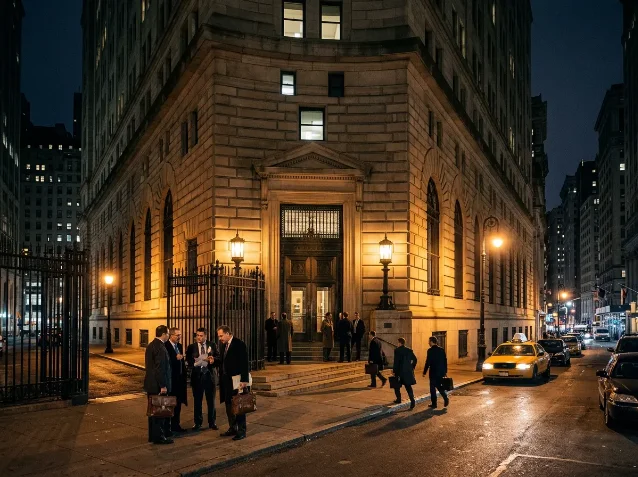
The Federal Reserve Bank of New York on Maiden Lane — site of the emergency negotiations that resulted in AIG's September 2008 rescue
The New York Federal Reserve's Maiden Lane headquarters served as the operational center for both the Lehman and AIG rescue negotiations. AI-generated illustration.

Why AIG, not Lehman: the counterparty calculus

The 36-hour gap between Lehman's bankruptcy and AIG's rescue is the most frequently cited paradox of the 2008 crisis. The official explanation from the Fed is precisely that there was no paradox: the two situations were legally and financially distinct. Lehman, they argued, lacked adequate collateral to secure a Fed loan under Section 13(3). AIG had assets that could be pledged.
That collateral argument has been contested. Johns Hopkins economist Laurence Ball concluded in a 218-page NBER study that Lehman had at least $131 billion in Primary Dealer Credit Facility-eligible assets against an estimated $88 billion liquidity need — an overcollateralization the Fed never formally analyzed or rejected. 8 Geithner himself acknowledged under testimony in 2014 that the Fed was "operating outside of the boundaries of established precedent." 2
The more transparent distinction was counterparty network topology. AIG had sold $441 billion in CDS protection to financial institutions around the world. 4 The known direct exposures among the largest counterparties: Goldman Sachs at $12.9 billion, Société Générale at $11.9 billion, Deutsche Bank at $11.8 billion, Barclays at $8.5 billion. 9 An AIG bankruptcy would also have forced European banks to recognize an immediate $18 billion increase in capital requirements, because the CDS they had bought from AIG functioned as regulatory capital relief — relief that would evaporate. 4
Ben Bernanke later told the television program 60 Minutes that AIG's failure would "bring down the financial system." 5 An internal FRBNY document that weekend put the same concern in institutional language: AIG's "size, name, franchise and market presence (wholesale and retail) raise questions about potential worldwide contagion, should this franchise become impaired." 4
A Fed official later explained the Lehman-vs.-AIG distinction more directly: "the markets were more prepared for the failure of an investment bank" than for the failure of the world's largest insurer. 6 That is not a collateral argument. It is a political-economy argument — and one that accurately describes how the decision was actually made.
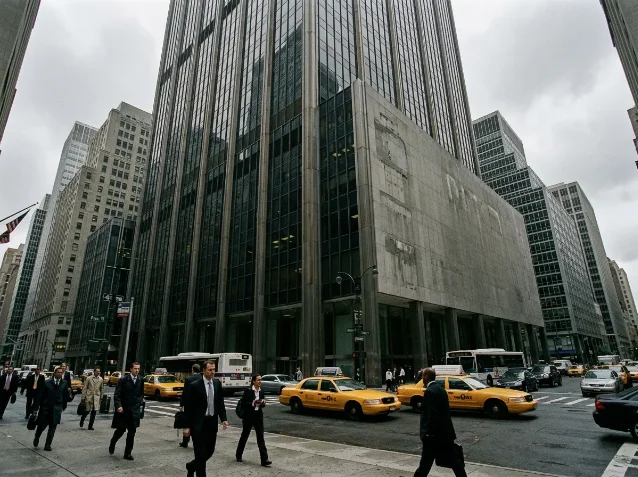
AIG's Manhattan offices during the financial crisis — the company held roughly $1 trillion in assets and operated in approximately 140 countries
A Lower Manhattan financial district tower in the style of AIG's New York headquarters, circa 2008. AI-generated illustration. 3

The counterparty payout and the court's paradox

The rescue did not end at $85 billion. The government's total commitment eventually reached $182.3 billion across four tranches: the initial $85 billion facility, a $37.8 billion securities lending facility in October, a November restructuring that added $40 billion in TARP funds and created Maiden Lane II and III, and a final $30 billion top-up in March 2009 after AIG reported a $61.7 billion quarterly loss — the largest in U.S. corporate history at the time. 7
The Maiden Lane III controversy became the most politically toxic element of the rescue. In November 2008, the FRBNY held two days of "negotiations" with AIG's CDS counterparties — Goldman, Deutsche Bank, Société Générale, and eight others — asking whether they would accept discounts on contract terminations. 10 Only UBS indicated any willingness to discount, and only if every other counterparty agreed as well. No one else moved.
The FRBNY, with Geithner's approval, proceeded to pay 100 cents on the dollar — $27.1 billion in direct payments plus the retention of $35 billion in collateral AIG had already posted, for a total of $62.1 billion at full face value. 10 Tom Baxter, the FRBNY's general counsel, testified afterward: "I don't know why we even bothered to ask." When pressed on why they had asked at all, he replied: "I guess it doesn't hurt to ask." 10
The Congressional Oversight Panel, chaired by Elizabeth Warren, called this a "backdoor bailout of AIG's counterparties" and labeled the company "a corporate Frankenstein, a conglomeration of banking and insurance and investment interests that defy regulatory oversight." 11
Duke finance professor Campbell Harvey drew the sharpest line: "A hedge is not a hedge if you did not factor in the counterparty risk. And the U.S. taxpayer should not be obligated to make people whole for hedges that were not properly executed." 9
The government ultimately exited AIG in December 2012, recovering $205 billion against total outlays of $182.3 billion — a net profit of $22.7 billion, with $17.7 billion going to the Federal Reserve and $5 billion to the Treasury. 12
Hank Greenberg — AIG's former CEO, who controlled approximately 12% of its shares through his firm Starr International — spent the intervening years suing the government for $25 billion, arguing the equity taking had been an illegal exaction under the Federal Reserve Act. In June 2015, Judge Thomas Wheeler of the U.S. Court of Federal Claims agreed: "There [was] nothing in the Federal Reserve Act or in any other federal statute that would permit a Federal Reserve Bank to take over a private corporation." 13
The judge then awarded zero damages. The reasoning: had the government not intervened, AIG would have filed for bankruptcy, and the shareholders' interests would have been "worth nothing" anyway. This is what the Harvard Law Review called "the Achilles' heel of Starr's argument." 13 The Federal Circuit reversed on standing in 2017; the Supreme Court declined to hear the case in 2018. 14
The paradox holds: the government rescued AIG through means a federal court later ruled illegal, made $22.7 billion doing it, and the shareholders who sued for compensation got nothing because they'd have been wiped out anyway.
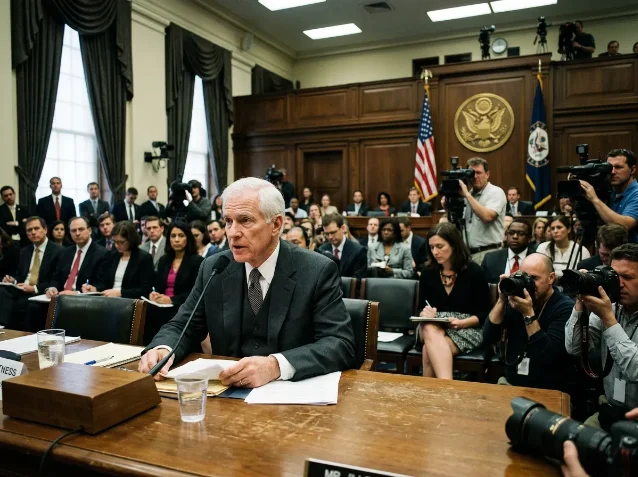
Congressional hearing room — the kind of high-profile testimony AIG's CEO Edward Liddy faced in March 2009 over the $165 million in bonuses paid to AIG Financial Products employees
A congressional hearing room, illustrating the atmosphere of Liddy's March 18, 2009 testimony. The Fed and Bernanke had approved the bonuses in advance. AI-generated illustration. 15

Frameworks you can use

The AIG rescue compresses four distinct negotiation dynamics into a single 72-hour window. Each is named and transferable.

Framework 1: BATNA erasure — when walking away destroys your own position

In most negotiations, both parties retain some version of a walkaway option. At AIG on September 16, 2008, the government's "walkaway" — allowing AIG to fail — was not a BATNA in any functional sense. It was the scenario the government was trying to prevent.
Kellogg professor Robert McDonald described the mechanism: once AIG's ratings were cut and collateral calls accelerated, "everyone wanted to unwind their position with AIG. The firm simply had to supply billions of dollars they couldn't easily come up with." 5 The same CDS contracts that generated AIG's crisis also ensured that any counterparty trying to exit would accelerate that crisis for everyone else — including themselves.
This is the structural signature of BATNA erasure: your counterparty's failure would impose costs on you that exceed the cost of any deal you might reach. Once that condition holds, you are no longer negotiating over whether to do a deal — you are negotiating over its terms. The government knew this; AIG's management knew this; the counterparties knew this. The result was a deal reached in roughly 24 hours, on terms AIG could not refuse.
Takeaway: Before any negotiation, map the scenarios in which your counterparty's failure would damage you directly. If that damage exceeds the cost of a deal, acknowledge that your BATNA has been structurally compromised — and negotiate accordingly. Pre-negotiation asset protection (hedging, relationship diversification, contract structure) is the only real defense; once you are inside the crisis, the BATNA is gone.

Framework 2: The 79.9% trick — equity as punishment and accounting engineering

The 79.9% equity stake was not chosen arbitrarily. Had the government taken 80% or more, U.S. accounting standards would have required AIG's debt to be consolidated onto the federal government's balance sheet — an accounting and political outcome no one wanted. 16
At 79.9%, the government retained near-total operational control through board appointment rights and the ability to veto dividends, while avoiding the legal and political consequences of formal nationalization. The equity stake was also punitive by design: existing shareholders, including employees who had held AIG stock, were diluted by 79.9% overnight. The message was deliberate — a rescue this does not mean your shareholders are made whole.
The structure was held through an independent trust (the AIG Credit Facility Trust), with three trustees holding the warrants on behalf of the Treasury. This arrangement allowed the Fed to say it had not taken a direct ownership stake in a private corporation — a claim the Court of Federal Claims later found unpersuasive as a matter of law, but which served an important political function at the time. 13
Takeaway: When structuring any equity-based rescue, investment, or forced transaction, accounting consolidation thresholds (typically 50% for control, 80% for tax consolidation in the U.S.) are de facto constraints on deal structure. A single percentage point can be the difference between control and formal ownership, between influence and liability. In distressed situations, equity stakes also function as punishment mechanisms: the dilution communicates moral hazard consequences without requiring explicit penalty clauses.

Framework 3: The hidden clock — rating triggers as a negotiation deadline

The AIG case illustrates a negotiation dynamic common in complex financial structures but rarely named: the hidden clock. AIG's CDS contracts contained automatic collateral-call triggers linked to credit ratings. When ratings fell below certain thresholds, additional collateral became due immediately — not at counterparties' discretion, but automatically. 5
This meant the negotiation was not taking place on a neutral timeline. Every day without a solution increased the collateral calls, which accelerated the ratings pressure, which triggered more calls. The collateral shortfall went from $4.5 billion on September 12 to $12.4 billion on September 15 — a $7.9 billion deterioration in three days. 4 The "hidden clock" was not AIG's negotiating tactic — it was embedded in the contracts themselves.
Any complex structure with automatic triggers — rating-linked margin calls, material adverse change clauses, cross-default provisions, covenant step-downs — creates this dynamic. The party who needs a deal does not control the deadline; the contracts do. The practical implication is that whoever enters such a situation last has the least negotiating power, because the clock has already been running.
Takeaway: When evaluating any deal involving a distressed counterparty, identify every automatic trigger in their existing contracts before entering negotiations. These triggers set the real deadline — not the parties' stated urgency. A counterparty who tells you they have "weeks" to solve a problem may actually have days once their rating deteriorates. Your leverage is highest at the beginning of the clock, before deterioration accelerates.

Framework 4: The pre-commitment trap — how public declarations remove your own optionality

Hank Paulson's "no government money" position was announced publicly and repeatedly: to reporters on Friday morning, to the assembled bank CEOs Friday evening, to foreign counterparts. By the time the AIG decision needed to be made, reversing that position came with political cost. David Skeel at Brookings noted that "Treasury Secretary Paulson insisted throughout the summer of 2008 that troubled SIFIs could not expect a bailout, but markets — and Richard Fuld — didn't believe these statements were credible." 17
Paulson reversed within 36 hours. The reversal was necessary — the alternative was genuinely worse. But the reversal also revealed the fundamental problem with public pre-commitments in multi-round crisis negotiations: they reduce your optionality without permanently solving the problem they were designed to address.
The Dodd-Frank Act, passed in July 2010, drew the same lesson in statutory form. Section 1101 amended Section 13(3) of the Federal Reserve Act to prohibit emergency lending to a single specific institution — any future facility must be "broadly based" and available to multiple participants, not targeted at one company. 18 The legislative intent was precisely to prevent the kind of ad-hoc, politically conditioned intervention that had defined both Bear Stearns and AIG.
Takeaway: In any multi-round negotiation, public declarations of position are binding in ways that private positions are not. Before committing publicly to a bottom line, ask: what are the conditions under which I would need to reverse this? What is the political cost of that reversal? If the reversal cost is high enough, consider whether the commitment should be made privately rather than publicly — or not at all.
Cargando vista previa del enlace…

What to remember

  • The real negotiation was between the government and AIG's CDS book, not between the government and AIG. AIG had no leverage; the counterparty risk network did. Once that network's failure costs exceeded the rescue cost, the outcome was structurally determined.
  • 79.9% was not a round number. It was the highest possible equity stake that avoided accounting consolidation and formal nationalization — a deliberate exercise in threshold engineering that any deal-maker structuring a forced rescue or distressed investment should understand.
  • Every automatic trigger in a contract is a clock someone else controls. AIG's rating-linked collateral calls destroyed $7.9 billion in negotiating runway over three days. Distressed deal-makers who don't map these triggers before entering negotiations will find their leverage shrinking faster than they expected.
  • A court ruled the rescue illegal; the government still made $22.7 billion; the shareholders who sued got nothing. The legal system, the political system, and the financial system produced three internally consistent but mutually incompatible verdicts. That is not a failure of any one system — it is what crisis-era sovereign intervention looks like from three different vantage points.

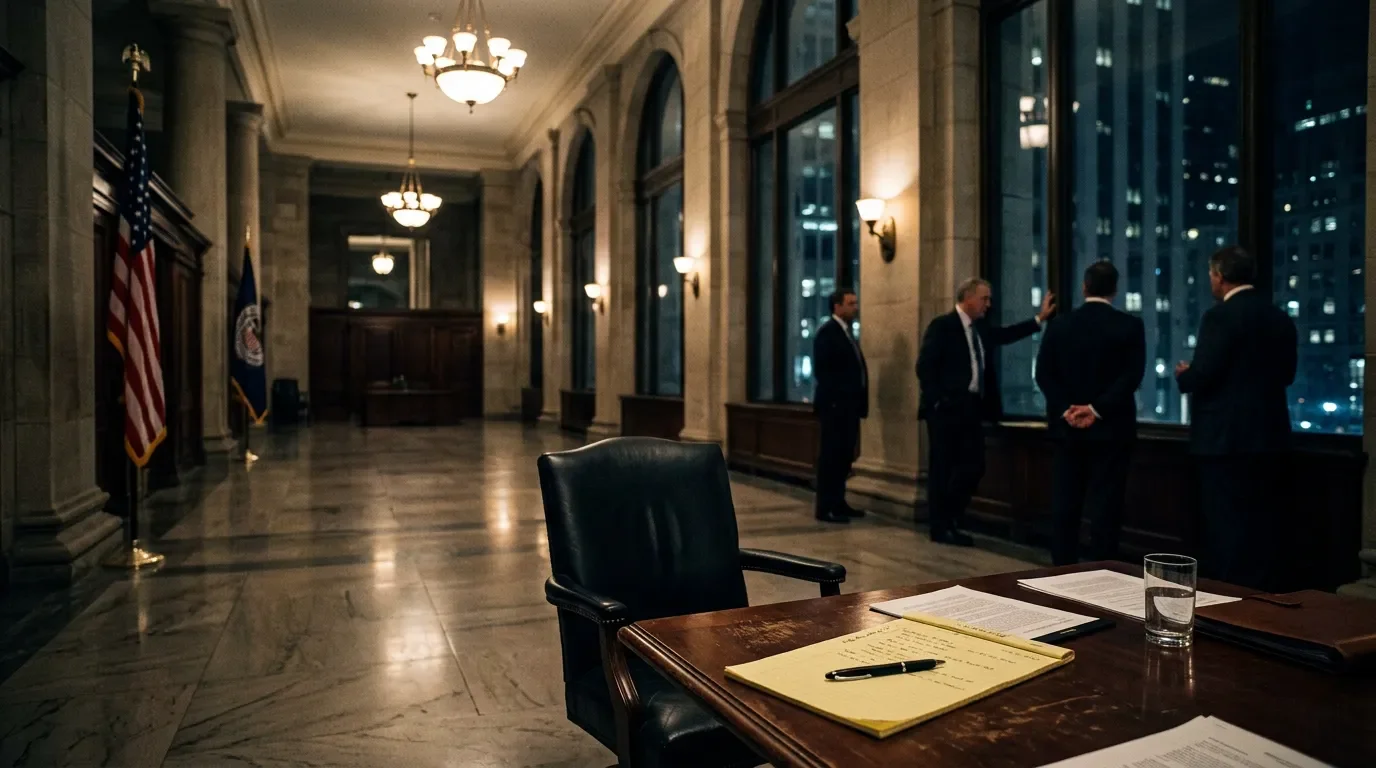
Cover image: AI-generated editorial illustration depicting a Federal Reserve institutional setting during a late-night crisis session, September 2008.

Añade más opiniones o contexto en torno a este contenido.

  • Inicia sesión para comentar.