The $30 Billion Content-Control Bet: Comcast-NBCUniversal
A business-school-style case study of how Comcast used a 51/49 joint venture to gain control of NBCUniversal, satisfy regulators with operating remedies, and preserve GE's later exit option.

The case in one question
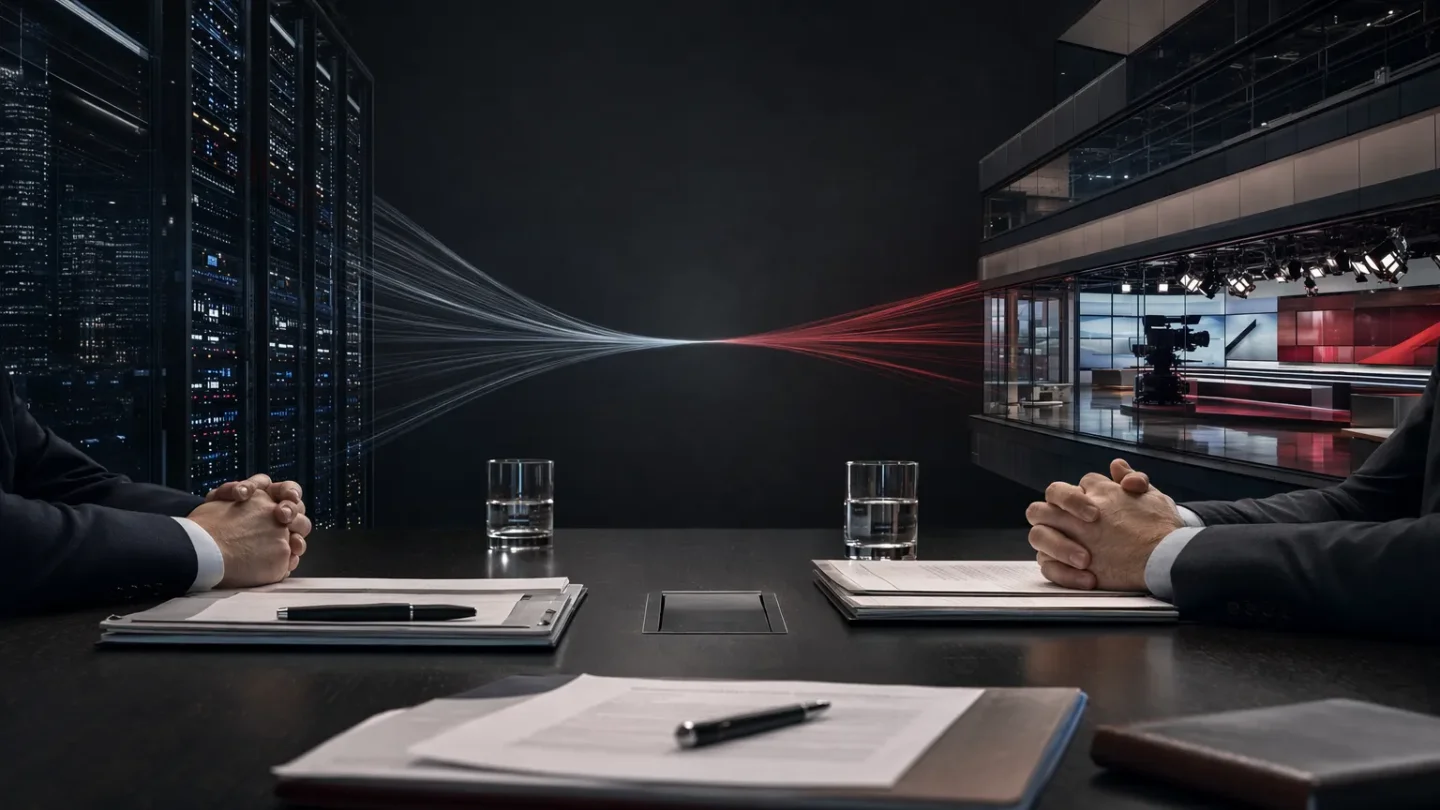
In 2009, Comcast did not simply buy a television network. It proposed combining the largest U.S. cable operator's distribution power with NBCUniversal's broadcast, cable, film, theme-park and online assets. The deal promised better economics: content would have a guaranteed route to viewers, and distribution would own more of what it sold.
It also created the exact conflict regulators are built to examine. If the same company controls a must-have channel and the pipe that delivers it, can rivals still compete on fair terms?
That question shaped the negotiation more than the headline price did. The result was a 51/49 joint venture, a 234-day FCC review, a DOJ antitrust case, and a remedy package that required access, arbitration and anti-retaliation protections. The deal closed in January 2011. GE sold its remaining stake two years later, giving Comcast full control.
The negotiation lesson is straightforward: in a regulated transaction, "Can we close?" is not a legal afterthought. It is a term that changes the value of every other term.
Deal snapshot
| Item | Documented position |
|---|---|
| Parties | Comcast; General Electric; NBC Universal |
| Announcement | December 3, 2009 |
| Announced value | Approximately $30 billion |
| Initial structure | Comcast 51%; GE 49%; Comcast management |
| Comcast contribution | Approximately $6.5 billion cash plus cable and regional-network assets at announcement |
| Review | FCC license-transfer proceeding and DOJ civil merger case |
| Closing | January 28, 2011 |
| Later control transfer | GE announced sale of its remaining 49% stake in February 2013 |
The announced value and the closing cash figure are not the same accounting measure. NPR reported the $30 billion headline value and approximately $6.5 billion of cash at announcement. Comcast later reported a $6.2 billion cash payment to GE, including transaction-related costs, in its SEC filing. 1 2
The setup: distribution wanted content, GE wanted an exit
The transaction was announced after nearly eight months of negotiations between Comcast and GE. The proposed company would combine NBC and Telemundo, 26 local broadcast stations, national cable networks, a film studio, theme parks and online content with Comcast's cable networks, regional sports networks and selected digital assets. Comcast would own 51 percent and manage the joint venture; GE would retain 49 percent. 3 4
The structure solved two different problems at once.
For Comcast CEO Brian Roberts, the strategic gap was content. Comcast had reach, but its most valuable customer relationship still depended on programming supplied by other companies. The company's public case was that combining strong content with strong distribution would support an "anytime, anywhere" digital future and create more room to invest. 5
For GE CEO Jeff Immelt, NBCUniversal was a valuable but non-core media holding inside a company that was refocusing on industrial businesses. The joint venture let GE monetize part of the asset, keep 49 percent exposure to future growth, and receive cash and other consideration without forcing an immediate outright sale of every NBCU interest.
This is the first important negotiation distinction: the parties were not negotiating over the same thing. Comcast was buying control of a strategic bottleneck. GE was selling concentration risk and buying capital flexibility. A 51/49 joint venture let both sides describe the same document as a growth investment and an exit plan.
Decision point 1: Why a controlled joint venture instead of a clean acquisition?
An outright Comcast acquisition would have been simpler to explain but harder to finance, harder to approve and less attractive to GE if GE still wanted upside. The joint venture separated three rights that are often bundled together in a purchase price:
- Economic participation: GE retained 49 percent.
- Operating control: Comcast managed the new company.
- Asset combination: Comcast contributed its own programming and sports assets rather than paying only cash.
The structure also made the parties' concessions legible. Comcast could say it was contributing real assets and taking operating responsibility. GE could say it had not abandoned NBCU's value. Regulators, however, could still treat Comcast's management control as the relevant fact.
The FCC docket described the proposed combination as a transfer of licenses into a new NBC Universal joint venture managed by Comcast. It expressly noted that Comcast's cable systems and wireless holdings were outside the joint venture, while the content and programming assets were inside it. 3
Negotiation reading: the control-rights premium
The transferable point is not "always use a joint venture." It is to price control separately from ownership.
When reviewing a proposed structure, ask:
- Who controls management appointments?
- Who controls licensing, pricing and distribution decisions?
- Which party can veto a sale, a budget or a strategic pivot?
- Does minority ownership come with information rights but no practical remedy?
- Which rights will a regulator treat as control even if the equity split looks balanced?
A 49 percent shareholder can be economically important and operationally weak. The useful BATNA analysis therefore starts with rights, not percentages.
Decision point 2: The regulator becomes a counterparty
The FCC accepted applications in 2010 for transfer and control of broadcast, satellite, wireless and other licenses. The docket recorded a June 21, 2010 deadline for petitions to deny and initial comments. The FCC timeline stopped at day 234 on January 18, 2011, when the agencies announced approval with conditions. 3
The DOJ's theory of harm was not that Comcast would stop making television. It was that the combined company could use NBCU programming to disadvantage cable, satellite, telephone and online video competitors. The department identified risks of reduced supply, higher prices, less investment, less experimentation and less variety in video distribution. 6
The DOJ case record classified the matter as both a vertical merger and an agreements-not-to-compete case. The United States was joined by California, Florida, Missouri, Texas and Washington. The complaint and competitive-impact statement were filed on January 18, 2011; the final judgment was entered on September 1, 2011. 7
That changed the negotiating table. Comcast and GE were the signatories, but the closing condition was controlled by institutions representing competitors and consumers. The agencies had a credible BATNA: delay, litigate, or deny the relevant license transfers. Comcast's BATNA was to remain a distributor without NBCU control and pursue content through other investments. GE's BATNA was to keep holding NBCU, sell to another buyer, or accept a less favorable exit.
The key asymmetry was therefore not just size. It was timing. Comcast and GE could negotiate value between themselves, but the regulators could remove the entire deal from the feasible set.
Decision point 3: Convert a veto threat into operating rules
The approval package did not rely on a broad promise to behave well. It specified mechanisms that a rival could use.
The DOJ announcement required the joint venture to offer online video distributors programming packages comparable to those made available to traditional distributors or to provide a comparable or better mix of broadcast, cable and film content than peer programmers received. Disputes could be taken to court or, in the department's discretion, to commercial arbitration. 6
The package also prohibited retaliation against broadcasters, affiliates, cable programmers, production companies or licensors that supplied a Comcast competitor or raised concerns with the DOJ or FCC. It required Comcast to give up management rights in Hulu, barred unreasonable discrimination against lawful online video traffic, and restricted contract terms designed to block online distribution, subject to narrow exceptions. 6
The remedies illustrate a general design principle: a regulator is more likely to accept a risky combination when the remedy reduces the other side's enforcement cost. Access without a dispute process is a promise. Access plus arbitration, anti-retaliation and reporting obligations is a system.
What actually happened
The transaction closed on January 28, 2011. GE contributed NBC Universal's cable networks, filmed entertainment, televised entertainment, theme parks and unconsolidated investments. Comcast contributed E!, Versus, the Golf Channel, regional sports networks and selected digital properties, made a payment to GE, and became the 51 percent owner and manager. 8
Comcast's 2010 shareholder letter later described the combined company's 2010 pro forma revenue as $54 billion and named Steve Burke as NBCUniversal CEO. Those are management-reported post-transaction figures, not an independent measure of realized synergy. 5
GE did not remain a long-term 49 percent partner. On February 12, 2013, GE announced the sale of its remaining common-equity stake to Comcast for $16.7 billion, consisting of $12.0 billion in cash, $4.0 billion in Comcast-guaranteed debt and $0.7 billion of preferred stock. A related real-estate sale brought the announced total to $18.1 billion. GE said the transaction would accelerate share repurchases, increase cash returned to shareholders and support investment in its industrial business. 9
The outcome is best read as a two-stage negotiation. Stage one allocated control while preserving GE's upside. Stage two allowed GE to turn that retained stake into a capital-allocation decision. The original deal was not just a purchase price; it was an option on when and how GE would exit.
Four reusable frameworks
1. Separate ownership from control
A cap table is not a control map. In any partnership, acquisition or restructuring, list the rights that actually move value: management, licensing, pricing, distribution, information, vetoes and exit timing. Then test whether the proposed minority protection works after a dispute, not just on signing day.
Use it when: the deal is marketed as balanced but one party will run the asset.
Watch-out: a minority stake can be a valuable economic position and still be a poor BATNA if the minority holder cannot force information, remedies or liquidity.
2. Build the regulatory ZOPA before setting the price
The zone of possible agreement is not just buyer value versus seller value. In a regulated transaction, it is the intersection of:
- the buyer's standalone and synergy value;
- the seller's exit and retention value;
- the regulator's acceptable competitive-risk envelope; and
- the cost of monitoring and enforcing the remedy.
Comcast and GE could negotiate a 51/49 split, but they could not negotiate away the agencies' concern about foreclosure. The winning structure was the one that made control tolerable enough to approve.
Use it when: your deal needs merger clearance, a license transfer, a public-interest approval or a consent decree.
Watch-out: a remedy that sounds broad but has no pricing benchmark, arbitration path or anti-retaliation protection may not change the regulator's practical risk assessment.
3. Treat the remedy as a product, not a concession
The Comcast-NBCU package had a customer: rival distributors and online video companies that needed a usable path to content. That suggests a better remedy test:
- Can the affected party identify the right it is receiving?
- Can it invoke the right without renegotiating from zero?
- Can an independent forum resolve a dispute quickly enough to matter?
- Can the regulator detect retaliation or circumvention?
This turns a vague behavioral commitment into an operating product with service levels, escalation and enforcement.
Use it when: a deal's risk is behavioral rather than purely structural.
Watch-out: the remedy may preserve closing but still constrain the combined company's future choices. Model the operating cost before promising it.
4. Preserve optionality for the party that needs an exit
GE kept 49 percent in stage one and sold it in stage two. The principle is broader than this case: when a seller has a strategic reason to exit but does not need to exit all at once, a staged structure can reduce valuation conflict.
Possible tools include a put or call right, a timed buyout, a liquidity window, a performance-based price adjustment or a defined path from minority ownership to full control.
Use it when: the seller's operating priorities and financial priorities are changing at different speeds.
Watch-out: retained upside is only useful if governance, valuation mechanics and exit timing are precise enough to prevent a second negotiation from becoming a hostage situation.
The manager's takeaway
The Comcast-NBCUniversal deal is often remembered as a content-and-distribution combination. For negotiators, the more useful description is different: it was a control transaction whose value depended on third-party permission.
Comcast won the operating position it wanted. GE got cash, retained interim upside and later exited. Regulators accepted the combination only after converting access concerns into enforceable operating rules. Each party's result came from solving a different constraint, not from pretending those constraints were the same.
Before your next complex deal, write three separate lists: the rights that create control, the third parties who can stop closing, and the remedies that would make them comfortable. If those lists are not in the first draft of the term sheet, the negotiation is not finished. It has only been described.
Fuentes de referencia
- 1Comcast To Buy 51 Percent Stake In NBC Universal
- 2Form 10-Q, Comcast Corporation
- 3Comcast Corporation and NBC Universal, MB Docket 10-56
- 4At Last, G.E. and Comcast Announce NBC Deal
- 52010 Letter to Shareholders
- 6Justice Department Allows Comcast-NBCU Joint Venture to Proceed with Conditions
- 7U.S. and Plaintiff States v. Comcast Corp., et al.
- 8Comcast And GE Complete Transaction To Form NBCUniversal, LLC
- 9GE Sells Remaining Stake In NBCUniversal Joint Venture And Related Assets To Comcast For $18.1b
Contenido relacionado
- Inicia sesión para comentar.