Geopolitics Daily Brief — June 19, 2026
Five-story brief: U.S.-Iran implementation talks slip while Hormuz and Gulf aviation reopen only partially; Israel's Lebanon strikes test ceasefire language; Ukraine keeps pressure on Moscow fuel logistics; Washington probes a possible ASML export-control breach; and Taiwan's $14 billion arms package remains tied to U.S. stock availability.

The working assumption for this brief is a 24-hour news window ending around 08:00 on June 19, with priority given to developments that changed trade routes, energy flows, defense procurement, or high-end technology controls.
At a glance
| Theatre | Headline | Market / supply-chain read |
|---|---|---|
| Middle East | U.S.-Iran implementation talks slipped, while Reuters reported new IRGC-directed cells in Iraq and AP reported partial Hormuz transits restarting. 1 2 3 | Energy and aviation risk is easing but not normal: routes are reopening, yet proxy risk and incomplete maritime clearance keep a risk premium in place. |
| Middle East | Israel intensified strikes in southern Lebanon; Lebanon's health ministry reported at least 18 killed and 33 wounded, while Israel said four soldiers were killed. 4 | The issue for markets is less immediate oil supply and more whether the U.S.-Iran accord can contain allied fronts. |
| Russia-Ukraine | Ukraine hit a Moscow oil refinery again, and Reuters reported an earlier strike halted operations at the plant that supplies the Moscow region. 5 6 | Russia's domestic fuel logistics remain a live vulnerability, especially if refinery outages and retail caps spread. |
| U.S.-China | U.S. Commerce Secretary Howard Lutnick told ASML executives that Washington is concerned an EUV machine may have reached China, Bloomberg News reported via Reuters. 7 | This is a compliance shock, not yet a confirmed production shock. Watch ASML controls, Chinese fab inspection risk, and allied export-control enforcement. |
| Taiwan Strait | Taiwan's top representative in Washington said the island needs U.S. weapons for self-defense, while a $14 billion package remains in limbo. 8 | The bottleneck is now political approval plus U.S. stock availability after the Iran war, with direct implications for missile, artillery, and air-defense supply chains. |
1. U.S.-Iran truce mechanics move from signing to implementation risk
- Switzerland said U.S. talks with Iranian negotiators would not take place on Friday, and Vice President JD Vance dropped plans to travel for the planned talks. 1
- Reuters reported that the IRGC set up small secretive cells in Iraq, with three or four cells of about 10 fighters each launching at least seven drone attacks against sites in Kuwait, Saudi Arabia, and the UAE between April 20 and May 17, according to Iraqi sources. 2
- AP reported that major shipowners had begun moving vessels through the Strait of Hormuz after the U.S.-Iran interim agreement, but the main central route remained closed and full reopening could take weeks or months. 3
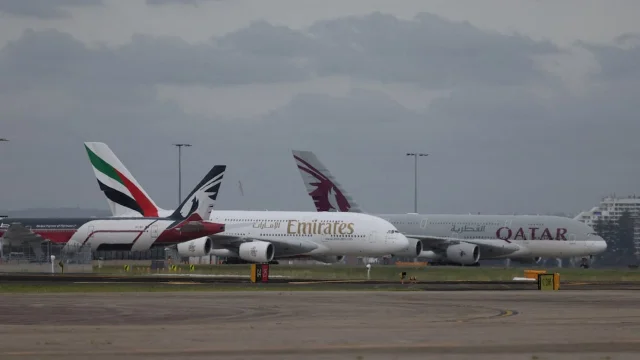
Market / supply-chain impact: The first-order oil shock is fading, but the transport system is not back to baseline. AP cited Lloyd's List Intelligence estimating that 550 merchant ships still needed to exit the Persian Gulf, including 160 tankers, 200 bulk carriers, 60 container ships, and 10 vehicle carriers. 3 Reuters separately reported that major Gulf airline flight volumes were back to about 82% of their February 27 level; Emirates was at 86%, Qatar Airways at 87%, and Etihad at 93%. 9 That points to partial normalization in cargo belly capacity and passenger networks, while insurers, refiners, and forwarders still have to price incomplete maritime clearance and proxy-attack risk.
2. Lebanon front tests the ceasefire language
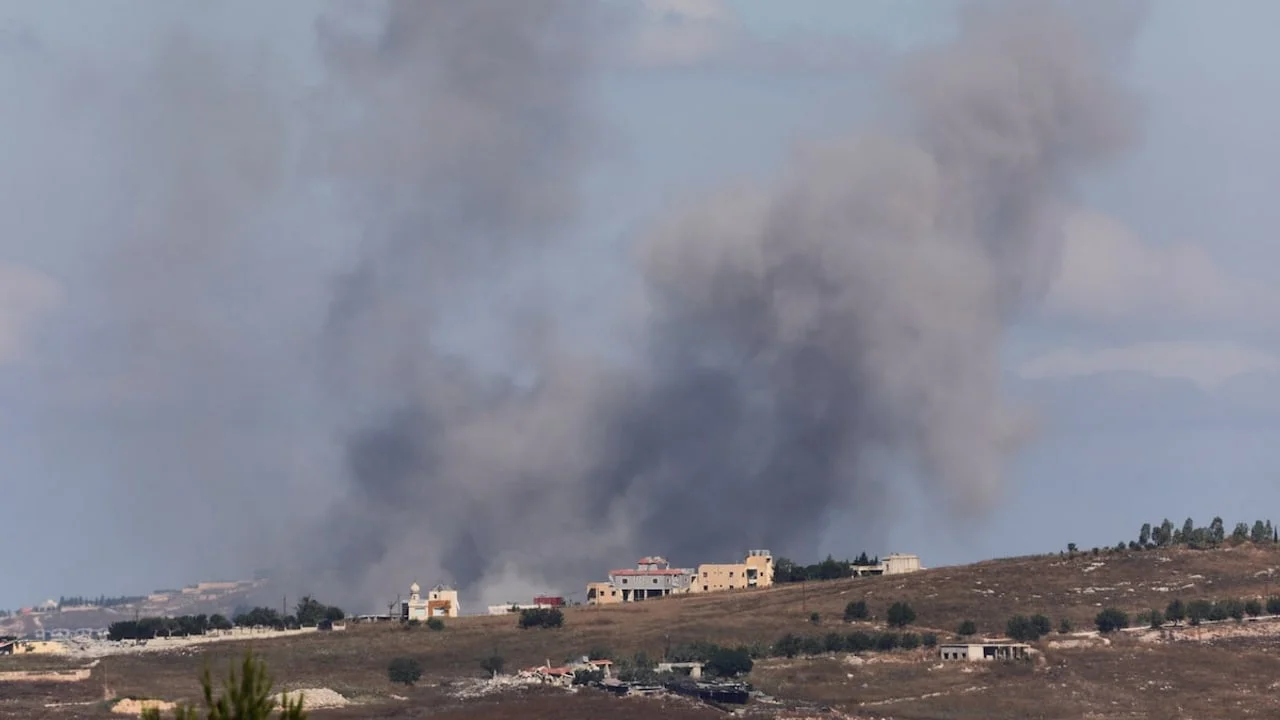
- Reuters reported that at least 18 people were killed and 33 wounded in Israeli strikes on southern Lebanon on Friday, according to Lebanon's health ministry. 4
- The Israeli military said four soldiers were killed in one of the deadliest single incidents since the latest escalation began. 4
- The escalation followed Israel's publication of an expanded southern Lebanon control-zone map, while the U.S.-brokered Iran agreement calls for an end to hostilities on all fronts, including Lebanon. 4
Market / supply-chain impact: Lebanon is not the central oil artery, but it is a test of whether the Iran agreement can suppress linked fronts. If Israel keeps forces up to 10 km inside southern Lebanon, as Reuters reported Israeli officials were negotiating with Washington, the accord's value for risk models weakens. 4 That matters for Eastern Mediterranean shipping, war-risk insurance, regional airspace confidence, and reconstruction finance. It also keeps pressure on U.S. mediation bandwidth while the Iran nuclear talks are already delayed. 1
3. Ukraine shifts pressure onto Moscow fuel logistics
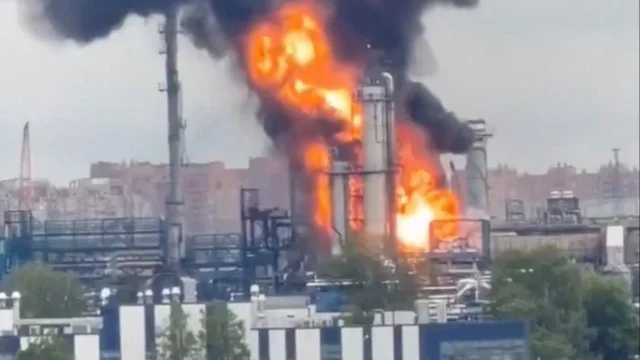
- AP reported that Ukrainian drones struck a major Moscow oil refinery on Thursday for the second time in a week, calling it one of Ukraine's biggest drone attacks against Russia since the full-scale invasion began. 5
- Reuters reported that a June 16 Ukrainian drone attack started a fire at the refinery that is the largest fuel supplier to the Moscow region, and two industry sources said it halted operations. 6
- Reuters said the damaged primary refining facility accounted for 53% of the plant's capacity, while the Moscow plant processed 11.6 million metric tons of oil in 2024 and produced 2.9 million tons of petrol and 3.2 million tons of diesel. 6
Market / supply-chain impact: The practical target is Russia's internal fuel chain, not global crude exports. Reuters reported that Tatneft introduced purchase restrictions at its hundreds of stations across Russia after a drone attack on its TANECO refinery, and a Reuters witness saw a Tatneft station limiting gasoline sales to 20 litres per car or 40 litres of diesel. 6 AP also reported more than 500 Moscow-area flights delayed or cancelled after the latest attack. 5 For procurement teams, the signal is sustained disruption risk in Russian domestic fuels, airport operations, and military logistics, especially during the summer harvest and battlefield resupply period.
4. Washington probes whether China obtained top-end ASML tooling
- Reuters, citing Bloomberg News, reported that U.S. Commerce Secretary Howard Lutnick told ASML senior leaders that Washington is concerned one of the firm's top-of-the-line machines may have reached China in violation of U.S.-led export restrictions. 7
- The concern focused on ASML's extreme ultraviolet lithography machines, the equipment category used for the most advanced chipmaking steps. 7
- The report did not identify the specific machine, the Chinese recipient, or whether U.S. officials had confirmed an operational transfer. 7
Market / supply-chain impact: This is a high-compliance-risk story rather than proof of a new Chinese production line. If Washington moves from concern to enforcement, the near-term effect would fall on ASML due diligence, servicing controls, allied export-control coordination, and customer audits. For chip buyers, the important watchpoint is whether the case tightens restrictions on parts, maintenance, or remote support, because those channels can constrain equipment uptime even when new-tool shipments are already blocked.
5. Taiwan arms package remains a procurement pressure point
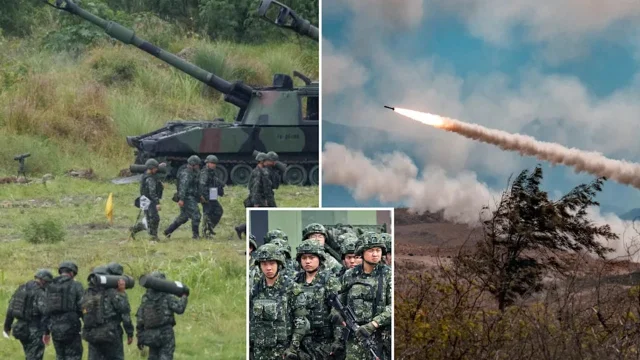
- Taiwan's top representative in Washington, Alexander Yui Tah-ray, told AP that Taiwan needs U.S. arms for defensive purposes and is trying to increase its defense spending and ability to survive a crisis. 8
- AP reported that a $14 billion arms-sale package remains in limbo after President Donald Trump returned from Beijing in May and said he had discussed the proposal with Chinese leader Xi Jinping. 8
- Secretary of State Marco Rubio told lawmakers the proposal was under review and that Washington had to weigh short-term stock availability because U.S. weapons stocks had been drawn down during the Iran war. 8
Market / supply-chain impact: The Taiwan story is now tied to U.S. inventory depth. A separate $11 billion package approved in December included HIMARS and howitzers, according to AP. 8 If the $14 billion package advances, contractors in rockets, artillery, air defense, sensors, and sustainment would face another demand signal. If it stays frozen, Taiwan's near-term deterrence plan leans harder on domestic production and previously approved deliveries.
Watch points for the next brief
- Whether the delayed U.S.-Iran technical talks are rescheduled, and whether Hormuz's central route begins mine clearance. 1 3
- Whether southern Lebanon fighting continues despite the agreement's all-fronts language. 4
- Whether the ASML inquiry becomes a formal enforcement action, and whether Taiwan's arms review moves from stockpile assessment to approval. 7 8
Fuentes de referencia
- 1US-Iran peace talks postponed, clouding prospects for lasting truce
- 2Iran's Revolutionary Guards set up covert Iraqi cells to attack Gulf neighbors, sources say
- 3Ships begin transiting the Strait of Hormuz again
- 4Israel hits Lebanon with deadly strikes, says four of its troops killed
- 5Ukraine hits Moscow oil refinery in major drone attack
- 6Ukrainian drone strike halts operations at Moscow oil refinery, sources say
- 7US tells ASML it is concerned China may have top chip tool, Bloomberg News reports
- 8Taiwan needs US weapons for self-defense as threat from China grows, diplomat says
- 9Gulf airlines get back to business as flights near pre-war levels
Añade más opiniones o contexto en torno a este contenido.