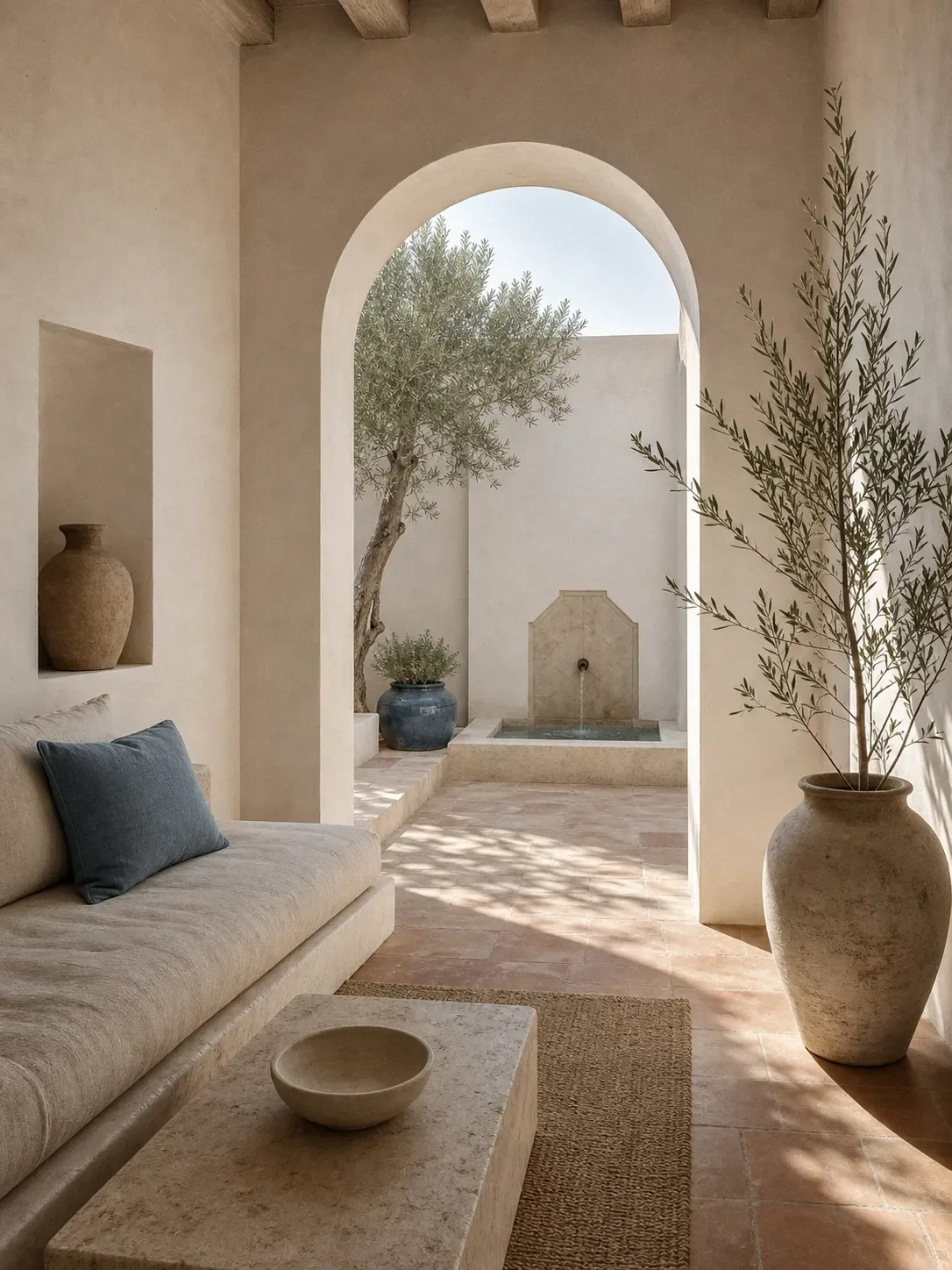

Mediterranean style
A four-card mood board for a Mediterranean interior language built around shade, thermal mass, courtyards, and tactile materials rather than a single national look.
Card 1 — mood
White lime plaster, terracotta underfoot, pale stone, linen, olive green and a restrained Aegean blue. The mood is sun outside, cool shade within: quiet, porous, and made for rooms that open to air.
Card 2 — origins
The courtyard is the organising idea. In Córdoba, the traditional casa-patio adapts the Roman house to local climate and culture, using an inward patio for light, ventilation, and summer coolness; water and vegetation complete the space. 1
A comparative study of a Mediterranean city’s old quarter describes the courtyard as the open-sky “heart of the house”. Thick envelopes, smaller openings, shading, and local stone, mud, and earth support thermal comfort, privacy, and passive cooling. 2
Card 3 — elements
Think limewashed or softly textured walls, limestone, terracotta tile, aged timber, woven cane, natural linen, ceramic, and dark iron. Keep the palette chalky and mineral, then let one blue note do the work of contrast. The material language follows the climate logic: mass, shade, filtered openings, and surfaces that feel better with use.
Card 4 — modern use
Contemporary Mediterranean interiors in Greece, Spain, and Italy often connect living rooms to terraces or courtyards, pairing whitewashed surfaces and earthy tones with natural stone, timber, linen, and sculptural furniture. 3
The useful translation is simple: design one generous shaded threshold, choose fewer honest materials, and let indoor and outdoor life share the same floor, light, and air.
Fuentes de referencia
- 1
- 2
- 3
Comentar