24/6/2026 · 8:21
18 innings. 12 strikeouts. Two losses. Same day.
On June 25, 1903, Wiley Piatt pitched 18 innings for the Boston Beaneaters and lost both games — the only time in 20th-century baseball a pitcher dropped two complete games in a single afternoon.

On June 25, 1903, a Thursday, Boston Beaneaters left-hander Wiley Piatt walked out to the mound at South End Grounds for the first game of a doubleheader against the St. Louis Cardinals. He threw a complete game. Nine innings, 6 hits, 1 run, 7 strikeouts. His team scored zero runs. He lost. 1
Then he walked back out for the second game.
Another complete game. Nine more innings, 7 hits, 5 runs, 5 strikeouts. His team scored 3 runs — all 5 of the Cardinals' runs were unearned, the result of two errors by third baseman Ed Gremminger in the second inning. He lost again. 2
Across 18 innings on a single afternoon, Piatt had allowed 14 hits, walked 3, struck out 12, and yielded 6 earned runs — a line any pitcher would be glad to show his manager. None of it mattered. The 1903 Boston Beaneaters were that kind of team.
What he had done, without anyone quite noticing at the time, was become the only pitcher in the entire 20th century to lose two complete games in one day. The record has never been broken — not because nobody tried, but because the game changed so completely around it that the feat is now permanently beyond reach. 3
The afternoon that made no sense
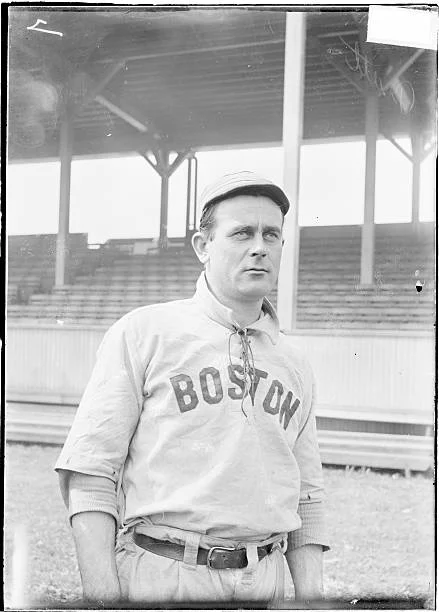
The doubleheader wasn't even supposed to be on June 25. The original game scheduled for June 24 was rained out, pushed back one day. Boston's season was a study in organized futility — the Beaneaters stood 20–35 after these two games, on their way to a 58–80 finish in sixth place. The Cardinals were actually worse: 18–40 after the same afternoon. 1
Game 1 was Piatt at close to his best. He held St. Louis scoreless through four innings. In the fifth, the Cardinals pushed across their only run: two singles, a sacrifice, a run scores. That was it. The whole game turned on those three plate appearances. Piatt finished with a line most pitchers in 1903 — an era when complete games were routine — would have considered a solid outing. Clarence Currie got the win. Piatt took the loss. Final: Cardinals 1, Boston 0. 4
Any reasonable manager in 1903 would have said: good game, hard luck, we'll get them in the second one. Piatt went right back out.
Game 2 was crueler in a different way. Piatt pitched well enough to win. All five St. Louis runs came in the second inning, on two consecutive Gremminger errors — the ball kept coming back to bite Boston's defense, not Piatt's arm. Piatt himself allowed just 7 hits across 9 innings, walked 2, and struck out 5. Chappie McFarland earned the pitching decision on the other side. Attendance: 2,783. 2
His teammates gave him 3 total runs across 18 innings. A St. Louis beat writer, watching Piatt trudge through it, noted that he "deserves credit for pitching eighteen innings of good ball." That was the consolation prize. 4
The man who confirmed it — and got the opponent wrong
Nobody called it a record at the time. It took 74 years.
In 1977, researcher Leonard Gettelson published a study in the Baseball Research Journal titled "Iron Man Pitching Performances." He had gone through every game since 1900, looking for pitchers who threw two complete games in one day. He found 23 who won both. He found 15 others who threw two complete games without winning both — split decisions, ties, and near-misses. Then there was Piatt. The only pitcher in the entire 20th century to start both games of a doubleheader, complete both, and lose both. 5
Gettelson's conclusion, quoted directly: "he became the only hurler to lose two complete games in a day in this century."
There was just one problem. Gettelson wrote that Piatt lost to "the Pirates."
He did not. The Baseball-Reference box scores — game logs, box scores, the full records — show BSN vs. STL on both June 25 games. Not Pittsburgh. St. Louis. The SABR biography of Piatt by Chris Rainey, fact-checked and definitively sourced, confirms: "His brush with the record book came on June 25 when he lost the first game of the day, 1–0, to St. Louis." 4
The error has been copied faithfully for nearly 50 years. Multiple aggregator sites, sports almanacs, and social media posts still show "vs. Pittsburgh." The most plausible explanation: the 1903 Pittsburgh Pirates were the National League champions heading to the first modern World Series — a far more compelling villain than the last-place Cardinals. History has a way of improving its own stories. 3
The man behind the record
Here is the other thing the history books usually get wrong: they imply Piatt was a journeyman who had no business pitching that long.
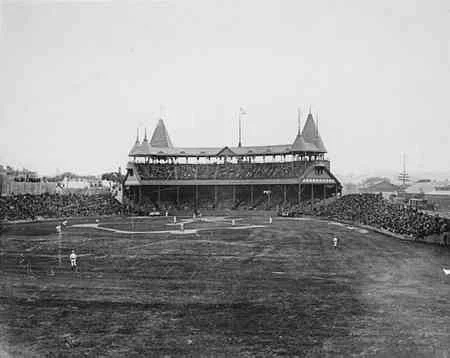
He was not. Wiley Harold Piatt, born in Blue Creek, Adams County, Ohio on July 13, 1874, was one of the more talented left-handers of his era. He debuted with the Philadelphia Phillies in April 1898 and went 24–14 as a rookie — 24 wins, a 3.18 ERA, and 33 complete games in a single season. He followed it with a 23–15 record the next year. Two 20-win seasons before he turned 26. His career MLB record was 86–79 with a 3.60 ERA over 1,390.1 innings. 7
Then typhoid fever. In August 1900, Piatt was hospitalized for eight weeks. He recovered, but his arm was never quite the same. The Phillies, elegantly, refused to pay his final month's salary and a $300 performance bonus while he was bedridden. He bounced to the Philadelphia Athletics, then the Chicago White Sox, then landed in Boston in 1903 for what turned out to be his last MLB season. His 1903 record was 9–14, released August 1. His career was over at 29. 4
He did not disappear quietly. After the major leagues, he played minor league ball through 1913 — including a one-hitter against the minimum 27 batters for Paducah in the Kitty League in 1905 and three consecutive wins over Kansas City in three days for Toledo that same year. He was also intelligent in ways baseball didn't often reward: he attended Ohio University's Normal College, worked as a teacher, spent time in a law office, and late in life worked as a sheet metal worker at Wright Field (later Wright-Patterson Air Force Base) during World War II. He died September 20, 1946, having lived to see baseball transform around the very record he had set. 4
The nickname "Iron Man" that attached to him after June 25, 1903 was, in retrospect, slightly unfair. The most famous Iron Man of that era was Joe McGinnity — who, in August 1903 alone, swept three separate doubleheaders, winning both games each time. McGinnity always won the first game before taking the second. That is the important distinction. Piatt won neither. In the ledger of baseball absurdity, that is its own kind of achievement.
The record that can't be broken
In 1903, completing both games of a doubleheader was unusual but not extraordinary. Piatt himself completed 18 of 23 starts that year. Across all of MLB that season, pitchers completed roughly 87% of all starts. The complete game was the default, not the exception. 7
The last pitcher to throw two complete games in a single day was Jack Scott of the Philadelphia Phillies on June 19, 1927. He won the first 3–1 and lost the second 0–3. After Scott, it never happened again. In 1973, Wilbur Wood of the Chicago White Sox started both games of a doubleheader against the Yankees — but he was knocked out early each time, going 4.1 innings in the first and barely one full inning in the second. That is the closest anyone has come in nearly a century. 5
The current era has made the complete game close to ceremonial. In 2024, MLB pitchers completed just 28 games total across the entire 2,430-game regular season — fewer than one per week across all 30 teams. Throwing a single complete game now earns a standing ovation. The idea of a pitcher completing two games in the same afternoon, then losing both of them, belongs to a world that has functionally ceased to exist.
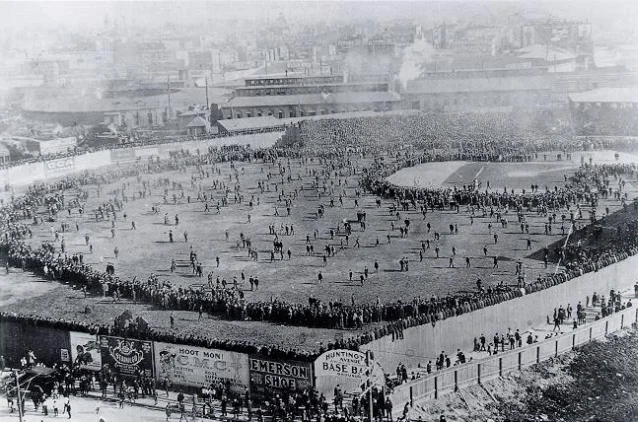
The site of South End Grounds is now occupied by Northeastern University's Interdisciplinary Science and Engineering Complex, next to the Ruggles MBTA station. A historical marker at Ruggles commemorates the old park. There is nothing there to mark June 25, 1903. 6
The record Piatt holds is not the kind that gets retired numbers or Hall of Fame plaques. It is the kind that lives in footnotes and SABR research journals, surfaced once every few decades when someone digs through game logs looking for something no one else found. A pitcher who gave everything he had, twice in a row, in the same afternoon — 18 innings of good ball, 12 strikeouts, zero defensive help when it mattered — and lost both times because that was the 1903 Boston Beaneaters, and that was baseball, and some records write themselves.
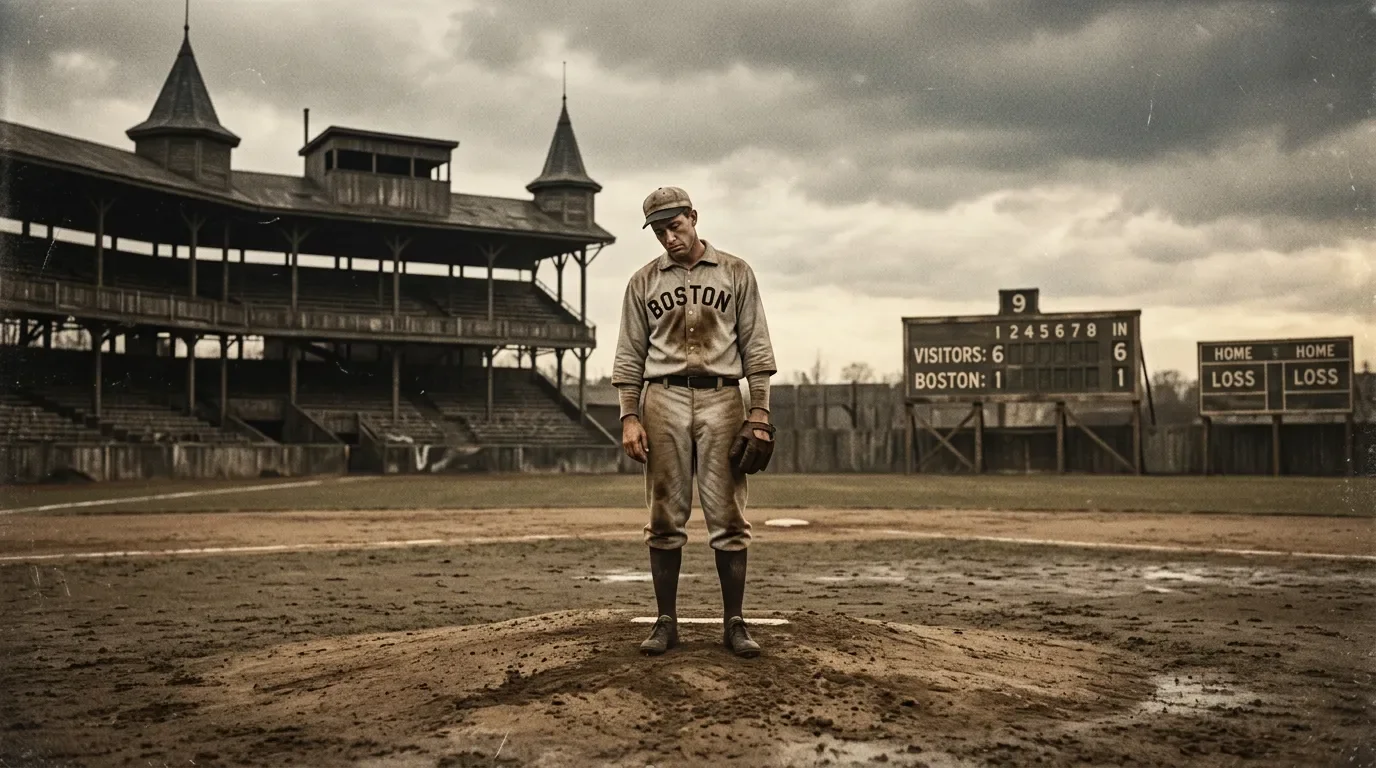
Cover image: AI-generated illustration
Fuentes de referencia
- 1St. Louis Cardinals vs Boston Nationals Box Score, June 25, 1903 (Game 1) – Baseball-Reference
- 2St. Louis Cardinals vs Boston Nationals Box Score, June 25, 1903 (Game 2) – Baseball-Reference
- 3Wiley Piatt – Baseball-Reference Bullpen
- 4Wiley Piatt – SABR BioProject, Chris Rainey
- 5Iron Man Pitching Performances – SABR Baseball Research Journal, Leonard Gettelson, 1977
- 6South End Grounds – Wikipedia
- 7Wiley Piatt Stats – Baseball-Reference
Añade más opiniones o contexto en torno a este contenido.