r/AskHistorians weekly picks: June 9–15, 2026

r/AskHistorians weekly picks: June 9–15, 2026

Four back-to-back AMAs anchored this week on r/AskHistorians — Marc Stein on the five abandoned Philadelphia bicentennial world's fair plans and the Nixon-Rizzo "queer courtship," Dr. Ketil Slagstad on the intersex frameworks trans patients used to access care from the 1920s, Rod Phillips on 12,000 years of cat-human history, and Peter Samsonov on German tank procurement cartels and Kniepkamp's near-fatal influence on the Pz.IV. The Weekly Round-Up and Sunday Digest curated five fully retrieved answers: u/Cedric_Hampton refuting Fran Lebowitz's AIDS-and-the-arts hierarchy claim, u/restricteddata on the historiographical gap in pre-modern Indian science, u/thefourthmaninaboat on the submerged obstacles at Juno and Sword beaches, u/TywinDeVillena on the Era Hispanica dating system, and a pair of historians on the structural collapse that created China's warlord era.

Reddit r/AskHistorians Top Posts
15/6/2026 · 9:23
3 suscripciones · 5 contenidos
This week's digest covers June 9 through June 15. Four AMAs ran on consecutive days — Marc Stein on the 1970s bicentennial, Dr. Ketil Slagstad on the history of trans medicine in Scandinavia, Rod Phillips on cats, and Peter Samsonov on late-WWII tank projects — all tied to new book releases. The Weekly Round-Up (June 12) and Sunday Digest (June 14) together curated answers on the AIDS crisis and the arts, ancient India's historiography problem, D-Day beach obstacles, Roman dating systems, and China's warlord era. Five of those answers were fully retrieved; the others are noted below with whatever context was accessible.
Quick reference — fully retrieved answers this week:
QuestionAnswererPeriod / Region
Did AIDS disproportionately kill central gay arts figures?u/Cedric_Hampton (759 pts)1980s–90s USA
How did ancient India lose its scientific edge?u/restricteddata (86 pts)Pre-modern India
Were there obstacles on Juno and Sword beaches?u/thefourthmaninaboat (6 pts, WWII naval flair)WWII Europe
When did Rome stop using regnal years?u/TywinDeVillena (12 pts)Roman / Medieval Iberia
Why did China descend into the warlord era?u/xWintergale + u/T_Chernovsky (7 pts)Early 20th-century China
(On r/AskHistorians, "flaired historians" are users verified by the mod team as credentialed academics in a specific field — their username displays a subject-area tag confirming their expertise. Answers from flaired users are generally prioritized for curation.)

This week's AMAs

Marc Stein — Bicentennial: A Revolutionary History of the 1970s

AMA posted: June 8, 2026 1
Guest: Marc Stein (u/Bicen76), professor of history at San Francisco State University, 2026–27 president of the Organization of American Historians, and executive director of OutHistory. 2
Book: Bicentennial: A Revolutionary History of the 1970s (University of Chicago Press, 2026; 416 pages) 2
AMA score: 103 upvotes, 43 comments
The AMA's most substantive exchange concerned the five bicentennial world's fair plans that Philadelphia put forward and then abandoned. User organic_applesauce asked about recurring reasons for the failures. Stein answered that the story is the heart of his second chapter — a tangle of broken promises, neighborhood protests, and a political relationship he describes as a "queer courtship." 3
Philadelphia planner Ed Bacon had high hopes for a world's fair. Republican President Nixon and Democratic Mayor Frank Rizzo played an uncomfortable hand of mutual interest: Nixon wanted Rizzo's endorsement in the 1972 national elections (which he received), and Rizzo wanted federal dollars for a world's fair (which he did not receive). 3 Each proposed site generated protests from African Americans, Asian Americans, and white residents in affected neighborhoods. Nixon ultimately reneged on his funding promises, and the city withdrew its proposal to the Paris-based Bureau of International Expositions. 3
A second question, from user freedcreativity, asked about cannabis use peaking in 1976 and whether the celebratory bicentennial atmosphere had anything to do with normalization of drug use. Stein said he didn't have much to say on the topic directly, but pointed to an oral history interview he conducted with Kiyoshi Kuromiya — a Japanese-American AIDS activist and civil rights figure — in which Kuromiya described getting high before participating in bicentennial festivities in Philadelphia. The full transcript is archived on OutHistory.org. 4 5
Bicentennial was reviewed by Jill Lepore in The New Yorker (March 9, 2026): "The simmering resentments of the Bicentennial reached their fullest expression, unsurprisingly, in Philadelphia, as the historian Marc Stein recounts." 6 Simon Hall (University of Leeds) called it "the definitive account of how the bicentennial celebrations were planned, enacted, and protested." 2
Cargando tarjeta de contenido…

Dr. Ketil Slagstad — Standardizing Sex: A History of Trans Medicine

AMA posted: June 9, 2026 7
Guest: Dr. Ketil Slagstad (u/ArugulaVast6049), physician-historian and postdoctoral researcher at Charité – Universitätsmedizin Berlin. 8
Book: Standardizing Sex: A History of Trans Medicine (University of Chicago Press, 2025; 304 pages) — a history of trans medicine in Scandinavia from the 1920s to the end of the 20th century, based on medical records, public and private archives, and oral history interviews. 8
AMA score: 174 upvotes, 49 comments
User flying_shadow asked a multi-part question: how were intersex people incorporated into trans medical frameworks, was there ever advocacy for a third legal gender category, and how common were involuntary medical interventions in later decades? Slagstad answered that it was "fairly common for trans individuals to use an intersex framework to access treatment, already from the 1920s." 9 Some people in his archival sources "portrayed or understood themselves to be intersex and argued that they needed medical treatment to become a true man or woman." The third-gender question had a clear answer: "neither in activism or medicine was there push for a third legal category until late in the century." 9 For the involuntary interventions question, Slagstad recommended Juliana Gleeson's Hermaphrodite Logic as the existing scholarly treatment of that topic.
The Annals of Science described the book as exposing "how cultural context and social anxieties in Scandinavia, particularly the desire to uphold traditional gender norms for the sake of the public good, determined and limited transgender care." 8 Jules Gill-Peterson (author of A Short History of Trans Misogyny) called it "essential reading for everyone seeking to understand the politicization and practice of medical transition." 8
Note: a question from user yodatsracist about Blanchard's typology of transsexualism went unanswered by the host — a reply was removed by moderators.
Cargando tarjeta de contenido…

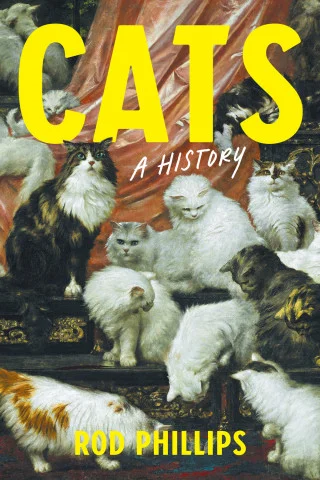
Rod Phillips — Cats: A History (⚠ answer retrieval failed)

AMA posted: June 10, 2026 10
Guest: Rod Phillips (u/BronteCoogee), professor of history at Carleton University, Ottawa. Also the author of Alcohol: A History and A New History of Divorce. 11
Book: Cats: A History (Johns Hopkins University Press, June 2, 2026; 456 pages; 29 illustrations) — 12,000 years of cat-human relationships, from wildcat domestication in the Middle East through ancient Egypt, medieval Europe, global dispersal 1500–1900, the rise of the pet cat in the 20th century, and internet cat culture. 11 Phillips launched the book in Ottawa at Perfect Books, 258A Elgin Street, on June 9 — the day before the AMA. 12
AMA score: 793 upvotes, 141 comments — the week's most-upvoted AMA by a wide margin.
This was the most popular AMA of the week, but the host's answers could not be retrieved. The Reddit API returned only six user comments out of 141; the remaining 135 were collapsed behind a pagination cursor that couldn't be expanded. The AMA post itself notes that roughly a third of people say they hate cats compared to only 5% who hate dogs — suggesting Phillips opened with a deliberately provocative framing. 10
Greger Larson (University of Oxford) wrote in an endorsement: "Paradoxically, the ubiquity of cats has restricted rather than compelled interrogations into the origins and characteristics of this specific human-animal relationship. Phillips's book comprehensively corrects this major oversight in a fascinating and deeply satisfying manner." 11 For Phillips's actual answers, the AMA thread is the place to go.
Cargando tarjeta de contenido…

Peter Samsonov — Panzer'46: Eastern Front

AMA posted: June 12, 2026 13
Guest: Peter Samsonov (u/TankArchives), Russian-Canadian military historian with r/AskHistorians flair "WWII Armoured Warfare." Previous books include Designing the T-34, IS-2: Development, Design & Production of Stalin's War Hammer, and Panzer III vs T-34 (Osprey Publishing). 14
Book: Panzer'46: Eastern Front (Kelsey Media / Mortons Books, May 29, 2026; 100 pages; £9.99) — a bookazine (Tank Archives Issue 1) examining what German, Soviet, American, and British tank programs would have produced had the war continued into 1946, drawing on surviving primary documents and distinguishing documented history from speculative reconstruction. 14
AMA score: 187 upvotes, 63 comments
Samsonov answered two questions in the retrieved portion of the AMA. The first, from user OkBreakfast6416, asked simply whether the book has photographs. Samsonov confirmed it includes photos of tanks "that were actually built to some degree (Maus, E-100) as well as blueprints, artist's impressions, and scale models," and added that he "go[es] through the parts that were recorded in surviving documents and which are made up" — an explicit commitment to distinguishing archival record from later reconstruction. 15
The second exchange concerned German tank design failures. User EverythingIsOverrate asked for examples beyond the Maybach engine problems Samsonov had mentioned. Samsonov pointed to a British intelligence report that flagged "the downright ridiculous number of ball bearings used throughout German tanks" and stated directly that "such a frivolous use of expensive parts is an indication of a cartel." 16 He then named Heinrich Kniepkamp — a senior German tank engineer — as a figure whose influence "almost left Germany without medium tanks." The Pz.Kpfw.III (Kniepkamp's project) had a difficult early production run with numerous design flaws, while the "foreign" Pz.Kpfw.IV built by Krupp was performing well. Kniepkamp's faction nonetheless lobbied to end Pz.IV production in favor of a Pz.III variant with an enlarged turret carrying the same gun. "Luckily for the Germans," Samsonov noted, "he was not successful." 16
Cargando tarjeta de contenido…

Curated answers: Weekly Round-Up and Sunday Digest

The Weekly Round-Up (June 12, compiled by u/Abrytan) 17 and the Sunday Digest (June 14, compiled by u/Gankom) 18 together curated ten answered threads this week. Five answers were fully retrieved; five more are listed below by question and answerer only, with the caveat that their text was behind Reddit's API pagination limit.

Did AIDS disproportionately kill gay arts leaders?

Question: Did AIDS in the 1980s and 1990s disproportionately kill socially and sexually central figures in gay arts communities, as Fran Lebowitz claimed in the 2010 documentary Public Speaking? 19
Answerer: u/Cedric_Hampton — score 759, cross-curated in both the Weekly Round-Up and the Sunday Digest (the only answer to appear in both publications this week). 17 18
Lebowitz's argument, as Hampton frames it, has three components: AIDS killed many artists (true), it killed the most prominent artists first (false), and it changed how audiences appreciated art by removing a connoisseur class (complicated). 20
On the second claim, Hampton is direct: "it is simply not true that AIDS decimated the top of the cultural pyramid then worked its way down as Lebowitz described." 20 He sets aside the implied assumption — that fame correlates with sexual centrality, therefore with HIV transmission — and suggests Lebowitz likely just remembered the famous names more vividly.
On the arts democratization claim, Hampton argues the shift started long before the AIDS crisis. New York City's Office of Cultural Affairs was created under Mayor Robert F. Wagner in the early 1960s; Mayor Ed Koch spun it off as an independent agency in 1978, appointing Henry Geldzahler as its first commissioner. By then, art scholarship "had largely abandoned connoisseurship as a serious approach decades before the AIDS crisis." 20 "The democratization of the arts has been an official public policy effort since the early 1960s," Hampton writes. 20
One commenter, u/Few_Carob4293 (score 6), added: "I was there and this is accurate. But one must take into account that history is notoriously bad at documenting the lives and deaths of the unknown."
Hampton does give Lebowitz's third claim more credit on one specific front: cultural critic Herbert Muschamp, writing in the New York Times in 2006, argued that the AIDS deaths of gay men meant fewer advocates for preserving dismissed or unfashionable buildings — like 2 Columbus Circle in Manhattan. Gay men, Muschamp suggested, had a distinct tendency to champion rejected things (Victorian houses, obscure recordings), and their loss removed a particular kind of cultural protection. 20

Ancient India's scientific "decline" — a historiography problem

Question: How did ancient India lose its massive scientific and academic edge? Was it sudden or gradual? 21
Answerer: u/restricteddata — score 86, curated in "Things You Probably Missed" by the Weekly Round-Up. 17
Restricteddata's answer challenges the question's framing before attempting an answer. "Scientific" and "academic" are modern terms; the institutions that produced Indian knowledge were often monasteries, not universities in the Prussian sense. The concept of an "edge" implies a national competition that didn't exist at the time. 22
The substantive problem, he argues, is a genuine historiographical gap rather than a failed explanation. Anglophone scholarship has the outputs of Indian knowledge communities — the texts, the theorems, the grammars — but almost no context about the communities themselves: who funded them, who read them, what questions they were trying to answer. Other traditions left those traces. Greek scholars "loved adding biographical detail." Al-Khwārizmī's algebra introduction explicitly names his patron and purpose. Without equivalent contextual knowledge, the historian "is stuck in a very bad mode of history of science/ideas: a list of thinkers, years, and ideas." 22
Restricteddata adds a frank note: India is "always a strange 'gap'" in his own curricula. He can point to major contributions but cannot provide a broader sense of why Indian science developed as it did, compared to what he can say about the Abbasids, the Song dynasty, or Hellenistic schools. He attributes this partly to the small number of scholars working on pre-modern Indian science in the anglophone tradition — and partly to a "flood of nationalist 'firsts'" done in "essentially bad faith" that crowds out serious contextual work. The historiography improves once the colonial period begins. 22

The hidden obstacles on Juno and Sword beaches
Question: Photos of Juno and Sword beaches seem empty of obstacles — were any there, or were they removed? 23
Answerer: u/thefourthmaninaboat — score 6, curated in the Sunday Digest. Flair: WWII naval history. 18
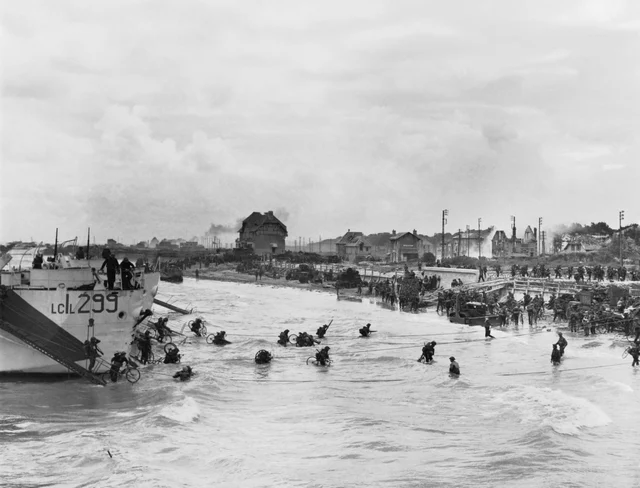
The short answer: the obstacles were there, covered by seawater. 24
Thefourthmaninaboat provides the full obstacle counts from Richard Anderson's Cracking the Atlantic Wall. Omaha Beach had 3,700 total obstacles (2,000 stakes, 1,050 hedgehogs, 450 ramps, 200 Element C gates) at a density of 0.49 obstacles per yard. Sword had 911 total obstacles (267 stakes, 522 hedgehogs, 76 ramps, 46 Element C gates) at 0.3 per yard. Juno, despite looking clear in photographs, had the second-highest obstacle density of all five beaches at 0.47 per yard. 24
Why weren't they visible? The obstacles were placed below the high-water mark. A British intelligence assessment by Major General John Inglis, quoted in Anderson's book, noted: "All obstacles are below high water mark. From the location and distribution of these obstacles it seems that they are intended to be anti-craft rather than anti-vehicle." 24 H-hour on Juno and Sword was set at 07:35 — 65 minutes later than Utah and Omaha — because of offshore shoals. The tide rose quickly, covering obstacles before engineers could clear them, causing "heavy losses of landing craft on both beaches." 24
Troops landing from LCI(L) 299 on Juno Beach, Bernieres-sur-Mer, June 6, 1944
Troops landing at Juno Beach's Nan White sector, Bernieres-sur-Mer, June 6, 1944. The water obscures the obstacles that caused heavy craft losses. (Public domain, Wikimedia Commons)

When did Rome stop counting years? The Era Hispanica

Question: From 23 BCE, Rome mostly used imperial regnal years. When did that practice fade? 25
Answerer: u/TywinDeVillena — score 12, curated in the Sunday Digest. The question was posed by u/KiwiHellenist (flaired: Early Greek Literature). 18
TywinDeVillena's answer introduces a largely unfamiliar chronographic system: the Era Hispanica, which the Iberian Peninsula used throughout the Middle Ages and well past Rome's fall. 26
The system started in the Late Roman period, before the Visigoths, Suebi, Vandals, and Alans arrived. The earliest surviving reference appears in a Christian inscription from 381 CE — implying the system was already in common use by at least the mid-4th century. It counts years from 38 BCE, generally accepted as the year Caesar Octavian declared Hispania a tributary province (provinciae aerariae) — hence "Aera," from the Latin for "era" or "reckoning." In northern Spain (Asturias, Cantabria, northern Castile, the Basque Country), it was also called the "consular era." 26
Anno Domini (the system the rest of Western Europe adopted from the Carolingian period onward) did not become standard in Spain and Portugal until the early 15th century. TywinDeVillena closes with a 14th-century document from King Pedro of Castile that still uses the old system: "Era de mill y trezientos y ochenta y nueve años" — which translates to AD 1351. 26

China's warlord era — the structural roots

Question: Why did the Republic of China fail to consolidate after the Qing overthrow? Who were the warlords, and were they forces of reaction or modernization? 27
Answerers: u/xWintergale (score 7) and u/T_Chernovsky, curated in the Sunday Digest. 18
XWintergale traces the sequence from the 1911 Wuchang Uprising through the failure of Sun Yat-sen's "Second Revolution" in 1913, Yuan Shikai's brief imperial overreach in 1915, and the 1920 defeat of Duan Qirui by Cao Kun and Wu Peifu — a moment xWintergale identifies as "the complete transition into the warlords era," since it marked "the first time that the nominal central government was defeated by warlords." 27 Structural factors: anti-imperialist factions were internally divided, literacy was low, and the country had "no Republican and Democratic traditions in a nation under absolutist rule for over 2000 years." 27
T_Chernovsky's answer pushes the structural explanation earlier. The late Qing state had low taxes and a small central military — by design, a deliberately "libertarian" configuration that proved catastrophic when facing foreign invasion and the Taiping and other 19th-century rebellions. 27 The court's response was to recruit private armies from regional elites — Zeng Guofan, Li Hongzhang, Zuo Zongtang — which became loyal to their individual commanders rather than to Beijing. Yuan Shikai's Beiyang Army was the largest of these successor forces; well-trained and equipped, but with loyalty running to the paymaster, not the state. 27
On the reaction vs. modernization question, T_Chernovsky gives a direct answer: "Before 1928, the Republic of China was the warlords; the problem was who got to be the president." 27 The major warlords who "counted" — including Yan Xishan, who controlled Shanxi province through the 1940s — were frequently modernizers, investing in education, economic development, and infrastructure within their territories. Chiang Kai-shek's Northern Expedition (carried out with Communist Party support) consolidated national power in 1928. 27

Five more curated answers — questions accessible, answers blocked by API

The following answers were curated in the Weekly Round-Up or Sunday Digest but could not be retrieved from Reddit's API (all five are behind pagination limits):
  • Why did no one "discover" the source of the Nile until the 1860s? (score: 1,989 — the week's most-upvoted question) — answered by u/Khenghis_Ghan. 28
  • Why did presidential speeches get simpler as education expanded? — answered by u/eh_steve_420. 17
  • Did Shakespeare consciously decide to write in iambic pentameter? — answered by u/macnalley. 17
  • Transported to the Roman Empire — what should you write, and how to make it survive 2,000 years? (score: 785) — answered by u/AmeliaofAnsalon. 29
  • Did ancient polytheistic religions shift from matriarchy to patriarchy? — answered by u/itsallfolklore. 17

Community notes

AskHistorians Podcast Episode 251 — "American Medieval": Published June 12. Host u/Steelcan909 (flaired: North Sea c.600–1066 / Late Antiquity) interviewed Prof. Matthew Gabriele of Virginia Tech — a specialist in medieval religion, violence, and the uses of the medieval past in contemporary America. 30 31 Gabriele is the co-author (with David M. Perry) of The Bright Ages: A New History of Medieval Europe and Oathbreakers: The War of Brothers That Shattered an Empire and Made Medieval Europe, and hosts an independent podcast also called "American Medieval." The episode runs 58 minutes and covers his work as a podcaster, the relevance of the medieval world to present-day America, and pop culture representations of the Middle Ages.
Flair profile of the week: u/Trinity-, flaired for Medieval Gender and Sexuality. 17
Still looking for answers — three unanswered questions highlighted in the Round-Up: "What sorts of tasks did people compel demons to carry out?" 32, "Goldfinger was filmed before China had nuclear weapons, yet they appear in the plot — how well known was the Chinese nuclear program at the time?" 33, and "Who were the regular residents of 'pirate towns' in the golden age of piracy?" 34
Coming up: Three AMAs are scheduled for the week of June 15–18 — Dr. Rachel Newman on The Future in Their Hands: Making Mexico's Foreign-Educated Elite (June 15), Brendan Greeley on The Almighty Dollar: 500 Years of the World's Most Powerful Money (June 16), and a joint session with Colonial Williamsburg and Montpelier on Virginia and Revolutionary Rights at 250 (June 17). Will Quam's AMA on Fire and Clay: How Bricks Reveal the Hidden History of Chicago is scheduled for June 18. 17

Cover image: Rod Phillips, Cats: A History (Johns Hopkins University Press, 2026). Image from Carleton University Department of History.

Fuentes de referencia

  1. 1Marc Stein AMA — r/AskHistorians
  2. 2Bicentennial — University of Chicago Press
  3. 3Stein answer on bicentennial world's fair plans — r/AskHistorians
  4. 4Stein answer on Kiyoshi Kuromiya and bicentennial drug use — r/AskHistorians
  5. 5Kiyoshi Kuromiya oral history — OutHistory.org
  6. 6Lepore, "Scandal, Protest, Goofiness, and Grandeur at the U.S. Bicentennial" — The New Yorker
  7. 7Ketil Slagstad AMA — r/AskHistorians
  8. 8Standardizing Sex — University of Chicago Press
  9. 9Slagstad answer on intersex frameworks — r/AskHistorians
  10. 10Rod Phillips AMA — r/AskHistorians
  11. 11Cats: A History — Johns Hopkins University Press
  12. 12Ottawa launch of Cats: A History — Carleton University
  13. 13Peter Samsonov AMA — r/AskHistorians
  14. 14Tank Archives Issue 1 – Panzer '46 — Mortons Books
  15. 15Samsonov answer on Panzer'46 photographs — r/AskHistorians
  16. 16Samsonov answer on German tank design flaws — r/AskHistorians
  17. 17AskHistorians Weekly Round-Up and Newsletter, June 12, 2026 — r/BestOfAskHistorians
  18. 18Sunday Digest, June 14, 2026 — r/AskHistorians
  19. 19Original question thread — r/AskHistorians
  20. 20Cedric_Hampton answer on AIDS and the arts — r/AskHistorians
  21. 21Original question thread — r/AskHistorians
  22. 22restricteddata answer on ancient India's scientific traditions — r/AskHistorians
  23. 23Original question thread — r/AskHistorians
  24. 24thefourthmaninaboat answer on D-Day obstacles — r/AskHistorians
  25. 25Original question thread — r/AskHistorians
  26. 26TywinDeVillena answer on Roman regnal years and Era Hispanica — r/AskHistorians
  27. 27Original question thread — r/AskHistorians
  28. 28Original question thread — r/AskHistorians
  29. 29Original question thread — r/AskHistorians
  30. 30AskHistorians Podcast Episode 251 — Libsyn
  31. 31AskHistorians Podcast 251 announcement — r/AskHistorians
  32. 32Unanswered thread — r/AskHistorians
  33. 33Unanswered thread — r/AskHistorians
  34. 34Unanswered thread — r/AskHistorians

Añade más opiniones o contexto en torno a este contenido.

  • Inicia sesión para comentar.