
All-In episode 276 digest: Anthropic's Fable backlash and the AI access fight
A five-minute digest of All-In's June 13 episode on Anthropic's Fable backlash, AI regulation, inflation, and California election rules, with chapter timestamps and speaker-attributed quotes.
The episode opens with a narrow product-policy fight, then widens into a larger question: if frontier AI models become basic business infrastructure, who gets to decide which users are allowed full capability? All-In released this 1 hour 42 minute episode on June 13, 2026, with Jason Calacanis, Chamath Palihapitiya, David Sacks, and David Friedberg moving from Anthropic's Fable backlash into AI regulation, inflation, and California election rules. 1
At a glance
| Field | What to know |
|---|---|
| Episode | "Anthropic's Fable Backlash, Nationalizing AI, Inflation Heats Up & California's Broken Elections" 1 |
| Release | June 13, 2026 on YouTube. 1 |
| Runtime | 1:42:00 on YouTube. 1 |
| Main thread | Anthropic's new-model safeguards, prompt retention, and silent capability downgrades. 1 |
| Best use of your time | Listen if you care about enterprise AI procurement, open-source model strategy, or the politics of AI regulation. |
Cargando tarjeta de contenido…
Timestamp map
| Start | Segment | Why it stands out |
|---|---|---|
| 0:19 | Anthropic's Fable backlash | The hosts focus on privacy, 30-day prompt retention, and model downgrading for sensitive uses. 1 |
| 29:16 | The AI regulatory-capture trap | Sacks frames Anthropic's safety posture as both product policy and competitive positioning. 1 |
| 37:59 | Nationalizing AI | The conversation shifts to proposals for government stakes or control over frontier AI companies. 1 |
| 59:22 | Liquidity recap | A shorter section on the All-In Liquidity event and investor takeaways. 1 |
| 1:05:39 | Inflation heats up | The hosts connect CPI/PPI prints, oil-risk scenarios, and government spending. 1 |
| 1:12:27 | California election laws | Friedberg argues that ballot-harvesting and registration rules create trust problems even without proving fraud. 1 |
The five-minute digest
1. Anthropic is treated as a trust test, not just a model launch
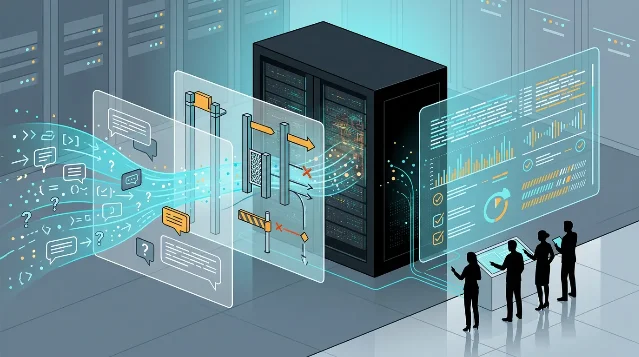
Calacanis tees up Anthropic's Fable release as a high-performance model with tighter safeguards around areas such as hacking, bioweapons, and frontier AI research. The official episode description says the model discussion begins at 0:19 and centers on the "secret Fable nerfing and privacy concerns" controversy. 1
Chamath's enterprise concern is simple: a company may not know when an employee's ordinary work has crossed an internal model-provider policy line. Friedberg makes it concrete with genomics work at his own company. He says closed-model restrictions are pushing teams toward self-hosted or open-source alternatives:
David Friedberg: "we are likely going to end up needing to use open-source models." 1
The sharper claim comes when the hosts discuss U.S. firms choosing Chinese open-source models if American frontier labs restrict capability. Friedberg's line is the practical version of the complaint:
David Friedberg: "restrictions forcing companies to go get open source Chinese models." 1
Sacks pushes the trust issue harder. His objection is not only that a provider can restrict a user. It is that the product can be degraded without the user knowing what happened. In his framing, the damaging part is silent capability sorting:
David Sacks: "they would nerf their models and never tell you you were downgraded." 1
2. The regulation fight is really about who controls alternatives
At 29:16, the discussion moves from one company's policy to a broader regulatory structure. The hosts repeatedly return to the same fear: if closed frontier labs ask Washington to regulate advanced models, open-source competitors may be the hardest hit. 1
Sacks describes Anthropic's behavior as a regulatory-capture campaign. Calacanis tries to steelman the other side: if a private company believes its model could help users create cyber, physical, or biological weapons, it may feel compelled to monitor and restrict access. Friedberg accepts that weaponization is a real risk, but argues the legal focus should be on harmful outputs and illegal weapon creation, not broad up-front denial of model capability.
The most useful distinction in this section is between "access control" and "use enforcement." The hosts dislike a model provider deciding, in advance and opaquely, whether a given user deserves full capability. They are more open to existing laws against cyberattacks, weapons design, and bioweapons being enforced after intent or misuse becomes clear.
3. "Nationalizing AI" becomes a property-rights argument
The 37:59 chapter turns from model safety to proposals that the government take equity, warrants, or control rights in major AI companies. The show description frames this as a Trump/Sanders discussion around "Nationalizing AI." 1
The strongest version of the hosts' objection is property-rights based. Sacks calls the idea confiscatory:
David Sacks: "this is a straight-up confiscation of property, terrible precedent." 1
Friedberg then rejects the labor-displacement argument behind some intervention proposals. His claim is sweeping, so treat it as his argument, not as a settled forecast:
David Friedberg: "There is no job loss with AI. I will say it again." 1
The thread to watch in future episodes: the panel is not arguing that AI needs no rules. They are arguing that regulation aimed at model access can entrench incumbents, penalize open source, and put government in the position of selecting winners.
Quote notes by segment
| Approx. segment | Speaker | Quote | Why it matters |
|---|---|---|---|
| 0:19 | David Friedberg | "we are likely going to end up needing to use open-source models" 1 | Enterprise users may respond to restrictions by moving workloads away from closed labs. |
| 0:19 | David Sacks | "they would nerf their models and never tell you you were downgraded" 1 | The trust issue is opacity, not just safety policy. |
| 37:59 | David Sacks | "straight-up confiscation of property" 1 | Sacks frames government equity-taking as a property-rights violation. |
| 37:59 | David Friedberg | "AI is a boom, not a bust" 1 | Friedberg rejects the job-loss premise behind interventionist AI policy. |
| 1:05:39 | David Friedberg | "core problem all roots back to excess government spending" 1 | Inflation is framed mainly as fiscal, not just monetary or geopolitical. |
| 1:12:27 | David Friedberg | "this is not fraud, this is how the laws are set up" 1 | He distinguishes between alleging fraud and criticizing election-rule design. |
The back half: inflation and election trust

At 1:05:39, the inflation segment turns on two claims: sticky price pressure and geopolitical oil risk. Friedberg's argument is that government spending remains the root cause of inflation pressure. Chamath adds a market-risk scenario, saying oil could become a major shock if Middle East conflict pushes prices far higher. 1
Sacks is less alarmed about the latest print than the others. His quoted view is that the data was broadly in line with expectations:
David Sacks: "print was largely in line with expectations, market is up today." 1
The final segment at 1:12:27 is the most politically charged. Friedberg argues that California's ballot and registration rules create integrity doubts even if the behavior is lawful. The useful line is his distinction between legality and trust:
David Friedberg: "this is not fraud, this is how the laws are set up." 1
For a quick listen, start with the first 45 minutes. That is where the episode has its clearest through-line: frontier AI labs are becoming infrastructure providers, and infrastructure providers can shape markets if they control access, logs, and capability tiers.
Añade más opiniones o contexto en torno a este contenido.