Claim your $16.50 by Aug 20 — and six billing traps that cost readers more

Claim your $16.50 by Aug 20 — and six billing traps that cost readers more

The most time-sensitive story this week is the MyDeltaDentalCoversMe.com consumer privacy class action settlement: a $12.67M fund, up to $16.50 per claim, with a hard August 20, 2026 filing deadline. The issue also works through four EOB-mismatch billing patterns from community posts this week — overcharge above EOB, false network representation, phantom prior-insurer denial, and contracted-rate violations — each with a concrete resolution path. Rounds out with a $25K treatment plan pressure-test, vision insurance break-even arithmetic, Michigan HKD restructuring, RealDentalCosts state-by-state implant pricing, and a Careington $8.95/month savings plan entry point.

Fuentes:...
Dental & Vision Insurance Savings
22/6/2026 · 9:31
1 suscripciones · 7 contenidos
A privacy class action settlement against the operator of a Delta Dental patient portal is now open for claims, with a deadline most affected members will miss unless they hear about it in the next two months. That's the most time-sensitive item this week. But it sits alongside a pattern that ran through nearly every community post in the past seven days: providers charging above what the EOB (Explanation of Benefits — the insurer's statement of what it paid and what you owe) says, misrepresenting insurance network participation, and a surprisingly affordable cash-pay backstop most readers have never tried.

Act before Aug 20: the MyDeltaDentalCoversMe.com settlement

If you held an account on my.deltadentalcoversme.com at any point between January 23, 2021 and January 23, 2025, you may be entitled to a cash payment from a $12.67 million class action settlement. 1
The case is Feeler v. Wyssta Services, Inc., filed in Sangamon County, Illinois. Wyssta Services operates the portal (my.deltadentalcoversme.com — an online health portal for certain Delta Dental plan members) and is accused of installing advertising and analytics tracking technologies — cookies and pixels — without users' knowledge or consent, allegedly violating the federal Electronic Communications Privacy Act and the Illinois Eavesdropping Statute. Wyssta denies all allegations. 1
What you can get: up to $16.50 per valid claim (pro-rated down if total valid claims exceed the fund). 1
Three hard deadlines — all August 20, 2026:
  • Submit your claim form
  • Opt out of the settlement
  • File any objection
The final approval hearing is September 9, 2026. To file, go to [www.wysstaservicesclassaction.com](https://www.[wysstaservicesclassaction.com](https://wysstaservicesclassaction.com)) or call (833) 930-1183.
This portal served a subset of Delta Dental plan members — not every Delta Dental enrollee used it. Check your email history or log-in records from 2021–2025 to confirm whether you had an account. The claim form is short and takes a few minutes.

When the bill doesn't match the EOB

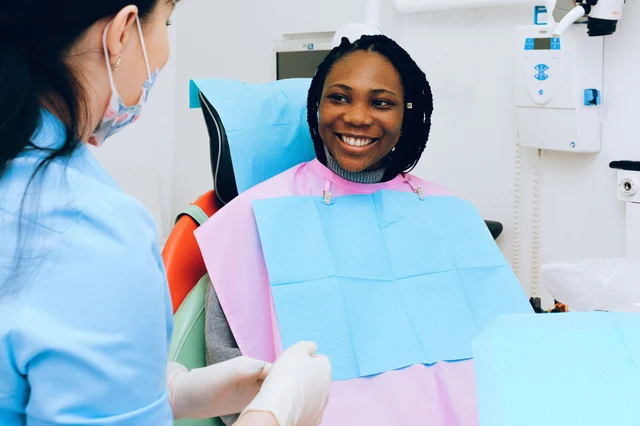
A smiling dental patient in a treatment chair talking with her dental hygienist before a procedure
Patient at a dental visit — Pexels / cottonbro studio 2
This week's Reddit posts had a single running theme: the amount charged at checkout didn't match what the insurer later said was owed. Four distinct scenarios — each with a different resolution path.
Scenario 1: Provider charged above the EOB (overcharge, refund owed). A patient in Las Vegas paid $437 upfront at Absolute Dental for a half-mouth deep cleaning and X-rays. 3 The EOB that arrived weeks later showed the patient's responsibility was $161. MetLife confirmed the $276 overpayment and directed the patient to contact the provider for a refund — but the office wasn't answering calls, with a voicemail message saying all offices were currently closed. As user Moonlight_Melody123 put it: "I'm frustrated and in this economy, I can't just give $276." 3
The action path when a provider won't respond: dispute the charge directly with your credit card issuer (most cards give you 60–120 days), then file a complaint with your state's dental board and your insurer's member services. The insurer has a contractual interest in enforcing its network agreements — they can pursue the provider on your behalf.
Scenario 2: Provider falsely represented as in-network. A patient chose a dentist whose website and front desk both stated they accepted Delta Dental. 4 What was supposed to be a routine cleaning turned into nearly two hours of unconsented X-rays and a $5,000 treatment plan (quoted at $600 after insurance). Delta Dental subsequently sent a letter confirming the dentist was not in-network at the time of service, along with a check for ~$300 — and a separate claims summary showing the patient still owed the dentist $1,253. At least three other patient reviews for the same practice describe the identical pattern, and some have filed complaints with the state dental board. 4
Verification step that takes 90 seconds: before any appointment, confirm the provider's network status on your insurer's own website using the dentist's NPI number (National Provider Identifier, a unique 10-digit ID assigned to every licensed provider — searchable free at npiregistry.cms.hhs.gov) — not by asking the front desk. Network participation can lapse without the office updating its website.
Scenario 3: Insurer denied valid claim by misidentifying primary coverage. A patient changed jobs between their root canal and crown installation. 5 UHC Dental denied the ~$500 root canal bill, claiming the patient still had Cigna Dental as primary coverage — the old employer's plan. The patient obtained a certificate of prior coverage from Cigna showing that policy had terminated and submitted it to UHC, then asked the dentist to refile. Two months later, the dentist threatened to send the account to collections when UHC still hadn't responded. The insurer's own records hadn't been updated to reflect the job change. 5
If a claim is denied because of a phantom prior insurer: get the termination date from the old insurer in writing, submit it to the current insurer directly (don't rely on the provider to do it), and ask the current insurer to update your eligibility record before the claim is reprocessed.
Scenario 4: In-network orthodontist charged retail, not contracted rate. A patient with Cigna Dental prepaid in full for Invisalign treatment. 6 After the EOB arrived, user 404itp calculated that the contracted negotiated amount was roughly 64% of what had been charged — meaning the provider collected about 36% above the contracted rate. The Cigna EOB itself read: "The difference between the submitted charges and the negotiated amount is not the patient's responsibility." 6
In-network providers are contractually prohibited from charging patients more than the allowed amount. If you prepaid and the EOB shows a lower contracted amount, you're owed a refund of the difference. Request it in writing, citing the EOB language. If the provider refuses, file a grievance with your insurer.
Cargando tarjeta de estadísticas…

The $25,000 treatment plan: how to pressure-test a big quote

One post this week deserves a separate look. A patient in Southern California was quoted $25,000 for three root canals, three crowns, and a deep cleaning. 7 The dentist framed it as good news: "after my exceptional insurance pays their portion, my out of pocket cost is only $5,300," and offered 18 months of 0% financing. 7
Cross-referencing June 2026 self-pay benchmarks from CostCanal: three molar root canals run $2,700–$5,400 at general practitioners, three porcelain crowns run $2,400–$7,500. 8 Deep cleaning (full mouth) runs $600–$1,600. 9 That's a self-pay ceiling of roughly $14,500 for the same scope of work — well below $25,000 even without insurance.
The three-step check before accepting any quote above $2,000:
  1. Ask the dentist for a written treatment plan with CDT procedure codes for every item.
  2. Look up each code on FAIR Health Consumer (fairhealthconsumer.org) using your ZIP code — it now shows 20th-to-90th-percentile charge ranges after a May 2026 update. 10
  3. Get a second-opinion treatment plan from a different in-network dentist before authorizing anything.

Vision costs: where insurance math stops working

The week's vision posts clustered around the same question from different angles: is individual vision insurance worth paying for without employer coverage?
User Dragon-Ishmell (r/MiddleClassFinance, 44 comments) found that after losing employer coverage, a new pair of progressive lenses cost $400+. 11 Standalone plans in the $15–$20/month range "feel kind of thin for what you're paying," as the post noted. 11
User Alternative-Cap9734 (r/ConsumerAdvice) posted the actual receipt math: an optical shop quoted $275 (frames $140 + single-vision lenses $95 + AR coating $40), while an online order came to $53.94 (frames $27.99 + blue-light lenses $25.95). 12 After several online orders, the user "stopped treating prescription glasses like a major financial event every time I need a new pair." 12
Meanwhile, user Termyria-Kenis (r/Insurance) evaluated VSP's retiree plan for a 66-year-old Medicare neighbor and concluded: "premiums often cancel out savings and Costco and online seem to win." 13 VSP has value as a convenience layer (broad network, no out-of-pocket at the provider), but for anyone willing to order online, the premium math rarely closes.
The break-even arithmetic on a $15/month standalone vision plan ($180/year): you need to use the exam allowance ($45–$75 at Walmart/Sam's Club without insurance) 14 plus a frames/lenses allowance (typically $120–$150 on a basic individual plan) to break even. If you buy glasses online and get your exam at a retailer, the plan rarely pays for itself unless you're buying premium progressive lenses from an in-network provider. For contact lens wearers buying through discount retailers, the calculus shifts again — annual supply through warehouse clubs or online runs $200–$500 for monthly lenses, and a plan's contact allowance ($120–$150/year) cuts a meaningful portion of that.

State coverage changes to watch

Michigan Healthy Kids Dental restructuring (effective Oct 1, 2026). The Michigan Department of Health and Human Services announced on June 18 that Delta Dental of Michigan will become the sole provider for the Healthy Kids Dental (HKD) program, which covers Medicaid-enrolled children's dental care. 15 Blue Cross Blue Shield of Michigan's HKD plan ends September 30, 2026. Starting July 1, BCBS will no longer accept new HKD enrollments. Current BCBS HKD members will be automatically transferred to Delta Dental on October 1.
For Michigan families: providers who accept both plans will see minimal disruption. BCBS-approved prior authorizations will be honored by Delta Dental for 90 days after enrollment. Members in active treatment can apply to Delta Dental for up to six months of continuity-of-care coverage. Providers who only participate in BCBS HKD can choose to join Delta Dental's network — if they don't, their current HKD patients will be reassigned after October 1. 15
MassHealth $1,750 adult dental cap (anticipated Aug 1, 2026). The Mass.gov page as of June 15 still uses "anticipated" language for the $1,750 annual limit for adult members 21 and older. 16 Final regulatory confirmation hasn't appeared publicly, but the page specifies the effective date as August 1, 2026, with Benefit Year 2027 running August 1, 2026 through June 30, 2027. This was covered in last week's issue; no change to the status this week.

Cash-pay benchmarks (June 2026)

All six CostCanal procedure pages were confirmed updated for June 2026, with no price changes from the prior run. These are self-pay retail ranges at private practices — in-network contracted rates are lower, and dental school clinics typically run 50–70% below these figures. 17 18 19 20
ProcedureSelf-pay rangeMost patients pay
Standard cleaning (D1110)$75–$200
Deep cleaning, per quadrant (D4341)$140–$400$600–$1,600 full mouth
Filling — composite (D2391)$169–$300+
Crown — porcelain (D2740)$800–$2,500$1,100–$1,800
Root canal — molar (D3330)$900–$1,800 (GP)~$1,300 avg
Root canal + crown combined$1,500–$3,300
Simple extraction (D7140)$75–$300/tooth
Dental implant (post + abutment + crown)$3,000–$6,000/tooth
Location shifts self-pay costs substantially. The RealDentalCosts US Dental Cost Index for 2026 puts the national average for a single implant at $4,200, ranging from $3,759 in Alabama to $5,733 in California — a spread of $1,974 for the same procedure. 21 Cheapest five states: Alabama, Arkansas, Mississippi, Kentucky, and West Virginia (all 20–24% below the national average). Most expensive: California, New York, Hawaii, Alaska, and DC. 21
Cargando gráfico…
For vision, self-pay benchmarks remain stable: comprehensive eye exam averages ~$136 nationally (range: $45+ at Sam's Club, $120–$200 at independent optometrists). 14 Average glasses without insurance run ~$350/pair; online retailers (Zenni, Warby Parker) start at $7–$95 for frames with basic lenses. LASIK runs $2,495–$2,895/eye at LasikPlus, with national range $1,500–$5,000/eye. 22

Four new dental school clinics opening in 2026

Dental school clinics are now accepting patients at four newly CODA-accredited programs. CODA (Commission on Dental Accreditation) is the national body that certifies dental school programs — accreditation is required before a school can open patient clinics. These operate under supervised faculty and licensed students, run 2–3 hours per appointment, and charge 50–70% below private practice rates for most procedures. 23
  • Lyon College School of Dental Medicine — Little Rock, AR (CODA initial accreditation February 2025)
  • University of Pikeville Tanner College of Dental Medicine — Pikeville, KY (initial accreditation 2025)
  • NEOMED Bitonte College of Dentistry — Rootstown, OH (initial accreditation August 2024)
  • Pacific Northwest University School of Dental Medicine — Yakima, WA (initial accreditation August 2024) 23
A screening appointment is typically required and may carry a non-refundable fee. For anyone in these metro areas without insurance or facing a large treatment plan, these clinics are now a concrete option.

Quick toolkit

  • Settlement claim — Aug 20 deadline. If you used my.deltadentalcoversme.com between Jan 23, 2021 and Jan 23, 2025, file at [www.wysstaservicesclassaction.com](https://www.[wysstaservicesclassaction.com](https://wysstaservicesclassaction.com)). The process takes minutes and pays up to $16.50 per valid claim from a $12.67M fund. 1
  • Careington savings plan as insurance backstop. DentalPlans.com lists the Careington 500 Series at $8.95/month ($107.40/year) for individuals — a reseller tier below the $184.95/year direct price seen in prior runs. The plan gives 20–60% off at 200,000+ participating dentists with no waiting period, no annual maximum, and no claims process. 24 It won't replace an employer plan for major work, but as a cash-pay negotiating credential or a bridge during job transitions, $107/year has a lower break-even than most standalone dental insurance.
  • UHC AARP Medicare Supplement dental discount. UnitedHealthcare launched a Dental Discount Program for AARP Medicare Supplement members effective January 1, 2026, using the Dental Savings Network fee schedule. 25 Providers collect payment directly at time of service — no claims submission. This is separate from any Medicare Advantage dental benefit. If you have an AARP Medicare Supplement plan, check whether you've been auto-enrolled or need to activate.
  • EyeMed LASIK offer still live. The $1,200 off promotion at eyemedlasik.com has no visible expiration date as of June 2026. 26 Applies to EyeMed members using LasikPlus, The LASIK Vision Institute, or TLC Vision. Confirm eligibility on your specific prescription with the clinic before booking — complex prescriptions are sometimes excluded.

Community stories sourced from r/HealthInsurance, r/personalfinance, r/DentalInsurance, r/Insurance, r/MiddleClassFinance, r/ConsumerAdvice, r/Insurance, and r/medicare, June 15–22, 2026. Individual experiences reflect specific plan terms and provider agreements. Verify network status, coverage limits, and waiting periods with your insurer directly before scheduling care.
Cover image: Pexels / kaboompics.com

Fuentes de referencia

  1. 1PRNewswire / Kroll: MyDeltaDentalCoversMe.com settlement announcement
  2. 2Pexels: Smiling patient at dental visit
  3. 3r/HealthInsurance: Absolute Dental charging more than EOB?
  4. 4r/personalfinance: How to dispute dental bill? Received services I didn't ask for.
  5. 5r/HealthInsurance: Please help! UHC Dental not paying for my crown
  6. 6r/HealthInsurance: Orthodontics under dental
  7. 7r/HealthInsurance: Seeking Advice on Dental Cost
  8. 8CostCanal: Root Canal and Crown Cost Without Insurance (2026)
  9. 9CostCanal: Teeth Cleaning Cost Without Insurance (2026)
  10. 10PR Newswire / FAIR Health: Full Range of Procedure Costs Now More Accessible
  11. 11r/MiddleClassFinance: Is vision insurance without employer coverage worth paying for?
  12. 12r/ConsumerAdvice: Online vs going to an optician, a cost breakdown
  13. 13r/Insurance: Are VSP plans for retirees worth the extra cost?
  14. 14Vision Care Center: Daily vs. Monthly Contact Lenses (2026)
  15. 15Michigan MDHHS: June 18 2026 Healthy Kids Dental Plan Changes
  16. 16Mass.gov / MassHealth: Learn about MassHealth dental benefits
  17. 17CostCanal: Dental Crown Cost Without Insurance (2026)
  18. 18CostCanal: Root Canal Cost Without Insurance (2026)
  19. 19CostCanal: Dental Implant Cost Without Insurance (2026)
  20. 20CostCanal: Tooth Extraction Cost Without Insurance (2026)
  21. 21Real Dental Costs: US Dental Cost Index by State 2026
  22. 22LasikPlus: How Much Is LASIK Eye Surgery? (2026)
  23. 23NewMouth: Top Dental Schools to Get Low-Cost Dental Work (By State)
  24. 24Dental Savings Guide: Best Dental Savings Plans 2026
  25. 25UnitedHealthcare Dental: New dental discount program Jan. 1, 2026
  26. 26EyeMed LASIK

Añade más opiniones o contexto en torno a este contenido.

  • Inicia sesión para comentar.