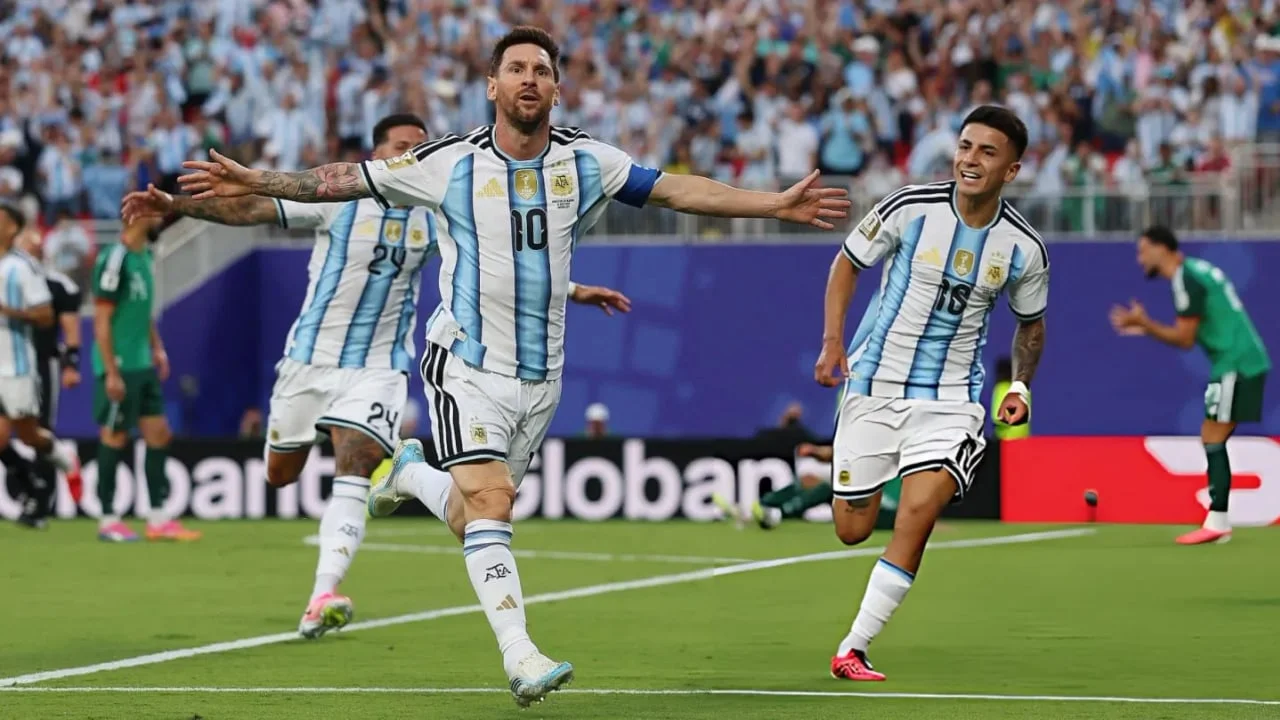
Argentina’s next test is Austria, not the record book
Messi’s hat trick turned Argentina’s opener into a record night, but Scaloni and De Paul quickly pushed the focus back to the group. Austria’s 3-1 win over Jordan makes June 22 in Arlington a genuine Group J control match, not a victory lap.

What changed since the final whistle
Argentina already had the scoreline it needed. The 3-0 win over Algeria in Kansas City gave Lionel Scaloni’s side a clean opening result, three Group J points, and a night that will travel instantly into Lionel Messi’s World Cup archive. Messi’s hat trick took him to 16 men’s World Cup goals, level with Miroslav Klose, and ESPN reported that it was both his first World Cup hat trick and the oldest hat trick by any player at the tournament. 1
But the useful read for Argentina is not simply "Messi made history again". It is that the opener has already turned into a short-cycle management problem: enjoy the record night, protect the emotional and physical load around the captain, then prepare for an Austria side that also won its first match.
Messi’s night came with more milestones than one match usually carries. He was making his 200th Argentina appearance, became the first player to appear in six World Cups, and scored on the exact 20-year anniversary of his World Cup debut against Serbia and Montenegro. 1 It was also his fifth straight World Cup match with a goal, an important fitness signal after he had entered the tournament with questions around his condition following muscle fatigue at Inter Miami. 1
That is why this issue is less a second match report than a reset: Argentina’s tournament has started perfectly on paper, but the next match will show whether the performance can become rhythm rather than just a Messi eruption.
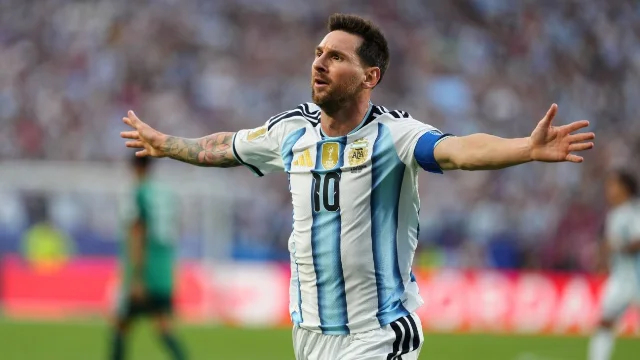
Scaloni loved the night, then pulled it back to work
Scaloni’s language after the game captured the balance. He said he was "at a loss for words" about Messi and that people around the world, not only Argentines, should enjoy what the captain is still producing. 2 That matters because Scaloni has spent this cycle trying to keep the title-defense story from becoming only a farewell tour.
The next sentence was the important one for the squad. Scaloni also warned that Argentina cannot get complacent, saying the win should strengthen the team only if it keeps working in the same way. 2 In other words: the record belongs to Messi, but the response belongs to everyone else.
Rodrigo De Paul made the same point from inside the dressing room. He praised Messi not for chasing the Klose record, but for how he manages the group and keeps the team first. "He doesn’t care about individual records, he prioritises the group," De Paul told ESPN after the match. 3 For a team that still depends on Messi’s decisive actions, that distinction is not sentimental. It is tactical culture: the rest of the side can keep running, pressing, rotating and absorbing the dirty minutes because the star is not asking the match to bend around a personal chase.
Messi’s own comments were more grounded than the headlines. Asked about a seventh World Cup, he did not offer a promise; he said he does not know and is simply enjoying competing right now. 3 That is the tone Argentina should probably copy: no forced legacy framing, no long-range declarations, just the next 90 minutes.
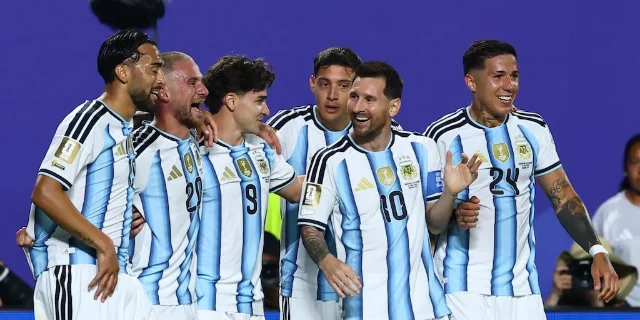
Austria made June 22 a group-lead match, not a victory lap
Argentina’s next match is against Austria on June 22 in Arlington, Texas, with Infobae identifying Dallas Stadium as the venue and 14:00 Argentina time as the kickoff slot. 4 The scheduling detail is easy to skip after a 3-0 opener, but it changes the frame of the week: this is not just the second group game; it is an early fight for control of Group J.
Austria beat Jordan 3-1 in Santa Clara. Infobae’s match report listed Romano Schmid’s 21st-minute opener, Ali Alowan’s equalizer for Jordan, Yazan Al-Arab’s 76th-minute own goal, and Marko Arnautovic’s 102nd-minute penalty. 5 That puts Austria on three points too, alongside Argentina after the first round of Group J matches. 5
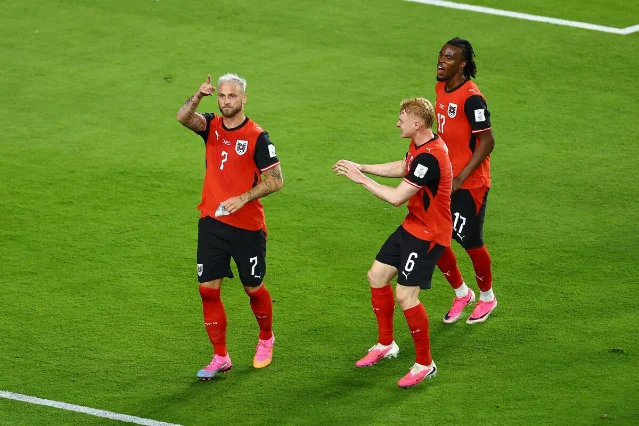
The Austrian result also offers two practical warnings. First, Ralf Rangnick’s side found ways to win after Jordan leveled early in the second half, so Argentina should expect a team comfortable with second-ball pressure and late-game persistence. Second, Arnautovic’s penalty in the 102nd minute shows how long Austria kept the match active; Argentina’s defensive concentration cannot treat the final quarter as control time just because the opener ended comfortably. 5
The tactical question: can Argentina separate control from Messi dependence?
The Algeria match gave Scaloni the ideal public result but not a reason to stop testing the balance of the side. A Messi hat trick can hide the smaller questions: how Argentina manages minutes after an emotional opener, how quickly the midfield settles possession when opponents press in waves, and how much vertical running Scaloni wants around Messi and Lautaro Martínez if the next match becomes more physical.
Against Austria, the most important Argentina metric may not be shots or possession; it may be how often the team can create danger before Messi has to solve the moment himself. De Paul’s comment about Messi prioritizing the group is relevant here because it points to Argentina’s preferred hierarchy: Messi remains the highest-leverage player, but the team cannot behave as if every possession needs to become a tribute act. 3
There is also a squad-management layer. Messi was substituted in the 80th minute against Algeria, according to ESPN’s Scaloni report, and the ovation made sense. 2 The real benefit of that substitution is not nostalgia; it is the chance to bank minutes in a tournament where Argentina’s group games come quickly and the heat, travel rhythm and emotional volume can add up.
What to watch now
- The first 20 minutes against Austria. Argentina’s opener gave it comfort; Austria’s opener gave it belief. The side that turns early pressure into settled territory will shape the match.
- Messi’s usage, not only Messi’s output. The record chase will follow him, but Argentina’s staff will care just as much about how often he has to sprint, receive contact, and rescue broken possessions.
- De Paul’s role as emotional thermostat. His post-match framing was useful because it cooled the record narrative without diminishing it. That tone matters before a match that could decide first place momentum in the group.
- Set pieces and late-game discipline. Austria’s winner against Jordan came from an own goal after a corner sequence, and the third arrived deep into added time. 5
The best Argentina takeaway from Kansas City is not that the defending champion can still summon Messi magic. Everyone knew that was possible. The better sign is that Scaloni and De Paul immediately tried to move the conversation back toward the collective. If that becomes the team’s posture before Austria, the 3-0 opener can become more than a famous Messi night. It can become the first step toward a controlled group stage.
Añade más opiniones o contexto en torno a este contenido.