The FDA just approved the first new sunscreen ingredient in 25 years. Here's what actually changed.

The FDA just approved the first new sunscreen ingredient in 25 years. Here's what actually changed.

On June 9, 2026, the FDA approved bemotrizinol (BEMT) — the first new sunscreen active ingredient in more than 25 years. We break down why it took so long, what BEMT does that existing filters can't, why it matters if you've been skeptical of sunscreen, and when it'll actually be on shelves.
Gen Z Health Daily
13/6/2026 · 23:10
5 suscripciones · 9 contenidos
The FDA just approved the first new sunscreen ingredient in 25 years. Here's what actually changed — and what it means for you this summer.
For the first time since 1999, American sunscreens are about to get genuinely better. On June 9, 2026, the FDA approved bemotrizinol (also called BEMT, brand name Parsol Shield) as a permitted active ingredient in over-the-counter sunscreens — the first new UV filter to clear the agency's review in more than a quarter century. 1
If you've ever felt like your sunscreen was greasy, chalky, or somehow not doing the job European skincare products seem to do, this is why. US formulators have been working with the same limited toolbox since the late '90s. That's finally changing.

Why it took 25 years to get here

Sunscreen is regulated as a drug in the US — not a cosmetic — which means every new active ingredient has to go through the FDA's full review process for safety and efficacy. In Europe and Japan, sunscreen is regulated as a cosmetic, so new UV filters move through approval far faster. Japan currently has more than 30 approved filters. Until last week, the US had 16, with only about 8 commonly used. 2
DSM-Firmenich, the Dutch company behind bemotrizinol, first submitted it to the FDA in 2005 — and spent roughly $20 million trying to get it approved over the next 20 years. 2 The approval was finally made possible by a 2020 law that created a streamlined review pathway for new sunscreen ingredients.
Cargando tarjeta de estadísticas…
The hold-up wasn't unique to BEMT. The whole system was stuck. "The agency has historically moved too slowly in this area, leaving Americans with fewer options than consumers abroad," FDA commissioner Marty Makary said when the formal approval process began last December. 2

What makes BEMT different from what's already out there

Here's the actual problem with the sunscreen options that have existed until now: most chemical UV filters only cover one type of UV ray — either UVB (the rays that cause sunburns) or UVA (the rays behind premature aging and a bigger factor in skin cancer risk). To get full broad-spectrum protection, brands have had to combine multiple ingredients.
BEMT handles both in one molecule. Cosmetic chemist Kelly Dobos, who teaches at the University of Cincinnati, explains it has "two distinct absorption peaks, one in the UVA range and one in UVB." 3 That dual coverage also means formulators can use lower overall concentrations of UV actives and still hit high SPF and UVA protection targets — which is exactly why sunscreens with BEMT should feel lighter and less greasy on skin. 2
Mineral sunscreens (zinc oxide and titanium dioxide) can also cover both UVA and UVB — but they notoriously leave white cast on skin, which is why a lot of people skip them. BEMT is a chemical filter, meaning it's transparent. 1
UVA coverageUVB coverageWhite castBloodstream absorption
Most existing chemical filtersOne type onlyOne type onlyNoVaries (some high)
Zinc oxide / titanium dioxideOften yesMinimal
Bemotrizinol (BEMT)NoLow

The bloodstream concern — and why BEMT addresses it

One reason sunscreen skepticism has surged on TikTok over the last few years: studies showed that several commonly used chemical sunscreen ingredients (like oxybenzone and avobenzone) are absorbed into the bloodstream at surprisingly high concentrations. The FDA asked for more safety data on those in 2019. That data still hasn't fully resolved the question.
BEMT has a different property: its molecules are larger, which means they absorb less through the skin. Dr. Heather Rogers, a dermatologist in Seattle, told NPR the ingredient "rarely absorbs into the skin" and has "really, really good safety profile" backed by 20 years of global use data. 3 The FDA classified it as GRASE — Generally Recognized As Safe and Effective — for adults and children six months and older. 1
That doesn't mean existing sunscreens are dangerous — the dermatology consensus is still that the sun cancer risk from skipping sunscreen far outweighs any theoretical concern from the absorption of current ingredients. But if you've been dodging sunscreen because of that ambiguity, BEMT gives you a cleaner option.
Skin cancer is the most common cancer in the US — 1 in 5 Americans will develop it in their lifetime. 4

What this doesn't fix right away

A few things worth being realistic about:
New products aren't on shelves yet. The FDA approval happened June 9, but sunscreen formulation takes time. Brands that have been testing BEMT in other countries (where it's been legal for years) have a head start — Ultra Violette confirmed to Allure it plans to launch a US sunscreen with BEMT in September. Neutrogena is also working on BEMT formulations. 2 Expect the first products to hit shelves in fall 2026.
DSM-Firmenich holds an 18-month exclusivity window. Because they spent $20 million bringing the ingredient to market, they get exclusive rights for a year and a half. After that, other brands can use BEMT freely, which is when prices will likely drop and availability will widen. 1
Your current sunscreen still works. Nothing changed about the sun — or the effectiveness of the SPF 30+ you already own. The dermatologist recommendation stays the same: broad-spectrum SPF 30 or higher, applied generously, reapplied every two hours when you're outside. If you're outside this weekend (and with summer starting, you probably are), use what you have.
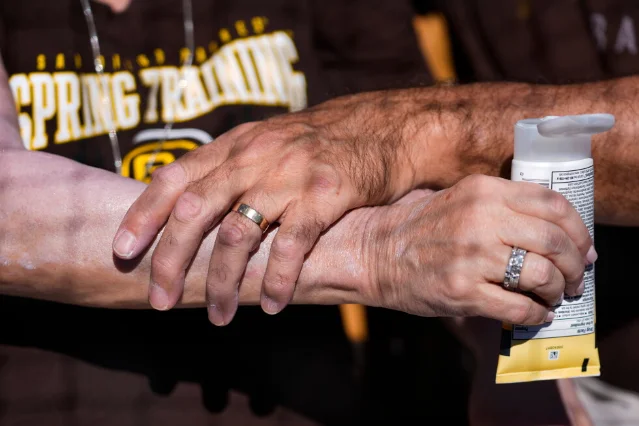
Sunscreen applied to skin in sunshine — the FDA approval means lighter, better-protecting formulas are coming
New sunscreen formulas with BEMT are expected on US shelves by fall 2026. 1

What to actually do right now

  • This summer: Keep using what works. Any broad-spectrum SPF 30+ sunscreen still protects you from both UVA and UVB, even if it requires combining ingredients to do it. Don't wait for the new stuff to protect yourself now.
  • This fall/winter: Watch for products featuring bemotrizinol (BEMT or Parsol Shield on the label). Lightweight feel and better UVA coverage are the main upgrades to look for.
  • If you've been skipping sunscreen: Skin cancer is the most common cancer in the US — 1 in 5 Americans will develop it in their lifetime. 4 Any sunscreen beats no sunscreen by a large margin. Don't let waiting for the "better" one be a reason not to use one at all.

Añade más opiniones o contexto en torno a este contenido.

  • Inicia sesión para comentar.