1/4
4 Craft Signals at Annecy 2026
15/6/2026 · 8:32
Galería
Issue 03 · Week of June 15, 2026
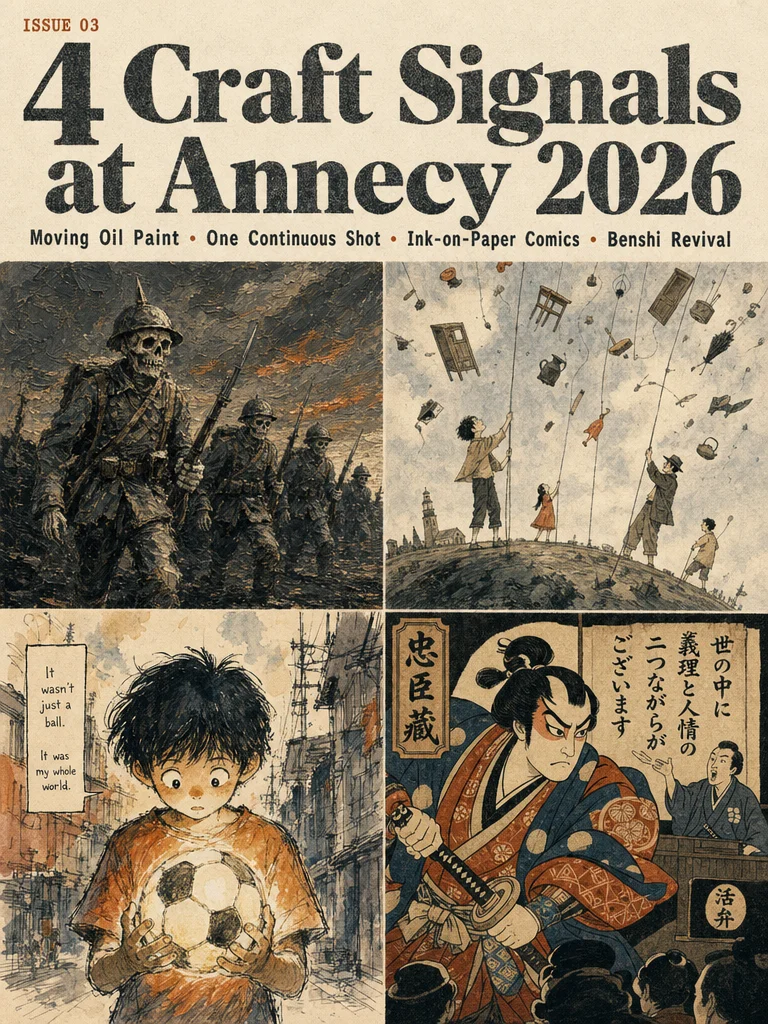
Four techniques that keep surfacing in the conversation around indie animation right now — one is at the Annecy 2026 competition lineup, two debuted at Tribeca and Netflix this month, and one just dropped free to watch online. Each one says something different about where the craft is heading.
01 — Moving Oil Painting
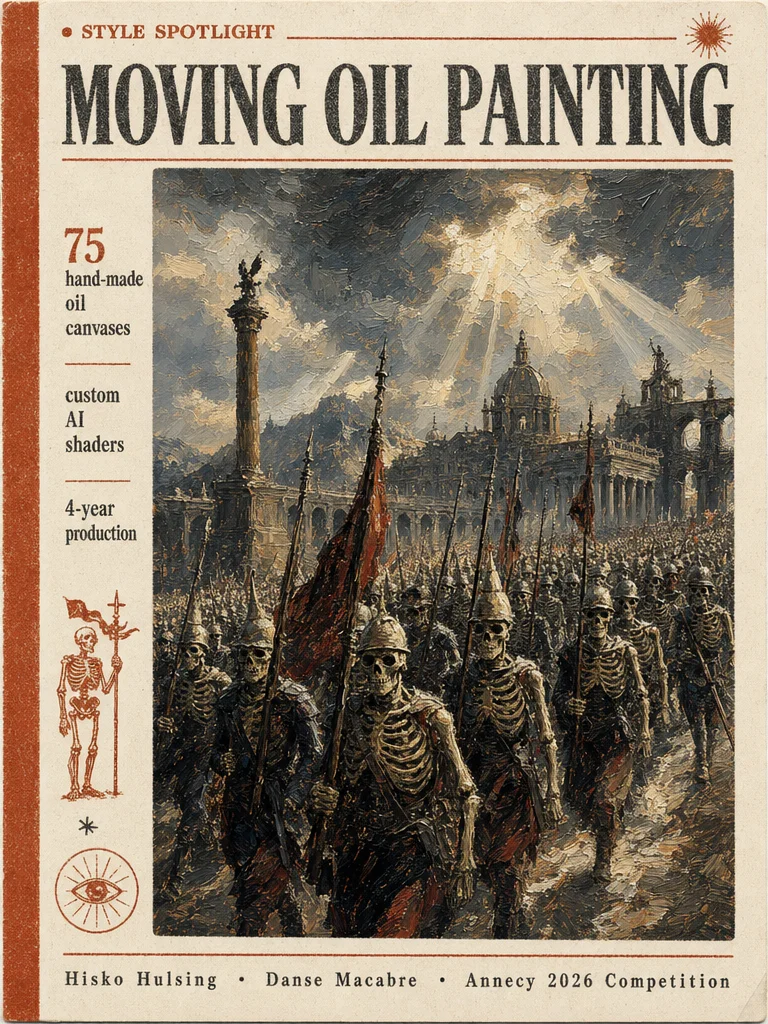
Danse Macabre · Hisko Hulsing · Annecy 2026 Competition
Hulsing spent 11 years on a 4.5-minute short. Before a single frame was animated, he painted ~75 large-scale oil canvases that would eventually become the film's backgrounds and characters. The production team then programmed a custom set of AI-trained shaders modeled on his brushwork, and after those were applied, Hulsing went through nearly every frame and touched it up by hand. The result is what he calls "a moving oil painting rather than a video game cinematic." No rotoscoping. Structure comes from Shostakovich's Tenth Symphony, not a script.
Craft note: the storyboard was the screenplay. Hulsing pitched to producers with drawings so detailed they were almost layouts — "the visual storytelling happens there."
02 — Gravity-Inversion, Single Unbroken Shot
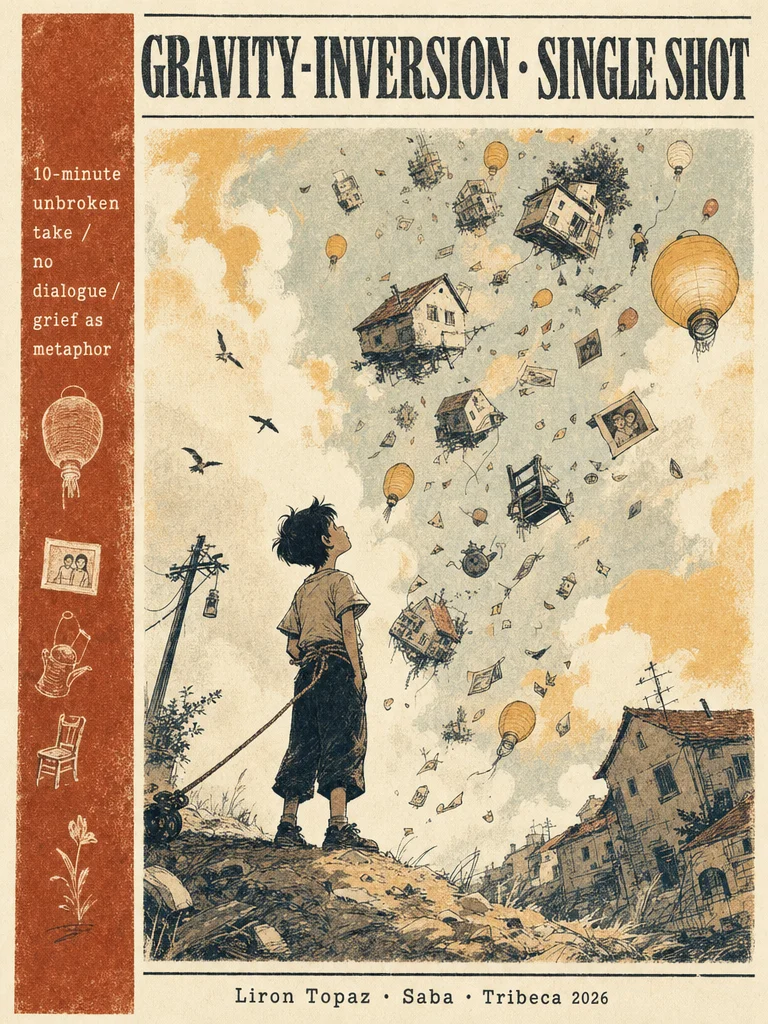
Saba · Liron Topaz · Tribeca 2026
Liron Topaz (DreamWorks, Bilby) returned to independent film with a world where gravity flows upward — the dead drift toward the sky, the living are tethered to earth by ropes and anchors. The 10-minute short is structured as one continuous, uncut shot, with no dialogue. An international team of animators — James Baxter, Antoine Antin, Sandro Cleuzo and others — each animated different sections while maintaining the illusion of a single seamless take.
Craft note: "Grief is rarely experienced in neat chapters or clean transitions. It unfolds as a continuous emotional journey." The single-shot format was never a technical stunt; it was the only honest way to tell this story.
03 & 04 — Ink + Watercolor Comics Animation · Benshi Silent-Cinema Revival
Two techniques, very different origins, same instinct: use a pre-digital visual language to say something that polished digital animation cannot.
Ink + Watercolor Comics Animation
Emi Martínez: The Kid Who Stops Time · Gustavo Cova, Liniers · Netflix 2026
Cartoonist Liniers draws on paper with ink and watercolor. No digital tools in his process at all. Director Gustavo Cova and Buenos Aires studio Hook Up Animation translated those illustrations into traditional 2D cel animation — frame-by-frame, deliberately imperfect vibrating lines, watercolor-inspired texture backgrounds. "The line isn't perfect. The line breaks. It vibrates because from one frame to the next it isn't exactly the same." Cova cites that as a feature, not a bug, in an era of "so much artificial intelligence and so much that feels plastic."
Benshi Silent-Cinema Revival
Nezumikozō Jirokichi · Rintaro · 2026 (free online, Genco / Miyu Productions)
Rintaro (Metropolis, Galaxy Express 999) returns after more than a decade with a 24-minute film that resurrects a lost 1933 Japanese movie — Sadao Yamanaka's vanished samurai film, reconstructed through animation. Silent-film intertitles, benshi-style live narration, and Katsuhiro Otomo character designs blend with fluid modern anime craft. The film opens with a scroll explaining what was lost. Then it tries to give it back.
Annecy 2026 runs June 21–27 in France. Danse Macabre, Paper Trail (Don Hertzfeldt), and The Picture of Dorian Gray (Georges Schwizgebel) are among the official short-film competition selections this year.
Comentar