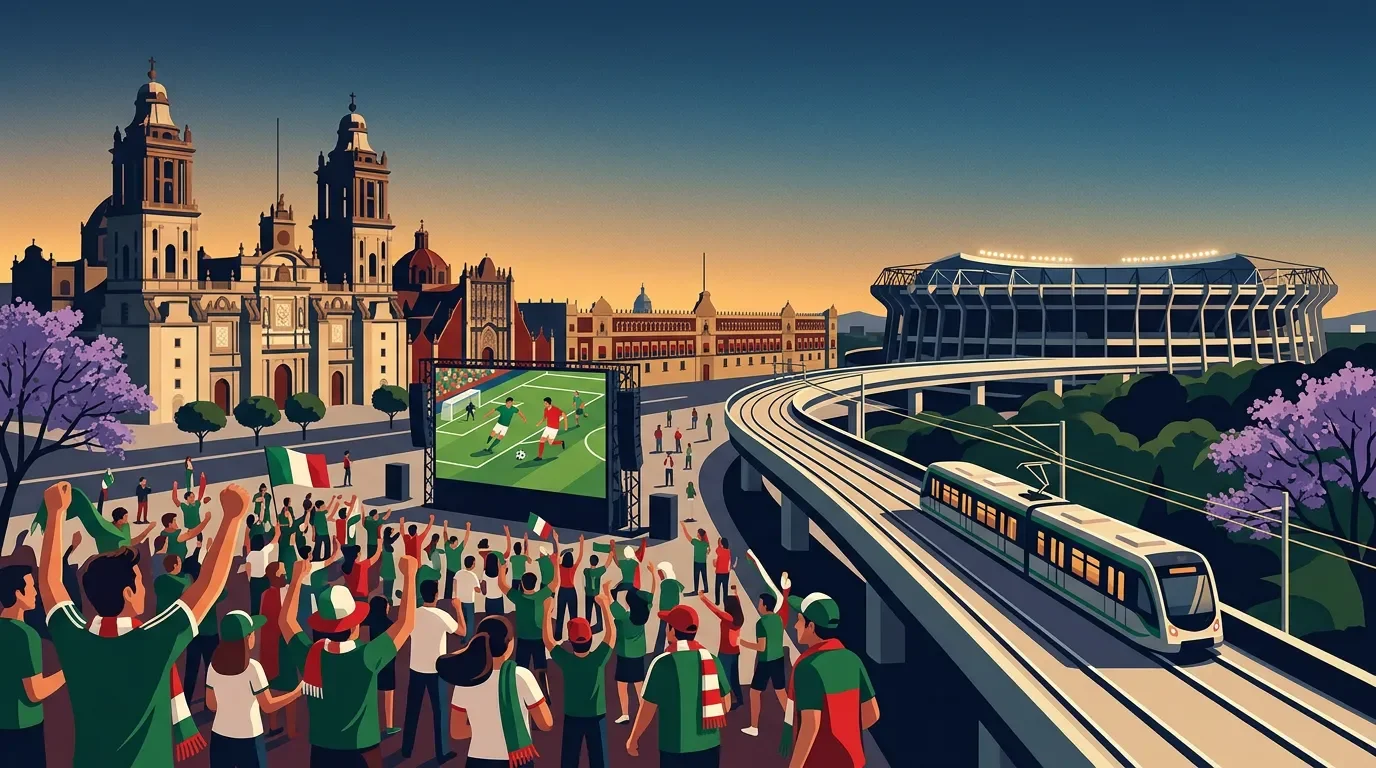
Mexico City World Cup Matchday Guide: Stadium, Transit, Fan Festival
A practical Mexico City matchday guide for World Cup fans: June 17 stadium plans, public-transit choices, Zócalo Fan Festival options, borough football festivals, and museum-friendly backup ideas for ticketed and non-ticketed visitors.

Mexico City has the tournament’s most useful fan setup right now: a south-side stadium with a formal no-car plan, a free Zócalo fan festival running through the final, and a citywide football-culture program that gives non-ticketed fans somewhere real to go before and after matches.
For Wednesday, June 17, the practical headline is simple: Uzbekistan vs. Colombia kicks off at 8:00 p.m. CST at Estadio Ciudad de México, and the host-city transport plan is built around public transit, dedicated Ride services, and remote Park & Ride points — not private cars. 1 2
Quick decision guide
| If you are... | Do this first | Why it matters |
|---|---|---|
| Holding a match ticket for June 17 | Get or top up a physical MI transit card, then choose Light Rail, Ride, or Park & Ride before you leave. 3 | The host-city plan says there is no general public parking at or immediately around the stadium. 2 |
| Watching without a ticket | Go to the official FIFA Fan Festival at the Zócalo, free of charge, open June 11–July 19. 4 | It is the official central celebration site, with live match broadcasts, concerts, DJs, food, games, and the FIFA Store. 4 |
| Staying outside the center | Check the city’s 18 football-festival locations before crossing town. 5 | The city lists free, family-friendly sites across boroughs, with big screens, culture, sport, music, and activities. 5 |
| Filling a non-match afternoon | Use the Cultural Corridor as your weatherproof backup plan. 6 | The corridor lists 19 museums and football-linked exhibitions across the city. 6 |
The stadium: what is happening in Mexico City
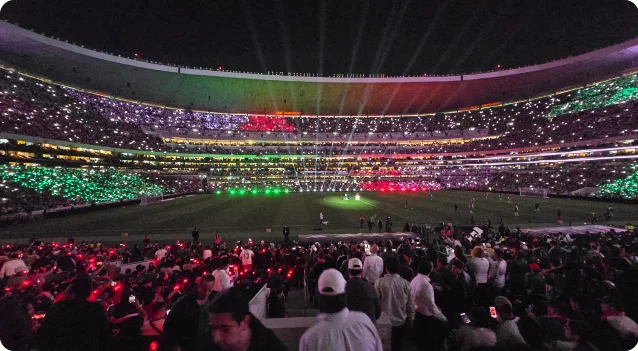
Estadio Ciudad de México is the tournament name for the venue widely known as Estadio Azteca and recently renovated under the Estadio Banorte name in local guide material. 3 The city’s official match page notes the venue is temporarily renamed under FIFA regulations and will host five World Cup matches in 2026. 8
That history is not just marketing copy. FIFA’s host-city guide calls Mexico City the 2026 Opening Match city and notes that the city previously hosted World Cup finals in 1970 and 1986. 9
Mexico City match schedule
The stadium day is the most structured part of the trip. Treat it like an airport movement: card loaded, ticket downloaded, route chosen, and no assumption that a car can get close.
Getting to the stadium without losing the afternoon
The host-city mobility page is blunt: avoid private cars, because there is no parking for the general public at the stadium or its immediate surroundings. 2 It also says the stadium perimeter closes fully from six hours before kickoff and reopens roughly three hours after the match, or when authorities consider it safe. 2
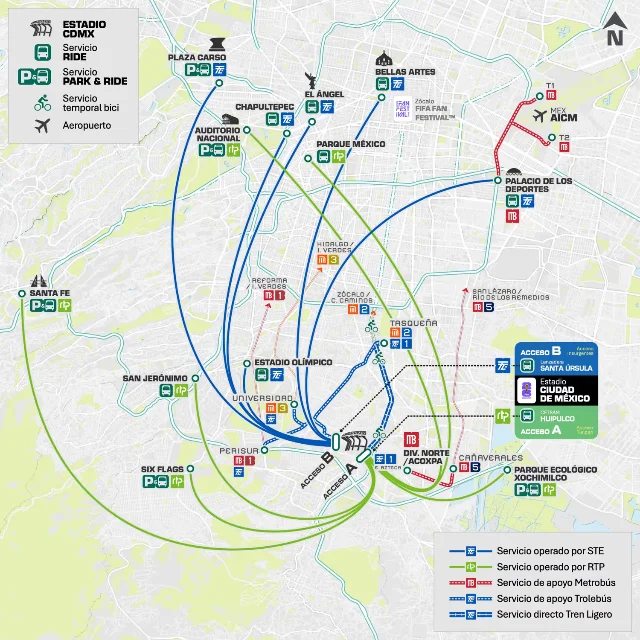
FIFA’s own stadium transport page points fans to the Integrated Mobility card and the Mexico City Host Committee’s transportation website, stating that seven dedicated public-transport routes serve Mexico City Stadium on matchdays. 10
Your main transport choices
- Light Rail from Tasqueña. The host-city page describes a direct matchday service between Tasqueña and Estadio Azteca station, requiring a match ticket or accreditation plus a physical MI card. 2 It says the special service starts four hours before kickoff; during that operation, the ordinary Tasqueña–Xochimilco service continues but does not stop at Estadio Azteca station. 2
- Official Ride buses and trolleybuses. Listed departure points include Palacio de Bellas Artes, CETRAM Chapultepec, Ángel de la Independencia, Palacio de los Deportes, Parque México in Condesa, Estadio Olímpico Universitario, and San Jerónimo. 2 The service uses the MI card, works first-come-first-served, does not require a reservation, and is listed at roughly 15-minute frequency subject to operations. 2
- Park & Ride. The city lists remote departure points including Auditorio Nacional, Centro Comercial Santa Fe, Six Flags, Parque Ecológico Xochimilco, and Centro Comercial Plaza Carso. 2 The transport fare is paid with the MI card, but the city warns that Park & Ride service cost does not include the parking fee. 2
- Taxi and ride-hailing only to drop zones. The host-city plan says app-based services cannot start or end trips inside the perimeter and will direct riders to predefined points outside it. 2 The tourist mobility guide adds that after major events, Calzada de Tlalpan becomes saturated; it recommends walking a few blocks or taking Light Rail a couple of stations north before requesting a car. 3
If you are new to the city, the MI card is not optional. The tourist mobility guide says it is the only way to access the city’s public transport network, with the plastic card costing $15 MXN before you add balance. 3
Where to watch without a ticket
The official fan festival is the easiest answer for first-time visitors: the Zócalo. The host-city site says the FIFA Fan Festival runs June 11–July 19, is free, and is located at the Zócalo de la CDMX, with listed capacity up to 55,000 people. 4

The Zócalo is the safest default because it is official, central, and built around the full tournament calendar. The same page describes live match broadcasts, concerts, DJs, food, brand activations, a game zone, and an official FIFA Store. 4
If you are staying far from Centro Histórico, the city’s football-festival catalog is worth checking before you commit to a cross-town trip. The catalog describes 18 Festivales Futboleros as free, safe, family-friendly spaces with big screens, culture, sport, music, and activities for all ages. 5 Listed sites include Parque de la Consolación in Coyoacán, Deportivo Hermanos Galeana in Gustavo A. Madero, Deportivo Vivanco in Tlalpan, Parque Tezozómoc in Azcapotzalco, and Utopía Eduardo Molina in Venustiano Carranza. 5
What to do around the matchday window
Mexico City is using the tournament to push fans beyond the stadium. The official tourist guide says the city has a network of football festivals across boroughs, a Cultural Corridor with more than twenty exhibitions, and a wider entertainment agenda tied to public spaces and concerts. 7
A practical fan day looks like this:
- Ticketed stadium day: keep the afternoon light, eat early, leave with four-hour transport timing in mind, and do not plan a dinner reservation near the stadium immediately after full time. The official plan starts some services four hours before kickoff and warns of post-match road controls. 2
- Non-ticketed city-center day: pair a museum or Centro Histórico walk with the Zócalo Fan Festival, then stay flexible as capacity and security lines change. The Fan Festival runs in the Zócalo from June 11 to July 19 and is free. 4
- Rain or heat backup: pick one Cultural Corridor stop near your hotel instead of trying to cross the whole city. The corridor lists museums including Franz Mayer, Museo de Memoria y Tolerancia, Museo Jumex, Museo Yancuic, MIDE, Museo Nacional de Antropología, Museo Tamayo, and Museo Kaluz. 6
Bottom line
For Mexico City, the best fan plan is not “get as close as possible by car.” It is choose your base, choose your official viewing point, and let the MI-card network do the heavy lifting. Use the stadium plan if you have a ticket, the Zócalo if you want the central free celebration, and the borough football festivals if you want a shorter trip from your lodging.
That is the city’s real advantage: even when the stadium is not your destination, the tournament still has official places to gather, watch, eat, and keep the day moving.
Fuentes de referencia
- 1Copa Mundial de la FIFA 2026™ match schedule in Mexico City
- 2Cómo llegar al estadio — Copa Mundial de la FIFA 2026™ Ciudad de México
- 3Mobility Guide for the Mexico City Stadium
- 4FIFA Fan Festival™ Ciudad de México
- 5Festivales Futboleros — Mexico City
- 6Corredor Cultural — Copa Mundial de la FIFA 2026™ Ciudad de México
- 72026 World Cup Tourist Guide in Mexico City
- 8The Matches — Mexico City
- 9Mexico City Host City Guide — FIFA World Cup 2026™
- 10Getting there — Mexico City Stadium, FIFA World Cup 2026™
Añade más opiniones o contexto en torno a este contenido.