Geopolitics Daily Brief — June 15, 2026
The US and Iran finalised an MOU to reopen the Strait of Hormuz (signing June 19 in Geneva), sending Brent down 4.5% to ~$83.4/barrel; Russia launched 70 missiles and 611 drones against Ukraine — setting the Kyiv-Pechersk Lavra ablaze — hours after a Trump-Putin call; China's Critical Minerals Framework took effect, with InP wafer prices already up 250%; Taiwan's Lai proposed a $40 billion emergency defence budget after fresh PLA coast-guard incursions; and the G7 opened in Évian with Hormuz governance, Ukraine, AI, and critical minerals at the top of the agenda.
Monday 15 June 2026
Five stories driving markets and supply chains this morning — across four theatres and into the trading week.
1. US-Iran framework agreement: Hormuz opens Friday, nuclear talks begin in Geneva
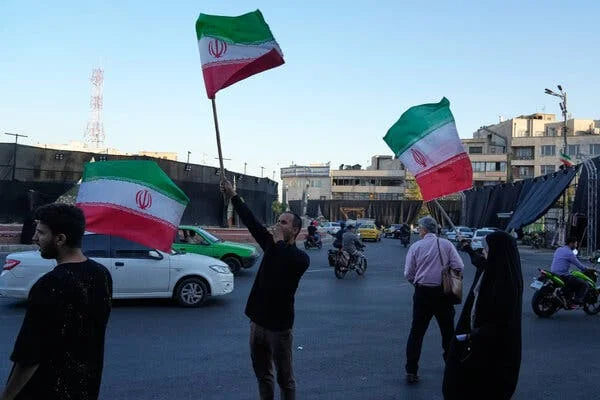
The United States and Iran announced late Sunday that they have finalised the text of a memorandum of understanding to end their four-month war. 1 Trump said in a social media post that he had "authorized the immediate removal of the United States naval blockade" on Iranian ports and that the Strait of Hormuz would reopen toll-free on Friday, when both sides are scheduled to sign the document in Geneva. Iran's Supreme National Security Council confirmed the MOU text was finalised and described it as calling for an immediate, permanent end to military operations on all fronts, including Lebanon. 2
The deal runs into immediate complications. Israel's national security minister Itamar Ben-Gvir said Israel is not bound by the agreement and will not withdraw from any captured territory. 1 Nuclear status — the stated casus belli for the original US-Israeli strikes in late February — is deferred to a separate negotiating track, a point Senator Lindsey Graham called "concerning" given that Iran and Washington appear to hold different readings of the deal. The text itself has not been publicly released.
Cargando tarjeta de contenido…
Supply-chain and market impact. Brent crude fell 4.5% to approximately $83.4/barrel early Monday (from $87.33 at Friday's close), with WTI dropping 4.8% to around $80.5; Norwegian exchange data shows August delivery Brent at $83.44 at the open. 3 Asian equities surged. The International Maritime Organization Secretary-General Arsenio Dominguez welcomed the deal but noted that it will take time to arrange security guarantees for the thousands of seafarers stranded in the Persian Gulf and to clear mines from the waterway. Europe's E3 leaders (France, UK, Germany, Italy) issued a joint statement calling for rapid implementation and pledging support for a mine-clearance mission; they also flagged the need for alternative export corridors to reduce dependence on Hormuz long-term. Key uncertainty: whether Israel will allow Lebanon's Hezbollah front to go quiet, and whether Iran's domestic hard-liners — who chanted "death to Araghchi" at Tehran rallies — will let the MOU hold together until the June 19 signing.
2. Russia strikes Kyiv-Pechersk Lavra hours after Trump-Putin call
Russia launched one of its largest single aerial barrages of the war overnight Sunday into Monday — 70 missiles and 611 drones targeting Ukraine, with Kyiv bearing the brunt. 4 The main Dormition Cathedral of the Kyiv-Pechersk Lavra, a UNESCO World Heritage site and the most important Orthodox monastery in Ukraine, was set ablaze and at least 13 people were injured there. Across the country, at least nine people were killed. In Kharkiv, five State Emergency Service rescuers died while fighting fires caused by Russian strikes; the Kharkiv Art Museum also burned. The Dovzhenko National Film Studios, founded in 1927, lost an estimated 100,000 costumes and three million clothing items.
The barrage came hours after Trump spoke by phone with Putin — a 55-minute call in which Trump told the Kremlin he considered "a cessation of hostilities vital" and said he was prepared to help bring about peace, according to Kremlin adviser Yury Ushakov. Trump also called Zelenskyy, who wished him a happy 80th birthday. Meanwhile, Ukraine struck back: three people were killed in a Ukrainian drone attack on Tula, a major Russian industrial city about 200 km south of Moscow; Ukrainian attacks also damaged two bridges in Russian-occupied Kherson.
The G7 summit in Évian-les-Bains, France, which opened Monday with Trump attending, placed Ukraine alongside the Hormuz deal on the agenda. The EU simultaneously opened formal accession talks with Ukraine and Moldova after Hungary's new government withdrew its veto. 5
Supply-chain and market impact. Russian Foreign Minister Lavrov said publicly that "soldiers, not talks, will decide the war" — rejecting the diplomatic track Trump is trying to open. With the Tula region's defence-industrial base now a regular Ukrainian strike target, interruptions to Russian artillery shell and missile-component production are possible but not yet quantified by independent sources. European defence procurement orders — already at multi-decade highs — are unlikely to ease while the battlefield position remains this volatile.
3. China's Critical Minerals Framework takes effect; InP wafer prices already up 250%
China's new Critical Minerals Framework, introduced in February 2025 and fully effective as of June 15, 2026, has moved indium phosphide (InP) substrates — the material underlying high-speed optical transceivers used in AI data-centre photonics — to a licensing regime rather than an outright ban. 6 China accounts for roughly 70% of global indium production (US Geological Survey, 2024), and InP substrate manufacturing is further concentrated: AXT Inc. (~40-45% of global capacity, but manufacturing primarily in China) and Sumitomo Electric Industries (~35-40%) together hold approximately 80% of global supply. InP wafer prices have risen 250% since the controls were introduced, according to reporting tracking the Coherent supply chain. No commercially available drop-in substitute for InP in the 1,300–1,550 nm photonic wavelength range exists.
The Trump administration is simultaneously working to counter Chinese mineral dominance: the UK and Japan issued a joint economic security declaration Monday aimed at stabilising and diversifying global critical mineral markets. 7 A separate G7 track on critical minerals pricing is also on the Évian agenda, though G7 officials told Reuters the US plan faces sceptical allies who are reluctant to commit to guaranteed pricing floors.
Supply-chain and market impact. Data-centre operators planning next-generation AI clusters that depend on InP-based 400G/800G optical transceivers (notably Coherent's products) face procurement lead times that have extended to 9–18 months in some configurations, according to industry analysis published in mid-June. Silicon photonics can substitute in some transceiver segments but still requires InP-based laser sources for light generation. The framework's licensing mechanism — designed to create administrative friction rather than a hard block — gives Beijing the ability to modulate AI infrastructure buildout timelines in the West without triggering formal WTO dispute procedures.
4. Taiwan: Lai proposes $40 billion defense package; China repeats coast-guard incursions
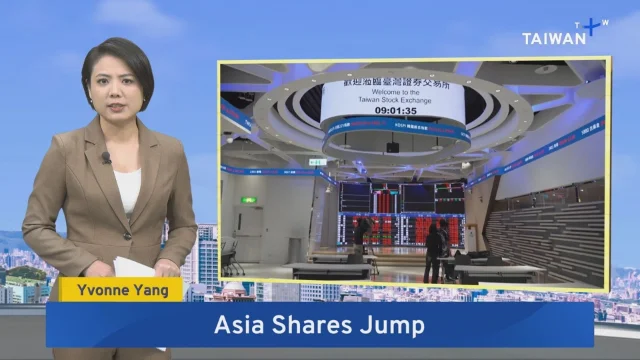
Taiwan's President Lai Ching-te proposed an emergency $40 billion supplemental defence budget after intelligence confirmed the PLA's accelerated expansion, including warplane inventory growth. 8 The proposal followed a fresh Chinese coast guard intrusion — Taiwan's Coast Guard deployed five vessels to monitor Chinese ships after Beijing announced what it described as a "special maritime traffic enforcement operation." Lai, speaking from an anti-terrorism coastal drill in Kaohsiung, said Taiwan would use its technology edge to safeguard stability in the Taiwan Strait.
Taiwan also launched a new public website to solicit intelligence from Chinese citizens, a move Beijing condemned. 9 Prior to these events, a Facebook post from the TaiwanPlus data indicated that Taiwan had detected 47 military aircraft along with navy and official ships engaged in simulated attacks and blockade exercises in the days before June 15. The $14 billion US arms sale to Taiwan, frozen following the Trump-Xi summit, remains on hold.
Supply-chain and market impact. Taiwan produces roughly 90% of the world's most advanced semiconductors (TSMC nodes below 5 nm). A Polymarket contract on China invading Taiwan before June 30, 2027, remains active with elevated odds. Lai's emergency defence budget proposal, if passed by the Legislative Yuan, would direct spending toward asymmetric drone and missile systems rather than traditional platforms — aligning with the US-advocated "Hellscape" doctrine. The direct market signal is defence procurement: Taiwanese defence contractors and US firms supplying Harpoon anti-ship missiles and HIMARS launchers are watching legislative votes closely.
5. G7 opens in Évian: Hormuz, Ukraine, AI, and critical minerals top the agenda
The G7 summit opened in Évian-les-Bains, France, on Monday with Trump attending — his arrival delayed until the afternoon after the Hormuz deal was finalised Sunday night. 5 French President Macron said the agenda would include the long-term governance of Hormuz freedom of navigation under the new US-Iran agreement, the war in Ukraine (with the question of whether G7 leaders can press Trump toward a stronger stance on Russia now front and centre), AI regulation and strategic technology investment, and critical minerals supply-chain diversification. Protesters clashed with police in Geneva ahead of the summit. The AI agenda is notable: a side report from Anthropic, cited in EU proceedings, argues the US can maintain a 12–24 month lead over China in AI if it tightens export controls and accelerates democratic-country adoption — a framework the EU is evaluating as it debates building tech independence from US platforms.
Supply-chain and market impact. The Évian summit is the first G7 meeting where the Strait of Hormuz reopening is simultaneously being celebrated and subject to governance negotiations. EU Commission President von der Leyen's warning that "energy dependencies have been weaponized" and her call for diversified export corridors signals that European governments will accelerate LNG terminal and pipeline investment regardless of how cleanly Hormuz reopens. For commodity markets, Brent's 4.5% drop Monday morning captures the immediate relief trade; whether it holds depends on whether the June 19 Geneva signing actually occurs and whether Lebanon's front quiets within days — outcomes that remain genuinely uncertain as of 08:00 UTC.
Sources: RFE/RL, New York Times, Euronews, CGTN, TaiwanPlus, Finansavisen (Oslo Børs), DiscoveryAlert. Prices as of approximately 06:00–08:00 UTC June 15, 2026.
Fuentes de referencia
- 1NYT live: US and Tehran agree on framework for peace
- 2CGTN live: US, Iran confirm peace deal, official signing June 19
- 3Finansavisen: Iran deal sends Asian markets up, oil down
- 4RFE/RL: Iconic Kyiv cathedral set ablaze in deadly Russian strikes
- 5Euronews: Europe Today — US-Iran deal, G7 summit opens
- 6DiscoveryAlert: China indium phosphide export controls and AI supply
- 7TaiwanPlus: UK, Japan announce tech partnership aimed at security, jobs
- 8TaiwanPlus: Lai says Taiwan stands firm after fresh Chinese coast guard incursion
- 9TaiwanPlus: Taiwan releases new platform to collect intelligence on China
Añade más opiniones o contexto en torno a este contenido.