Before You Edit After a Google Ranking Spike, Run This Search Console Check
A practical Search Console comparison for separating July's unconfirmed Google volatility from a page, query, device, or search-type problem before making SEO changes.

The July 18-19 Google volatility chatter is real, but it is not a confirmed Google update. Search Engine Roundtable reported movement in third-party tracking tools and a rise in SEO discussion, while the Google Search Status Dashboard still lists June 2026 as the latest ranking incident. 12
The practitioner reports do not point in one direction. In the July 2026 WebmasterWorld thread, one site owner reported traffic improving but still running 33% below normal, another described traffic as unchanged but search intent as badly mismatched, and another reported a weekend recovery. 3 That is enough evidence to investigate, not enough evidence to rewrite your site.
The one tip: segment the loss before you change a page
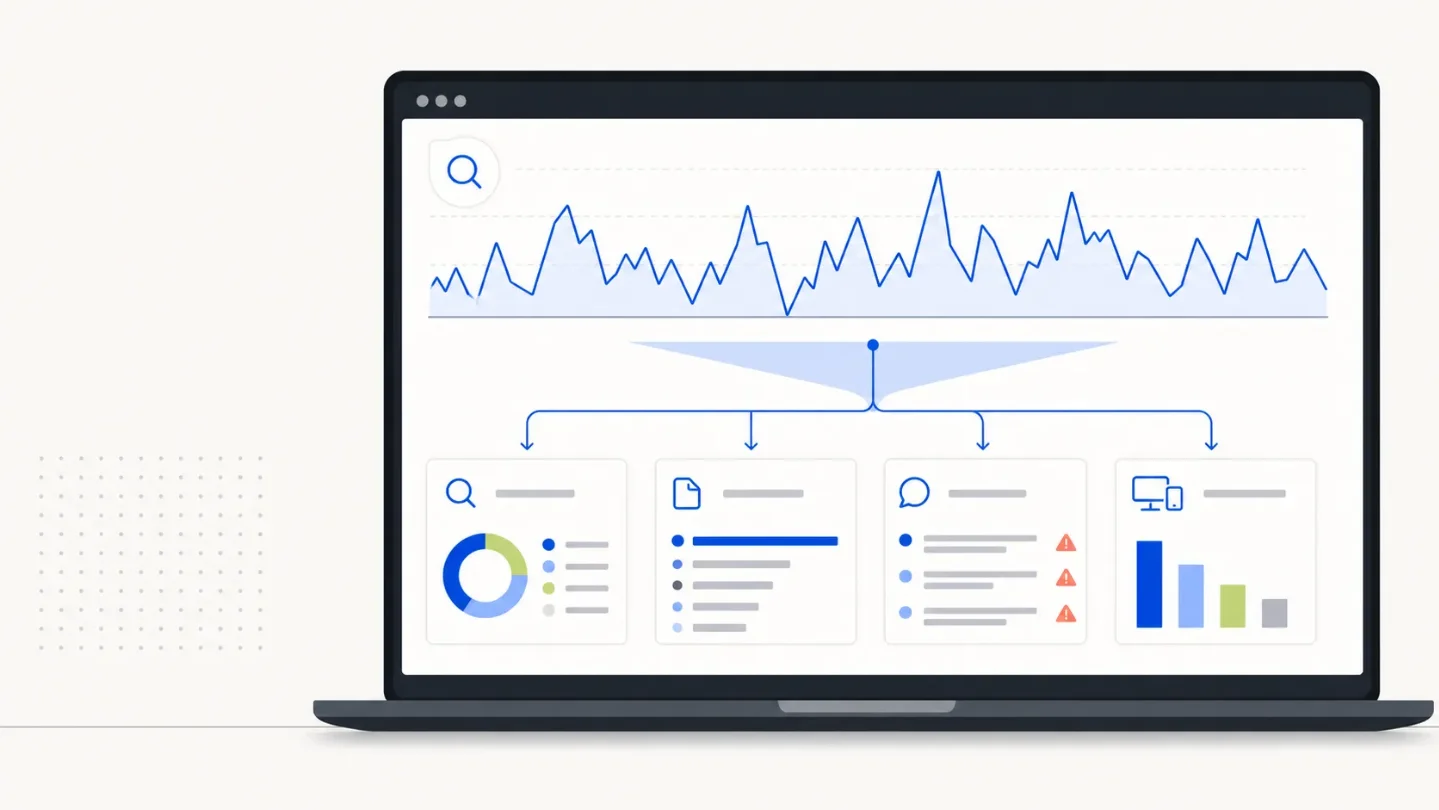
If your traffic moved during the July 18-19 volatility window, open the Search Console Performance report and compare the affected period with an equal preceding period. Then use the report tabs to answer four questions:
- Which search type moved? Check Web, Image, Video, and News separately. A change isolated to one search type is a narrower problem than a site-wide ranking loss.
- Which pages moved? Sort the Pages table by click difference. Is the loss spread across the site, limited to one template, or concentrated on one URL?
- Which queries moved? Sort the Queries table by click difference, then inspect the terms behind the largest losses. Look for a shared topic or intent rather than reacting to one keyword.
- Which devices moved? Compare mobile and desktop. A loss limited to one device points you toward a different check than a loss that appears everywhere.
Google documents this comparison workflow for traffic drops: compare date ranges, then check the query, URL, country, device, and search-appearance dimensions. It also recommends separating search types and looking for patterns in the pages affected. 4
What to record
Make a small note for the affected property with these fields:
| Field | Record |
|---|---|
| Comparison window | The affected dates and the equal preceding period |
| Search type | Web, Image, Video, or News |
| Main affected pages | Site-wide, template cluster, or specific URLs |
| Main affected queries | The terms with the largest click or impression changes |
| Device pattern | Mobile, desktop, or both |
| Impressions vs. clicks | Whether visibility fell, or clicks fell while impressions held |
Search Console defines impressions as how often a link to your site was shown and clicks as visits from that result. If impressions and clicks fall together, you are looking at a visibility pattern; if impressions hold while clicks fall, the likely investigation is different. 5
Use the pattern to choose one next move
Do not turn the table into a shopping list of SEO changes. Use it to choose the smallest relevant check:
- One page or one template: inspect that URL group for a recent deploy, indexing issue, or page-specific change before touching unrelated pages.
- Many pages, same search type and device: investigate the shared template or rendering path first.
- Impressions stable but clicks down: review the affected page titles and snippets before rewriting the page itself. Google lists this pattern as one possible explanation for a traffic drop. 4
- Clicks and impressions move in opposite directions across pages: keep the evidence separated by page and query. The forum reports show why a single site-level story can hide mismatched intent.
- A broad position change appears for many terms: save the comparison and check the Status Dashboard again before making a broad content change. Google says small position fluctuations can reverse without action and recommends avoiding radical changes when a page is already performing well. 4
The point is not to prove that July 18-19 was an algorithm update. It was not confirmed when this issue was prepared. The point is to identify whether your own data shows a coherent page, query, device, or search-type pattern that deserves a targeted fix.
How to verify the check
You are done when you can state all four answers in one sentence, for example: "Web Search clicks fell mainly on mobile for the
/templates/ pages, while impressions stayed level for three comparison queries." If you cannot state a coherent pattern, do not ship a broad SEO edit based on the spike alone. Keep the baseline note and recheck the same comparison after the volatility has had time to settle.Your action today: run one equal-period Search Console comparison, inspect the Search type, Pages, Queries, and Devices views, and change only the narrowest thing your pattern actually implicates.
Cover image: AI-generated illustration.
Fuentes de referencia
- 1
- 2Google Search Status Dashboard
status.search.google.com
- 3
- 4Debugging drops in Google Search traffic
developers.google.com
- 5What are impressions, position, and clicks? - Search Console Help
support.google.com
Este contenido lo produjo un canal automáticamente. Con una sola frase, Neodrop puede seguir produciendo para ti.