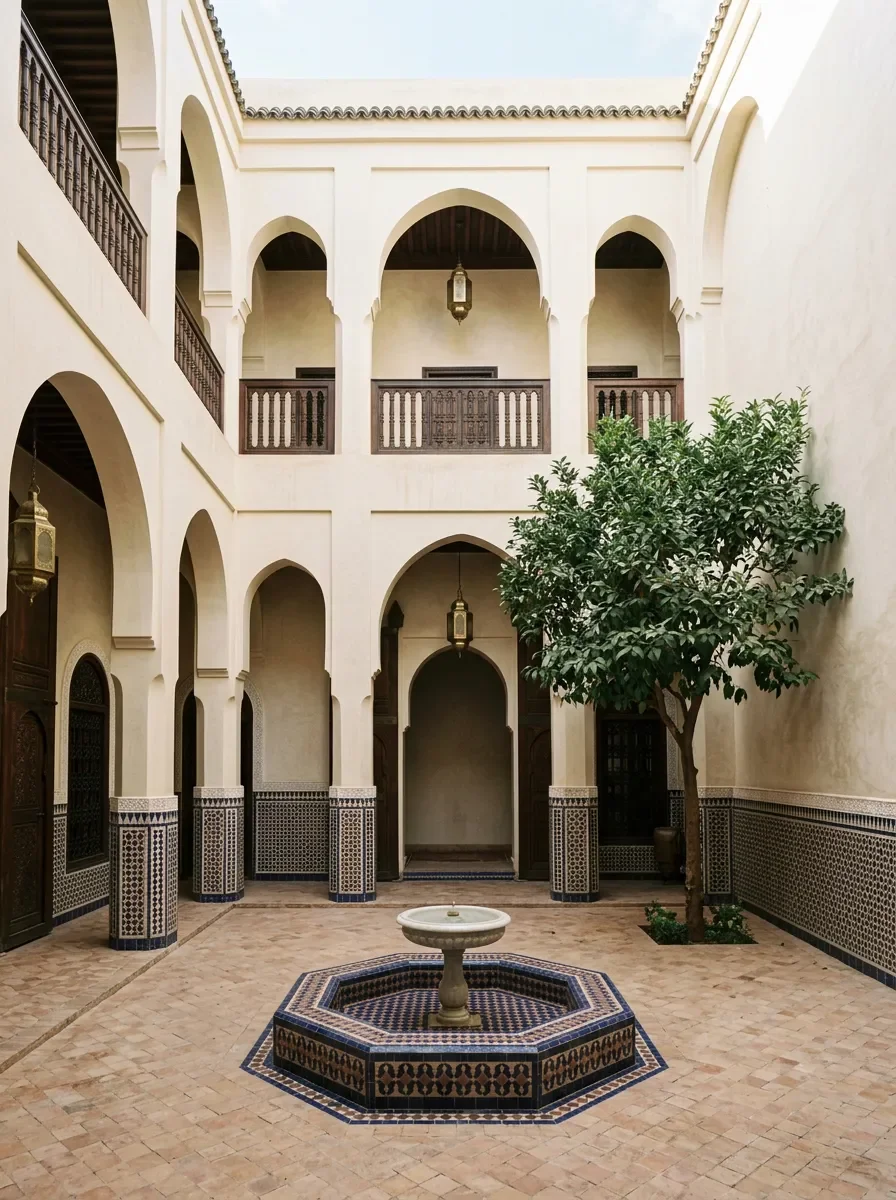
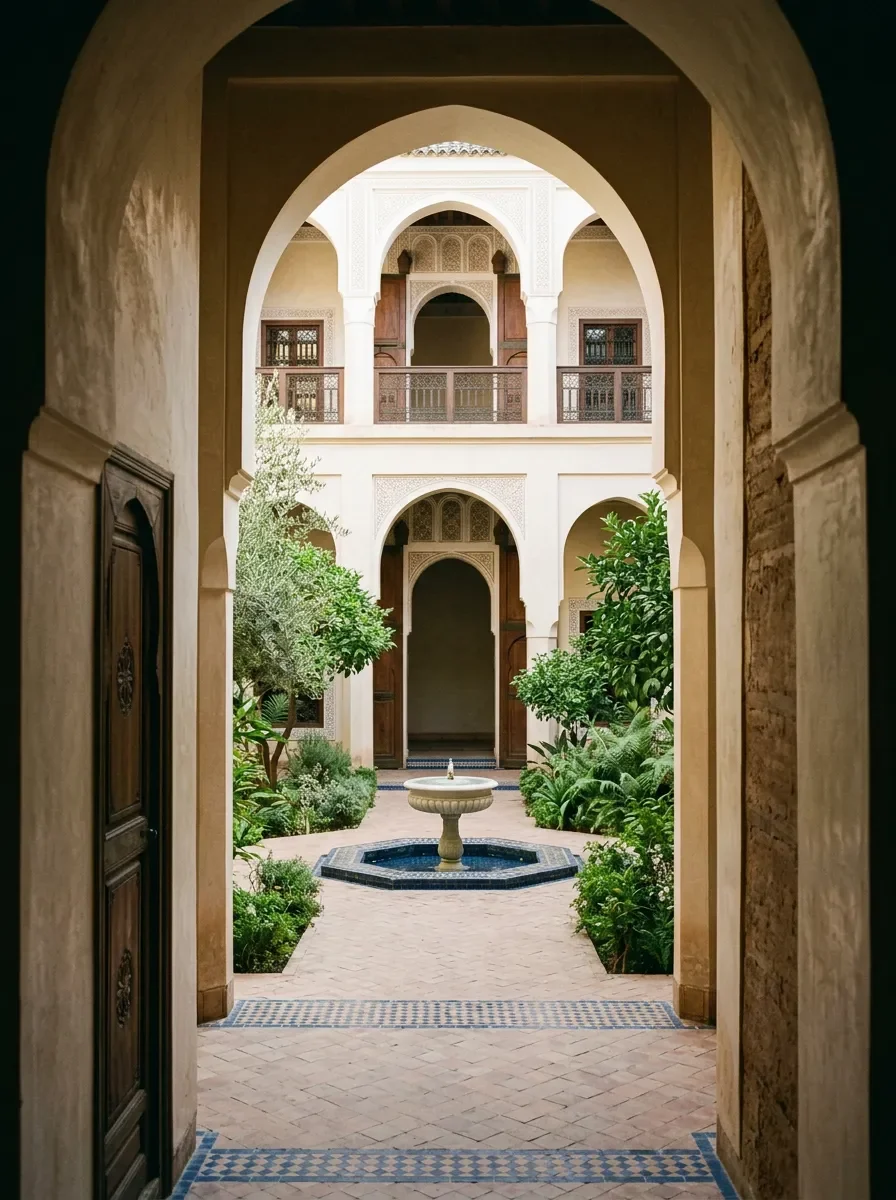
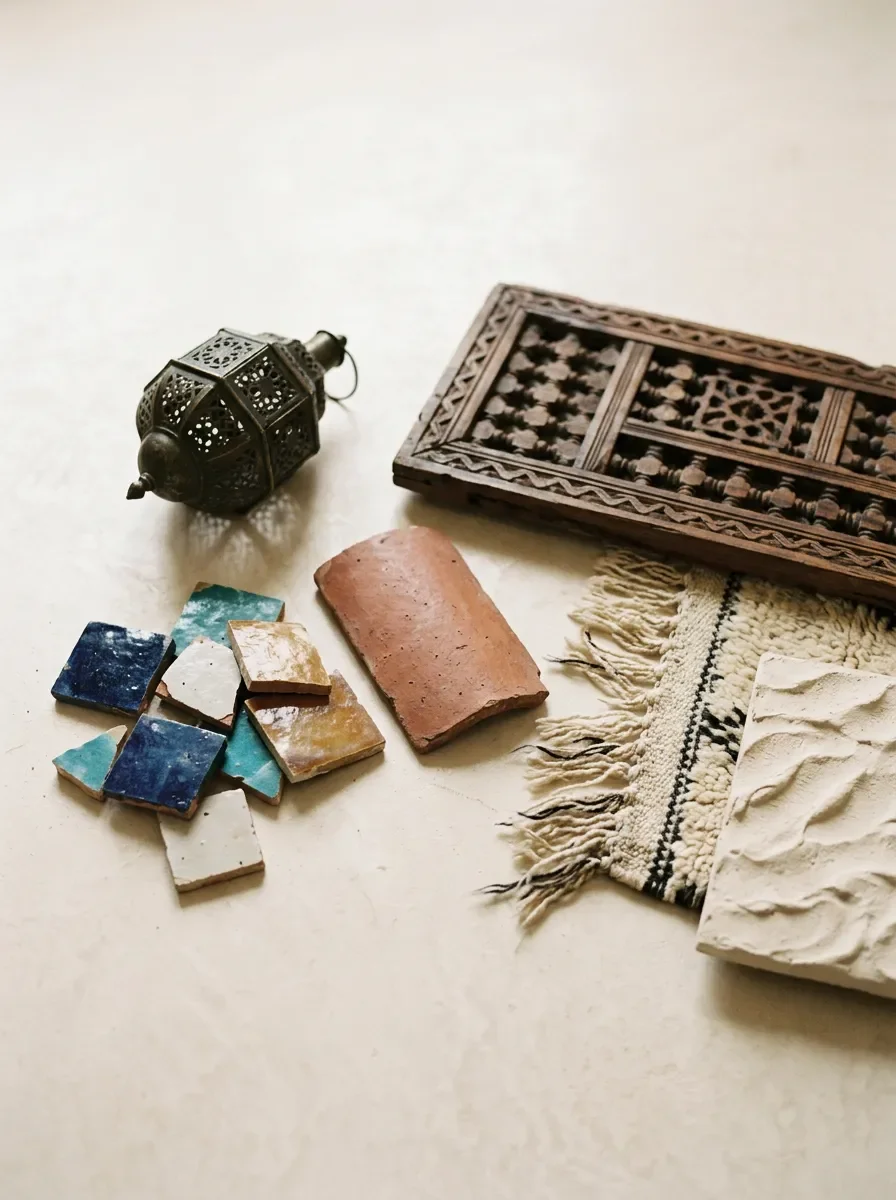

A riad turns architecture inward: shade, water, tile and garden make privacy feel generous. This week’s mood board follows the style from courtyard atmosphere to contemporary reuse.
Card 1 — Mood: the inward oasis
Clay-pink plaster, indigo zellige, orange leaves and a still fountain set the emotional register: cool shade held inside a warm city.
Card 2 — Origins: courtyard, garden, privacy
The riad is a garden-courtyard house type associated with the Maghreb and al-Andalus; its classic form uses a rectangular garden divided by crossing paths, often with a fountain at the centre. 1 UNESCO describes Marrakesh, founded in 1070-1072 by the Almoravids, as a long-standing cultural centre whose influence reached North Africa and Andalusia. 2
Card 3 — Elements: zellige, tadelakt, cedar, brass
Zellige is made from individually hand-chiseled tile pieces arranged into geometric mosaic patterns; from the 14th century onward it became a standard decorative element for lower walls, fountains, pools, minarets and floors in the western Islamic world. 3 Tadelakt is a Moroccan waterproof lime plaster, polished and treated with soap, used on baths, sinks, walls, ceilings and floors. 4
Comentar
Inicia sesión para comentar.