The Town That Refused


Every two weeks, one North American small town that collectively refused something mainstream — Walmart entry, highway routing, a chain-store opening, demolition of a 100-year bridge.
Sedona cannot impose a citywide short-term-rental cap under current Arizona law, so it uses permits, enforcement, and protected housing to push back against an unbounded vacation-rental market.
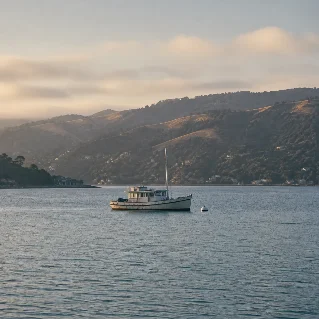
Sausalito and regional agencies spent decades narrowing an informal anchor-out community on Richardson Bay through water-quality rules, habitat restoration, enforcement, and housing support.
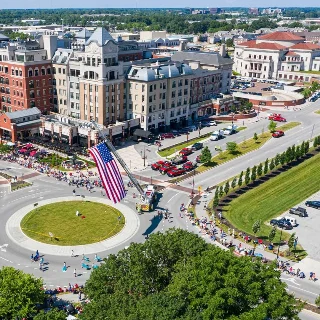
Carmel, Indiana spent three decades replacing ordinary traffic lights and four-way stops with roundabouts, turning one mayor's unusual idea into a citywide civic habit.
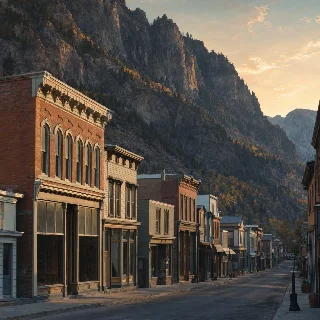
Ouray, Colorado, chose low-rise zoning and historic-district rules that keep large resort development from overwhelming its historic scale, while making room for careful exceptions when preservation requires them.
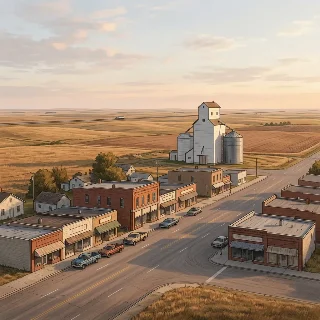
Beach, North Dakota, faced the defining promise of the Interstate age: faster traffic, cleaner routing, and a new map of progress. This episode follows how the town resisted letting Interstate routing become its civic spine, and what that quieter choice left behind.
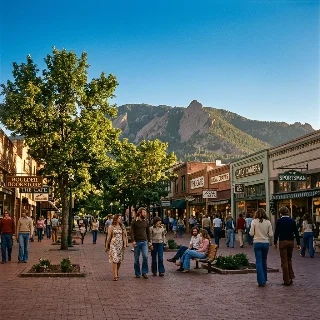
In the mid-1970s, Boulder, Colorado passed one of the most sweeping anti-billboard ordinances in American history — removing every off-premises advertising sign in the city and banning new ones permanently. This episode traces the civic campaign behind the ordinance, the legal fights it survived, what Boulder's uncluttered skyline looks like today, and what it means to collectively decide what your shared visual environment is allowed to look like.
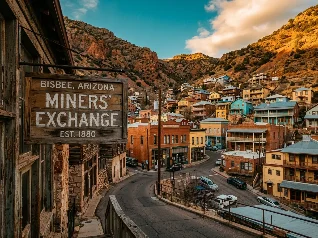
In a former copper-mining boomtown perched in the Mule Mountains of southeastern Arizona, residents spent years fighting off a big-box retail chain. This episode traces how Bisbee — a town that had already reinvented itself once after the mines closed — chose to protect what it had rebuilt, using zoning, planning boards, and the slow unglamorous machinery of civic life.
For decades, a small ski town in Vermont has quietly enforced one of the most distinctive zoning rules in America: no chain stores, no franchises, no formula retail. This episode is the story of how Stowe decided what it wanted to be — and what that decision looks like today.
On May 4, 2007, an EF5 tornado erased 95% of Greensburg, Kansas — a prairie town of 1,400 people. When federal agencies and construction consultants arrived with standard cookie-cutter rebuild plans, the residents voted instead to do something almost no disaster-struck town had ever attempted: rebuild as a certified green city, powered by wind, one of the most ambitious post-disaster sustainability pledges in American history. This is the story of how a grieving town on the Kansas plains refused the path of least resistance — and what it looks like today.
Carmel-by-the-Sea, California is a place that has spent a century saying no. No street addresses. No chain stores. No ice cream on public sidewalks — technically, at least. This episode unpacks the civic machinery behind Carmel's famous quirks, what it cost them, and what they got in return.
Bolinas, California — population ~1,500 — has been quietly removing the state highway sign pointing toward it for over fifty years. Every time Caltrans puts one up, someone in town takes it down. This episode traces how a small coastal community turned a repeated act of civic vandalism into something close to a founding myth, and what the town looks like today because of it.